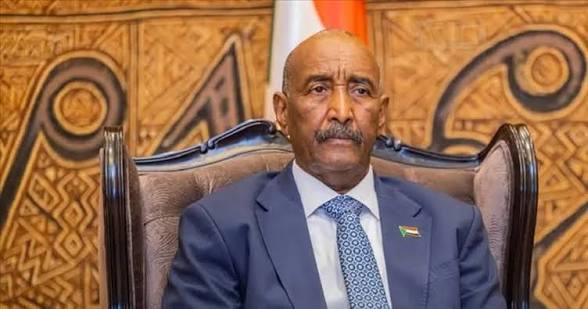
New message amid difficult US-Sudan relations
Sudan’s military chief and Transitional Sovereignty Council Chairman Abdel Fattah al-Burhan has renewed his government’s stated commitment to US-led peace efforts following weeks of disagreements over the proposed path to ending the country’s war.
In an October 15 statement, al-Burhan said he had written to President Donald Trump to reaffirm Sudan’s willingness to work in good faith with all parties towards a durable settlement.
He emphasised that any peace arrangement must safeguard the country’s sovereignty, national unity, territorial integrity and the dignity of its population.
The announcement did not confirm any agreement on a ceasefire, direct negotiations or a future political transition.
Washington pushes for a humanitarian truce
The Trump administration has been pursuing a diplomatic initiative centred on a proposed 90-day humanitarian ceasefire between the Sudanese Armed Forces and the Rapid Support Forces.
US presidential adviser Massad Boulos has played a prominent role in efforts to advance the proposal.
Washington has argued that an immediate cessation of hostilities should be followed by inclusive political dialogue and a transition towards civilian government.
In September, the US State Department criticised both warring sides for failing to make sufficient commitments to a truce and expressed concern about continued attacks affecting civilians.
Disagreements over the conditions for peace
Sudan’s authorities have raised objections to aspects of the US-backed framework, particularly regarding the status of national institutions and the future role of the Rapid Support Forces.
Khartoum argues that a peace settlement must prevent the emergence of competing centres of authority and preserve Sudan’s territorial integrity.
The disagreement intensified after Washington declared in September that neither warring side represented legitimate constitutional governance.
Sudan’s Foreign Ministry rejected that assessment and called for international engagement based on respect for Sudanese sovereignty.
Al-Burhan’s previous peace proposals
In an article published on September 21, al-Burhan outlined his preferred conditions for ending the conflict.
His proposals included international monitoring of a future ceasefire, the removal of armed forces from civilian areas, national political dialogue and eventual elections.
He also called for a single national military structure under civilian supervision rather than competing armed organisations.
However, in remarks on October 7, the military leader rejected negotiations with the Rapid Support Forces and said military operations would continue.
His latest letter therefore should not be interpreted as confirmation that those earlier positions have changed.
Egyptian mediation and regional engagement
Regional diplomacy has continued alongside US efforts.
Earlier in October, al-Burhan attended high-level meetings in Egypt, including discussions with President Abdel Fattah el-Sisi on the Sudan crisis.
US adviser Massad Boulos attended an event hosted by the Egyptian president and reaffirmed Washington’s support for Sudan’s sovereignty and territorial unity.
The United States also reiterated its willingness to cooperate with Egypt and other partners to advance a political settlement.
No breakthrough agreement emerged from those contacts.
Outlook remains uncertain
Al-Burhan’s latest statement suggests a willingness to maintain diplomatic engagement with Washington despite the tensions surrounding the ceasefire proposal.
Whether that position leads to renewed negotiations will depend on the parties’ ability to resolve disputes over humanitarian access, security guarantees, political legitimacy and the future of Sudan’s armed groups.
No official US response to the October 15 letter has been confirmed, and there is no announced timetable for a new round of negotiations.