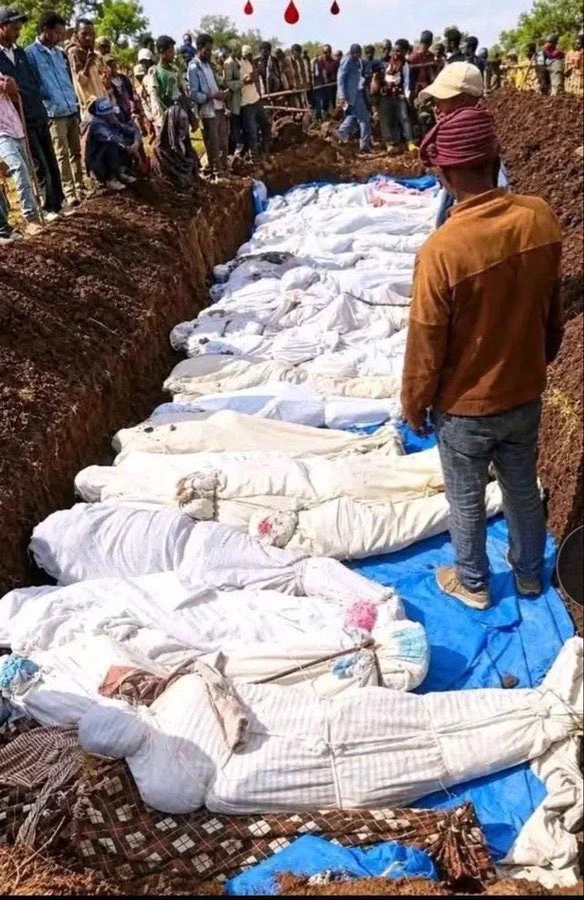
The Ethiopian Orthodox Tewahedo Church has called for urgent government intervention following the killing of 60 Orthodox Christians in two separate attacks in Oromia's Arsi Zone.
The Church's Holy Synod discussed the violence during its assembly in Addis Ababa on October 26, 2026, after receiving reports from the Arsi Eparchy concerning attacks carried out on October 20 and 24.
In its official statement, the Synod emphasized that the violence had resulted not only in deaths and injuries but also in displacement and the destruction of residential property.
Church leaders announced a series of measures intended to encourage stronger government action and prevent further attacks against civilian communities.
Holy Synod calls on federal authorities
The Holy Synod said the killing of innocent civilians violated constitutionally protected rights to life and freedom of religion.
It urged federal and regional authorities to publicly condemn the attacks, ensure that those responsible are brought to justice and provide effective protection for threatened communities.
Church officials emphasized that security agencies must take preventive measures rather than wait for further violence to occur.
They also warned that repeated attacks risk undermining the country's longstanding traditions of religious coexistence and mutual respect.
High-level government consultations planned
The Synod announced plans to arrange a meeting with relevant senior government officials to address security challenges affecting Orthodox Christian communities.
The proposed discussions are expected to focus on practical protection measures and long-term arrangements aimed at preventing further attacks.
Church authorities also decided to establish a special committee comprising senior clergy, Church scholars and legal experts.
The committee will examine the situation and work toward sustainable solutions.
However, no date for the proposed government meeting or new security deployment arrangements has been confirmed.
Memorial prayers ordered across Orthodox churches
The Holy Synod also announced religious observances to commemorate the victims.
A memorial prayer service was held at the Patriarchal Seat in Addis Ababa on October 26.
The Church instructed its monasteries and churches across Ethiopia and around the world to conduct prayers for the deceased following the Divine Liturgy on October 27.
The observances were intended to honor the victims and demonstrate solidarity with families affected by the violence.
Arsi region has faced repeated civilian attacks
The latest killings follow earlier episodes of violence involving civilian communities in Arsi Zone.
In March 2026, the Ethiopian Human Rights Commission warned that attacks in the region had resulted in civilian deaths, injuries, displacement, abductions and extensive property damage.
The commission called on federal and Oromia regional authorities to deploy adequate security forces and provide humanitarian assistance to affected communities.
Religious organizations also condemned earlier attacks and warned against violence targeting civilians.
The Holy Synod's latest intervention reflects growing pressure for lasting security arrangements rather than temporary responses to individual incidents.
Responsibility for the attacks remains disputed
Oromia regional government spokesperson Hailu Adugna accused the Oromo Liberation Army and associated armed groups of carrying out the October attacks.
A source linked to an opposition armed alliance separately accused Oromia regional authorities of responsibility.
Reuters reported the competing accusations but found no independently established evidence proving either account.
The Ethiopian Orthodox Tewahedo Church did not name the perpetrators in its statement.
Protection and accountability at the center of demands
The Church's latest decisions place civilian protection, accountability and long-term security at the center of its demands.
Oromia regional authorities have pledged to take action against those responsible for the killings.
However, the outcome of the proposed discussions between Church leaders and government representatives remains uncertain.
The attacks have renewed scrutiny of the government's responsibility to protect vulnerable communities and uphold constitutional guarantees of religious freedom and the right to life.