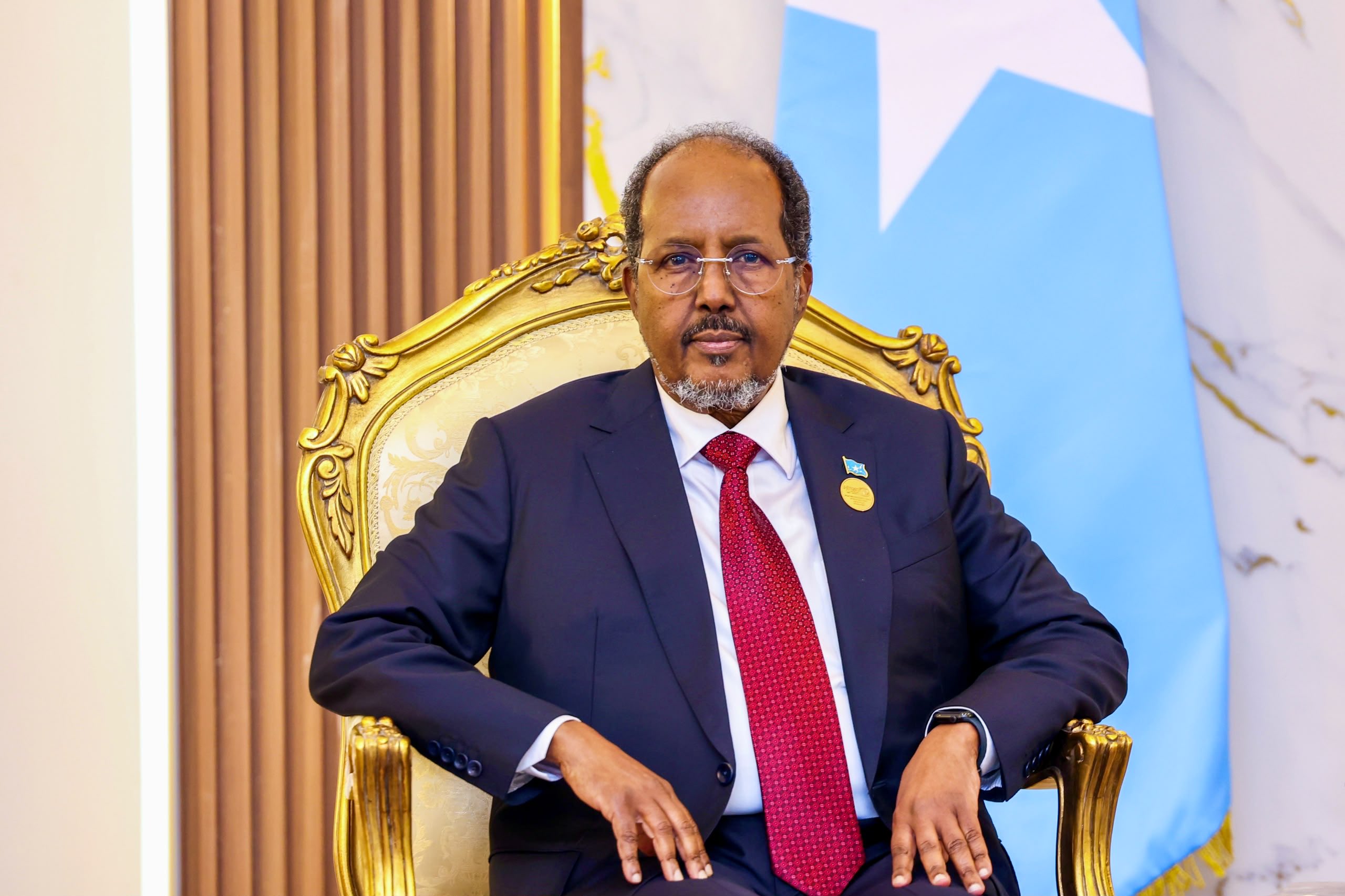
Somalia moves towards a new electoral phase
Somali President Hassan Sheikh Mohamud has outlined his administration's approach to the country's electoral future as preparations for the 2027 federal elections gather momentum amid continued political disagreement.
Addressing lawmakers affiliated with the Justice and Solidarity Party (JSP) in Mogadishu, Mohamud discussed electoral reforms, political participation and the responsibility of state institutions in guiding the country through its democratic transition.
The president maintained that Somalia should continue moving towards a multiparty political system in which citizens play a greater role in choosing their representatives.
His remarks came as the National Independent Electoral and Boundaries Commission released its timetable for next year's federal elections.
Consultation must lead to practical proposals
Mohamud called on opposition leaders to put forward clear and workable alternatives to the government's election plans.
He argued that political differences should be addressed through dialogue and institutional processes rather than prolonged uncertainty or escalating confrontation.
The president emphasised his administration's willingness to consider proposals from political stakeholders while defending the constitutional responsibilities of the federal government.
His message reflected a distinction between the importance of consultation and the obligation of state institutions to make decisions within their legal mandates.
The administration has presented continued dialogue as compatible with implementing the electoral programme.
Ruling party prepares for nationwide political competition
The president's meeting with JSP lawmakers also focused on the party's preparations for the 2027 elections.
Discussions covered parliamentary coordination, political organisation and the implementation of the government's proposed direct voting framework.
Mohamud reiterated his support for moving beyond the country's longstanding indirect electoral arrangements, which have relied heavily on clan-based political negotiations.
The president argued that direct parliamentary elections and organised multiparty competition would strengthen public participation and democratic accountability.
The JSP's preparations indicate that the governing political movement is seeking to consolidate its organisational readiness ahead of the announced election dates.
Government endorses election commission's timetable
Somalia's National Independent Electoral and Boundaries Commission has scheduled elections for both chambers of the Federal Parliament for April 15, 2027, followed by the presidential election on May 15.
Registration for political organisations and voters is expected to reopen on November 1, 2026.
The federal government welcomed the commission's announcement and described the timetable as an important step towards implementing the electoral process.
In a separate statement, the government said consultations and negotiations with political stakeholders had continued over the previous 18 months.
It pledged to maintain those discussions in pursuit of broader political understanding while continuing preparations for the scheduled elections.
Opposition questions the constitutional framework
Despite the administration's position, major opposition figures continue to challenge the legal and political foundation of the planned elections.
Former President Sharif Sheikh Ahmed has filed a constitutional petition with the Supreme Court seeking to overturn disputed amendments and decisions arising from them.
Opposition leaders argue that major changes to the electoral system should be based on agreement among the country's political stakeholders.
Their concerns centre on the constitutional framework, political mandates and whether the announced timetable can command broad acceptance.
Mohamud, meanwhile, has urged political leaders to avoid actions that could threaten public security or deepen divisions.
Electoral credibility remains a central challenge
The dispute highlights the difficulties facing Somalia as it attempts to replace indirect political selection with a more representative electoral process.
The government's willingness to continue consultations may provide opportunities for compromise, but significant disagreements remain over the constitutional and political basis of the planned vote.
The election commission must also oversee voter registration and preparations for polling in a country where security and administrative capacity remain major challenges.
The coming months will therefore test whether Somalia can combine its electoral reform ambitions with sufficient political agreement to deliver credible federal elections in 2027.