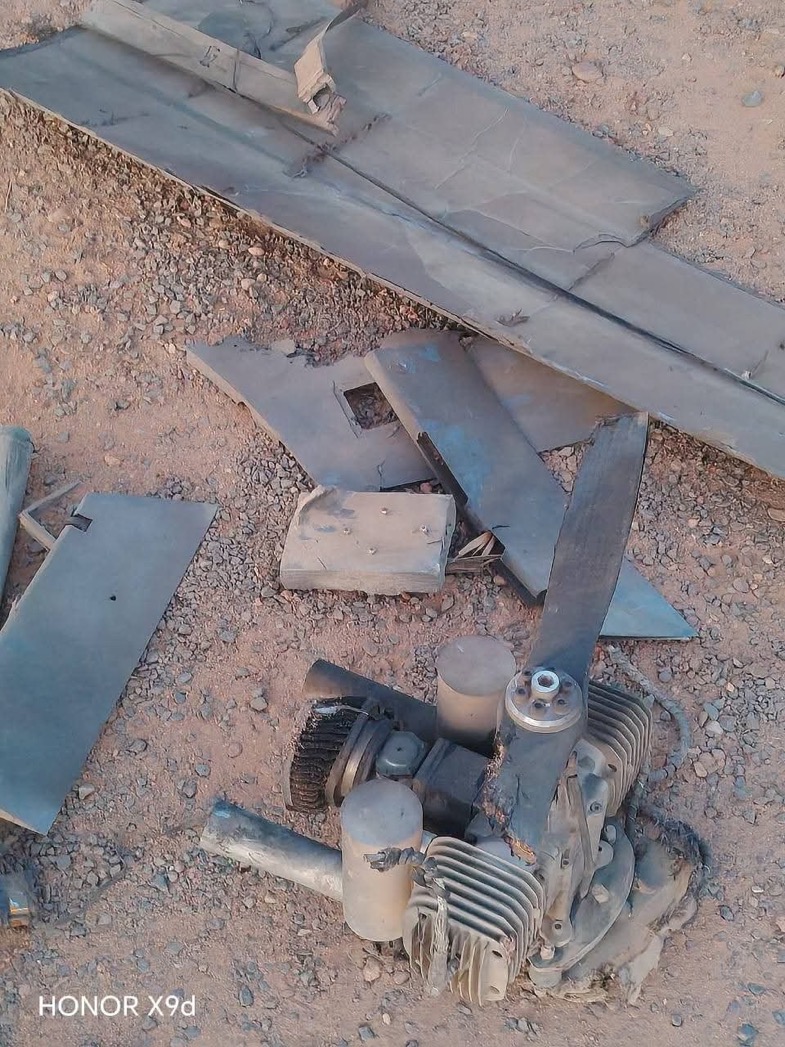
KHARTOUM — Sudanese Armed Forces (SAF) air defence units engaged incoming drones over the capital on Monday, October 19, 2026, as the military continued operations against the Rapid Support Forces in other parts of the country.
The incidents came amid intensified drone warfare across Sudan, with fighting reported in the capital, Darfur, Blue Nile and the eastern states.
Military sources reported the interception of RSF drones near Khartoum International Airport, while separate accounts described army airstrikes targeting RSF positions in Nyala, South Darfur.
In southeastern Sudan, the military announced that it had prevented an allied RSF and Sudan People’s Liberation Movement-North (SPLM-N) force from advancing toward army positions.
Sudanese Air Defences Intercept Drones Near Khartoum Airport
The first attack was reported on Monday morning in eastern Khartoum.
According to security sources, Sudanese anti-aircraft units intercepted two drones attributed to the RSF over the Burri and Nasser neighbourhoods.
The areas are located close to Khartoum International Airport and the Sudanese military’s General Command headquarters.
Residents reported hearing anti-aircraft fire and explosions as military units engaged aerial targets over the capital.
The airport, which resumed flight operations in February 2026 following a prolonged wartime closure, has previously been exposed to drone attacks during its rehabilitation.
The renewed incidents have raised concerns about the continued vulnerability of strategic facilities despite the army’s control of the capital.
Second Drone Wave Triggers Fresh Air Defence Response
A further drone attack was reported over Khartoum on Monday evening, marking the second wave of aerial activity during the same day.
Witnesses described hearing aircraft-like buzzing sounds, followed by heavy anti-aircraft fire and explosions.
The activity was particularly noticeable in eastern districts near the airport.
Videos circulated online appeared to show drones flying above the city as ground-based defences opened fire.
Although military sources reported successful interceptions earlier in the day, the total number of drones destroyed during the evening incident has not been independently verified.
Three Children Killed in Residential Drone Incident
Despite the military’s air defence response, a drone incident in the Imtidad Nasser neighbourhood caused civilian casualties.
Medical sources said three children, aged between two and six, were killed when a drone struck a residential property east of Khartoum International Airport.
Their mother suffered serious injuries and was admitted to intensive care.
The impact damaged the family home and nearby structures.
Sudanese rights monitors attributed the attack to the RSF and condemned the deaths of civilians.
The incident demonstrated the continuing danger posed by aerial attacks in densely populated areas, even where air defence systems are active.
Sudanese Military Conducts Air Operations in Nyala
Elsewhere, the Sudanese military carried out airstrikes against locations identified by military sources as RSF positions in Nyala, the capital of South Darfur.
The reported targets included positions in the city’s Al-Nahda district.
Residents described hearing powerful explosions in several locations during the early hours of October 19.
Military sources claimed that approximately 20 RSF personnel were killed, including Brigadier General Mohamed Shorba.
Neither the reported death toll nor the commander’s death has been conclusively established through independent verification.
Nyala remains one of the RSF’s principal military and administrative centres in western Sudan.
The army had also announced strikes against RSF command-and-control facilities in the city during the preceding days.
No verified official statement has established that the October 19 operations in Nyala were launched specifically in retaliation for the Khartoum drone attacks.
RSF-SPLM-N Assault Repelled in Blue Nile, Army Says
Sudanese military units also reported engaging an allied RSF and SPLM-N force in the southeastern Blue Nile region.
The fighting centred on the Al-Baraka area near Kurmuk, where the army said an attempted advance toward its positions had been stopped.
According to the military, its forces destroyed several vehicles and pieces of equipment, inflicted substantial losses and forced the attackers to withdraw.
The army said the operation demonstrated its readiness to defend positions against further attacks.
Independent confirmation of the reported casualties and equipment losses was not immediately available.
The RSF-SPLM-N alliance has been involved in intensifying clashes in Blue Nile, adding another significant front to Sudan’s ongoing conflict.
Army Reports Drone Interceptions at Eastern Dams
The developments in Khartoum followed another series of drone incidents in eastern Sudan on October 18.
Military sources reported that RSF drones attempted to strike the Upper Atbara and Setit dam complex in Gedaref state and the Khashm El-Girba dam in neighbouring Kassala.
Sudanese air defence units reportedly intercepted several incoming drones before they could reach their intended targets.
Other unmanned aircraft were reported near military and government facilities in Gedaref.
Initial accounts indicated that no major infrastructure damage or casualties resulted from those attacks.
The incidents highlighted the importance of protecting electricity, water and other strategic infrastructure during the widening conflict.
Burhan Chairs Security and Defence Council Meeting
Amid the continuing attacks, Sudan’s Security and Defence Council met in Khartoum on October 19 under the chairmanship of General Abdel Fattah al-Burhan, chairman of the Transitional Sovereignty Council and commander-in-chief of the Sudanese Armed Forces.
The council reviewed the country’s security situation and the growing threat posed by drone attacks.
Defence Minister Lieutenant General Daoud Hassan Kabroun said relevant state institutions had been directed to take the necessary measures against threats to national security.
He also said the council had reassured citizens that measures being implemented by the responsible authorities were intended to prevent further threats.
The discussions addressed economic pressures, civilian protection, the rule of law and the delivery of humanitarian assistance.
The council additionally praised military personnel and supporting forces serving on active fronts.
Civilian Protection Remains a Major Challenge
The latest fighting came amid increasing international concern about the humanitarian consequences of drone warfare.
Alongside the three children killed in Khartoum, reports from West Kordofan described significant civilian casualties from airstrikes in areas under RSF control.
Rights organisations and RSF-linked authorities accused the Sudanese military of responsibility for some of those incidents.
The full circumstances and casualty figures remain contested and require independent investigation.
All parties to the conflict remain bound by international humanitarian law, including obligations to distinguish military targets from civilians and civilian infrastructure.
Army Continues Operations Across Multiple Fronts
The events of October 19 demonstrated that the Sudanese Armed Forces were simultaneously responding to aerial threats in Khartoum and conducting military operations in Darfur and Blue Nile.
Air defence units engaged two waves of drones over the capital, military aircraft reportedly targeted RSF positions in Nyala, and army units said they had prevented an opposing force from advancing in Blue Nile.
The operations form part of a broader struggle for control of strategic territory and infrastructure across Sudan.
However, civilian casualties and the continued expansion of drone warfare underscore the difficulty of protecting communities as the conflict enters another period of military escalation