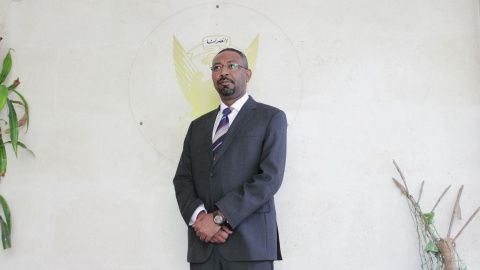
Sudan's response to the deaths of gold miners near its northern border has become the subject of an intense national debate, prompting a detailed intervention from Amgad Fareid Eltayeb, political and foreign affairs adviser to Sovereignty Council Chairman General Abdel Fattah al-Burhan.
Fareid argued that the deaths require an impartial investigation and firm measures to protect Sudanese citizens, while warning against turning the tragedy into a political confrontation with neighbouring Egypt.
Sovereignty Council launches fact-finding process
On October 12, Sudan's Sovereignty Council announced that General al-Burhan had ordered the creation of a committee to investigate the deadly incident.
The panel will include representatives of the Public Prosecution, judicial authorities and relevant security agencies.
Its mandate is to establish the circumstances of the deaths, identify relevant responsibilities and report its findings.
Fareid presented the inquiry as a necessary institutional response rather than an attempt to delay accountability.
Diplomatic engagement and sovereignty
According to the presidential adviser, senior Sudanese and Egyptian officials have remained in contact since the incident.
He said Cairo had provided its own official account, which differed in several respects from information circulating publicly.
Fareid stressed that diplomatic communication should not be interpreted as abandoning Sudan's sovereignty.
He also argued that alleged border violations must be handled through lawful procedures and that the unlawful use of lethal force against civilians cannot be justified.
Preserving ties amid growing tensions
The adviser linked the vulnerability of Sudanese miners to the country's wartime economic hardship and weakened border supervision.
He acknowledged the state's continuing duty to protect its citizens despite the pressure of the conflict.
Fareid also criticised political groups he accused of exploiting public anger to undermine relations with Egypt, which he described as an important supporter of Sudan.
His remarks reflected concern that the border incident could damage relations between neighbouring populations as well as their governments.
Casualty reports remain disputed
The Sudan Doctors Network initially reported 13 deaths and 28 injuries following the October 10 strikes.
Emergency Lawyers, a Sudanese rights organisation, put the death toll at 72 and accused Egyptian warplanes of carrying out the attack.
The exact number of victims and responsibility for the strikes have not been independently confirmed.
Fareid called for the findings of the investigation to be disclosed to the public and for measures to prevent further loss of life.
His central message was that justice for Sudanese victims and continued diplomatic engagement with Egypt should not be treated as mutually exclusive objectives.