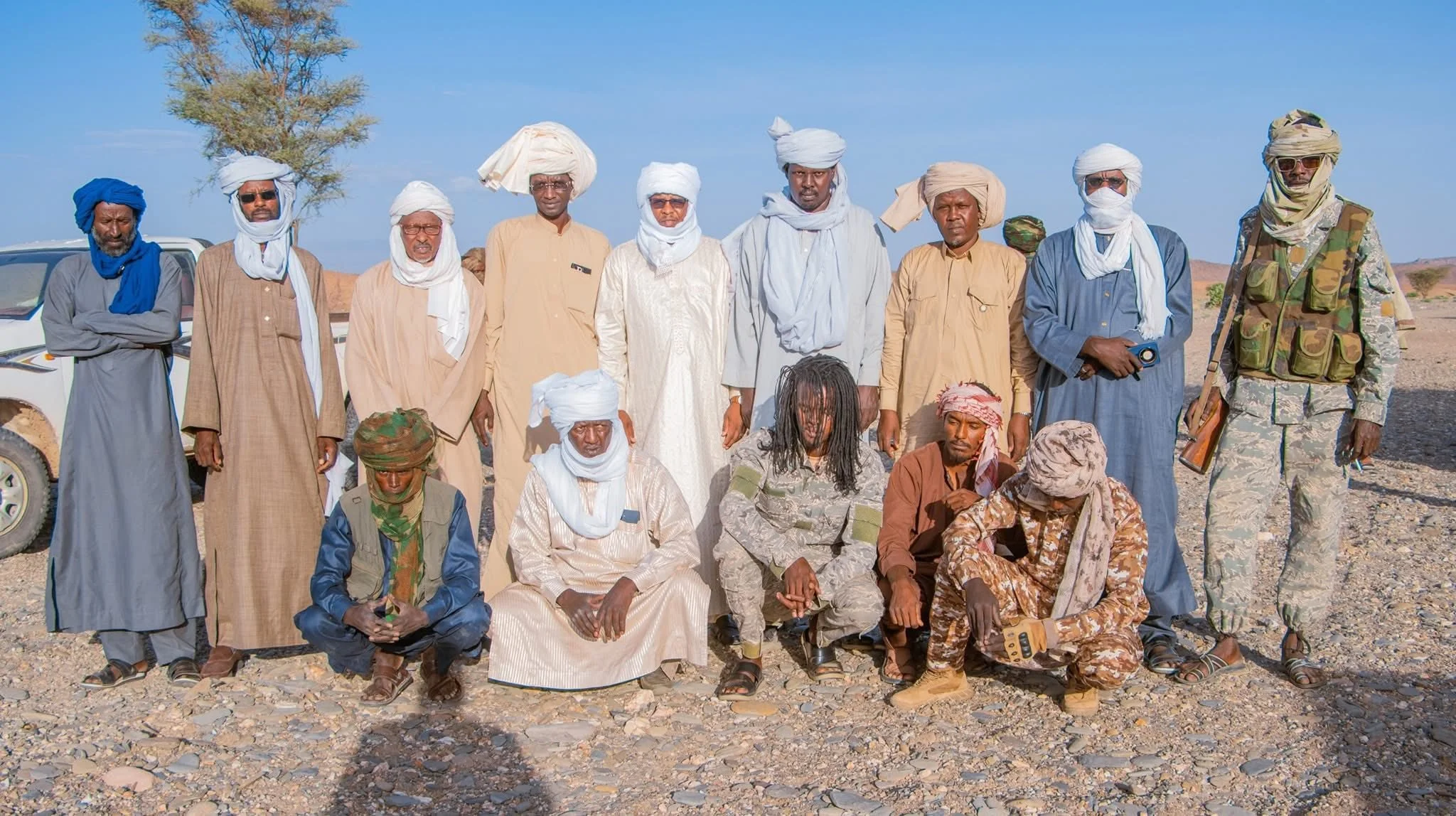
Deadly confrontation in northern Chad
Two Chadian military officers were killed and nine other soldiers wounded in clashes involving government forces and an armed local self-defence group in the northwestern Tibesti province.
The fighting occurred on October 14, 2026, in Miski, a remote gold-producing area where disputes over mining activities and local control have fuelled tensions for several years.
In a statement released the following day, Chad's General Staff accused the Miski Self-Defence Committee of attacking a position held by the military's Mining Brigade.
The unit had been deployed to provide security at gold-mining sites in the region.
Military issues disarmament warning
Chad's armed forces condemned the incident and ordered the local self-defence committee to surrender its weapons immediately.
The statement, signed by military communications chief Brigadier General Chanane Issakha Acheikh, accused the group of repeatedly issuing threats despite a peace agreement reached with the government in April 2025.
The military also cited a statement issued on October 13 by the committee's president, Alhadj Djimi Chaha.
The General Staff warned that failure to comply with its disarmament demand would be treated as an act of rebellion.
Local committee disputes responsibility
The Miski Self-Defence Committee expressed regret over the loss of life but rejected attempts to hold it solely responsible for the violence.
Its spokesperson, Ahamat Molikni, said the authorities should also address incidents involving local residents, including deaths that the committee attributes to military personnel.
The committee reiterated its preference for dialogue while demanding the removal of the Mining Brigade coordinator, whom it accuses of interfering in gold extraction activities.
Those allegations have not been independently verified, and the precise circumstances surrounding the outbreak of fighting remain disputed.
April 2025 peace deal under pressure
The latest fighting threatens a peace agreement signed on April 20, 2025, between the Chadian government and the Miski Self-Defence Committee.
The agreement was intended to end years of armed confrontation and included a ceasefire, an amnesty covering participants in fighting during 2019 and 2020, and provisions for integrating eligible former fighters into national security forces following training.
It also required the cancellation of existing mining permits and the suspension of mining activities in Miski and surrounding areas pending environmental, mapping and social studies.
While the government maintains that it has respected the agreement, the local committee argues that key provisions, particularly those concerning mining, have not been fully implemented.
Gold resources remain a source of conflict
Miski is located approximately 200 kilometres from Bardaï, the capital of Tibesti province, in a mountainous region near Chad's borders with Libya and Niger.
Its substantial gold deposits have attracted miners and competing interests for years.
Local groups have sought greater control over resource exploitation, while central authorities have attempted to strengthen security and regulate mining operations.
These rival interests have contributed to repeated confrontations since 2018, despite successive efforts to negotiate a lasting settlement.
Fears of renewed instability
The latest violence comes after recent attempts to ease tensions in the region.
On October 9, a government delegation secured the release of 14 people who had been held amid an earlier local dispute linked to the death of a young gold-sector entrepreneur in Tourkou.
However, the confrontation on October 14 has raised fresh concerns about the future of the peace process.
No independently verified civilian casualty figure has been established, and further military operations have not been formally announced.
The continuation of dialogue and the resolution of disputes surrounding gold extraction will be central to preventing another cycle of violence in northern Chad.