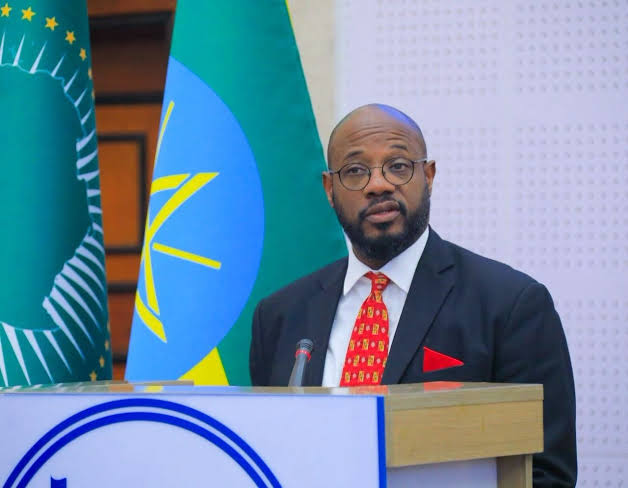
ADDIS ABABA — The United States has outlined its approach to several major geopolitical disputes affecting the Horn of Africa, emphasising diplomatic engagement, regional economic integration and negotiations between rival governments.
Speaking in an interview published on October 19, 2026, US Ambassador to Ethiopia Ervin J. Massinga addressed Washington's positions on Somaliland, Ethiopia's maritime ambitions, deteriorating relations with Eritrea and the continuing dispute over the Grand Ethiopian Renaissance Dam.
His remarks came amid heightened regional tensions following renewed fighting in northern Ethiopia and increasingly strained relations between Addis Ababa and Asmara.
No Change in US Policy Toward Somaliland
One of the most significant clarifications concerned Washington's position on Somaliland.
Asked whether recent remarks by President Donald Trump describing Somaliland as different from Somalia indicated a shift toward American recognition, Massinga said US policy had not changed.
The ambassador did not announce a new recognition initiative, diplomatic agreement or modification of Washington's existing position.
His remarks came as Somaliland's international status remained a sensitive issue across the Horn of Africa, particularly following Ethiopia's controversial 2024 memorandum of understanding with Somaliland concerning maritime access.
Massinga also warned that inaccurate and deliberately misleading information circulating on social media was complicating public understanding of regional political developments.
He urged greater scrutiny of information sources before conclusions were drawn about diplomatic decisions.
Washington Avoids Endorsing Confrontation Over Red Sea Access
Massinga also addressed Ethiopia's efforts to secure maritime access, an issue that has become increasingly contentious in its relations with neighboring countries.
Rather than endorsing a specific Ethiopian territorial or port arrangement, the ambassador pointed to the importance of economic integration and peaceful cooperation across the Horn of Africa.
He indicated that decisions involving sensitive regional security questions were being handled by senior officials in Washington.
The comments came as Ethiopia and Eritrea remained divided over access to the Red Sea, military movements and accusations involving armed groups in northern Ethiopia.
For Addis Ababa, improved maritime access represents an important economic objective. For Eritrea, questions surrounding ports and coastal territory remain closely connected to national sovereignty.
The ambassador did not announce American support for any territorial claim over Eritrean ports.
Ethiopia-Eritrea Tensions Remain a Diplomatic Priority
The interview also addressed accusations that regional actors, including Eritrea and Egypt, were involved in Ethiopia's renewed internal conflict.
Massinga declined to make a detailed public assessment of those allegations.
Instead, he emphasised that the US government was pursuing regional diplomatic engagement through senior officials in Washington.
He referred to Secretary of State Marco Rubio's recent telephone conversation with Ethiopian Prime Minister Abiy Ahmed as part of wider American efforts to prevent further instability.
Washington has called for de-escalation as military tensions between Ethiopia and Eritrea raise fears of another confrontation.
Massinga's remarks did not establish responsibility for alleged cross-border military involvement or verify the accusations exchanged by regional governments.
Trump Administration Offers Support for Nile Dam Negotiations
A separate part of the interview focused on the Grand Ethiopian Renaissance Dam and the longstanding disagreement involving Ethiopia, Egypt and Sudan.
Massinga reiterated that President Donald Trump had expressed interest in renewed mediation over Nile Basin water management.
The ambassador referred to diplomatic efforts by presidential adviser Massad Boulos, who had discussed the issue during regional engagements.
According to Massinga, Washington was encouraging Egyptian, Ethiopian and Sudanese experts to work toward technical solutions acceptable to all parties.
He said the United States remained prepared to provide technical assistance to support negotiations.
The remarks indicate continued American interest in facilitating an agreement, although no new binding settlement or formal negotiating framework was announced.
Armed Opposition Groups Urged to Enter Dialogue
Turning to Ethiopia's domestic security challenges, Massinga discussed the government's relations with armed opposition organisations.
He criticised the newly formed Alliance for Survival for promoting further confrontation and warned groups against threatening civilian airports.
The ambassador called on opposition leaders to consider negotiations rather than continued military operations.
He confirmed that he had held numerous discussions with TPLF leaders during his diplomatic assignment, including meetings in Addis Ababa, Mekelle and Shire.
However, he said he had not spoken with TPLF leaders since fighting resumed on September 23.
Massinga also recalled earlier American efforts to facilitate talks with the Oromo Liberation Army in Dar es Salaam.
Those negotiations were unsuccessful, but he maintained that the United States remained prepared to assist future Ethiopian-led dialogue initiatives.
US Says Peace Agreements Must Be Driven by Ethiopians
The ambassador emphasised that durable political settlements could not simply be imposed by outside governments.
He argued that Ethiopia's political actors needed to develop agreements they could jointly implement.
Washington, he said, could facilitate such efforts without necessarily leading every negotiation.
Massinga also reaffirmed American support for the key principles of the 2022 Pretoria Peace Agreement, including disarmament, democratic governance and the return of displaced populations.
The comments reflect a diplomatic approach combining pressure against renewed armed conflict with support for locally negotiated political solutions.
Humanitarian Assistance and Trade Become Central to US Engagement
Beyond security disputes, Massinga outlined changes in American development assistance.
He said US programmes were increasingly focused on essential humanitarian and health services, with stronger financial oversight following earlier aid-diversion problems in Ethiopia.
The ambassador argued that Ethiopian institutions should gradually assume greater responsibility for addressing domestic humanitarian needs.
He also pointed to future opportunities for American businesses, investment and technology partnerships as security conditions improve.
According to Massinga, sustainable economic cooperation will depend heavily on political stability and the restoration of normal economic activity in areas affected by conflict.
Horn of Africa Diplomacy Faces Multiple Challenges
The ambassador's comments illustrate the range of challenges currently facing American diplomacy in the region.
Ethiopia's maritime objectives, the deterioration of relations with Eritrea, unresolved disputes over Nile waters and renewed domestic armed conflict are increasingly interconnected.
Washington is attempting to maintain communication with regional governments while encouraging negotiated solutions and avoiding commitments that could further escalate territorial disputes.
Massinga's clearest messages were that US policy toward Somaliland had not changed, regional economic integration should not be pursued through violence and durable peace in Ethiopia requires dialogue among the country's political actors.
Whether these diplomatic positions translate into new agreements will depend on the willingness of governments and armed groups to pursue negotiations.