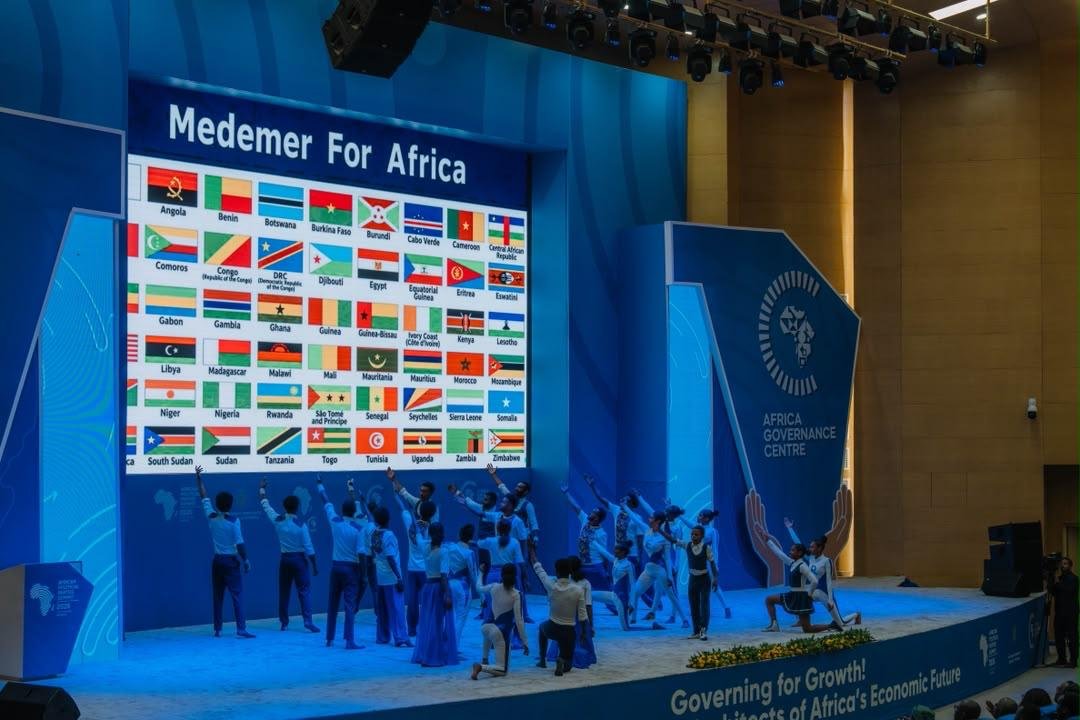
The Second African Political Parties Summit (APPS 2026) is underway in Addis Ababa, Ethiopia, bringing together senior political leaders, government representatives and policymakers to discuss Africa's economic and political future.
The three-day gathering, held from November 5 to 7 at the Adwa Victory Memorial Museum, is organized by Ethiopia's ruling Prosperity Party in collaboration with the Africa Governance Centre.
Under the theme "Governing for Growth: Political Parties as Architects of Africa's Economic Future," the summit seeks to strengthen cooperation among political parties and advance sustainable economic development across the continent.
Participants include leaders of governing and opposition parties, current and former senior government officials, parliamentarians, academics, representatives of international institutions, business leaders and civil society organizations.
The main summit sessions began on November 6 following preparatory meetings focused on women's political leadership and youth participation.
Prime Minister Abiy Ahmed Calls for Long-Term Political Consensus
Ethiopian Prime Minister Abiy Ahmed, who also serves as President of the Prosperity Party, addressed the summit's main session on November 6.
He urged African political organizations to move beyond short-term electoral competition and develop national policies capable of delivering lasting economic and social improvements.
Abiy proposed two commitments for inclusion in the planned Addis Ababa Declaration.
His first proposal called for governing and opposition parties to agree on a limited number of long-term national development priorities.
He emphasized that these priorities should be supported by measurable targets, allowing citizens to evaluate progress and hold political leaders accountable.
Under the proposal, opposition parties would continue scrutinizing government policies while supporting agreed national development objectives.
The Prime Minister argued that fundamental development programmes should not automatically be abandoned whenever governments change.
Leadership Renewal Must Become a Political Priority
Abiy's second proposal focused on the importance of preparing future political leaders.
He warned that countries risk losing development momentum when experienced leaders fail to build capable successors.
Political organizations, he said, should provide younger members with meaningful responsibilities and promote individuals who demonstrate integrity, competence and sound judgment.
The Prime Minister announced that Ethiopia would make training programmes offered by the African Leadership Excellence Academy available to political parties across the continent.
The initiative is intended to strengthen leadership development and institutional capacity among African political organizations.
Abiy also encouraged participating parties to report at their next gathering at least one concrete change implemented as a result of the summit's discussions.
AU Commission Chairperson Mahmoud Ali Youssouf Addresses Summit
African Union Commission Chairperson Mahmoud Ali Youssouf joined Prime Minister Abiy Ahmed and other African political leaders at the summit on November 6.
In his address, Youssouf emphasized that the quality of political leadership directly influences the continent's future.
He called on political parties to prioritize citizens' interests, strengthen democratic institutions and support effective economic governance.
According to the AU Commission Chairperson, political organizations have responsibilities extending beyond winning elections.
These include developing economic and social policies, connecting citizens with public institutions and promoting a broader understanding of national development priorities.
Youssouf also highlighted the importance of opposition parties in scrutinizing government decisions and ensuring accountability.
African Union Calls for Constitutional Governance
The AU Commission Chairperson stressed the importance of respecting constitutional frameworks, fundamental freedoms and credible electoral processes.
He said political competition should remain peaceful and that dialogue must take precedence when disagreements arise.
Youssouf also called for increased transparency in political party financing and stronger safeguards against corruption and inappropriate external influence.
Referring to the African Charter on Democracy, Elections and Governance, he underscored the rights and responsibilities of both governing and opposition political parties.
He warned that political instability, unconstitutional changes of government and internal conflicts continue to challenge several African countries.
The African Union, he reaffirmed, remains committed to promoting democratic governance, peace and inclusive development under Agenda 2063.
Economic Transformation and Regional Integration Dominate Discussions
The summit's economic agenda covers industrialization, employment creation, public financial management and private-sector development.
Political leaders and policy specialists are examining how national economic programmes can support productivity, investment and sustainable growth.
Discussions also include strengthening domestic revenue collection, improving public debt management and expanding public-private partnerships.
The African Continental Free Trade Area (AfCFTA) is another major focus.
Participants are considering ways to align national industrial strategies with regional trade integration and improve cooperation between African economies.
Climate resilience and green industrial development also feature in the programme.
The summit seeks to encourage political parties to develop economic policies that remain effective beyond individual election cycles and changes in political leadership.
Women and Youth Leadership Take Center Stage
The opening programme on November 5 included the African Women Political Leadership Forum and the African Youth in Politics Forum.
These meetings provided opportunities to examine barriers preventing women and young people from participating fully in political decision-making.
Ethiopia's Minister of Women and Social Affairs, Shawit Shanka, called for women's equal participation in political leadership and economic development.
She emphasized the importance of recognizing women as entrepreneurs, producers, investors, innovators and national leaders.
Minister of Youth and Sport Aklilu Tadesse also addressed the gathering, stressing the need to give young Africans a greater role in shaping public policy.
He said young people should participate directly in government leadership and decision-making rather than being involved only during elections.
The African Union Commission Chairperson similarly urged political parties to create meaningful opportunities for women and young people to influence policy and assume leadership responsibilities.
Ethiopia Presents Its Medemer Political and Economic Experience
As the host nation, Ethiopia used the summit to present aspects of its political and economic development approach.
Prime Minister Abiy Ahmed explained the country's Medemer philosophy, which emphasizes bringing different social and political capacities together around shared national objectives.
He described the establishment of the Prosperity Party through the merger of organizations with different regional backgrounds.
The Prime Minister also highlighted the inclusion of opposition figures in government as part of Ethiopia's approach to political participation.
Turning to economic reforms, Abiy outlined measures introduced under Ethiopia's Homegrown Economic Reform Agenda.
These included opening telecommunications and banking to foreign participation, reforms to the foreign exchange system and initiatives intended to strengthen economic competitiveness.
He also referred to Ethiopia's Green Legacy Initiative, saying more than 50 billion seedlings had been planted since its launch in 2019.
Delegates participating in the summit visited the Prosperity Party headquarters and the MESOB Service Center, where they received presentations on Ethiopia's digital government services and institutional development.
Addis Ababa Declaration Expected to Set Future Priorities
The summit is expected to conclude on November 7 with the proposed adoption of the Addis Ababa Declaration.
The document is intended to establish shared commitments covering political leadership, economic development, institutional accountability and long-term national planning.
Participants are also discussing the creation of a permanent continental platform for dialogue among African political parties.
Such a mechanism would allow parties to exchange experience and coordinate discussions on economic policy, industrial development and regional integration.
The inaugural African Political Parties Summit was held in Accra, Ghana, in 2025.
The Addis Ababa gathering aims to build on the previous summit by encouraging participating organizations to move from broad political commitments toward measurable actions.
As of November 6, the final declaration had not yet been formally adopted.
The discussions in Addis Ababa place political cooperation, constitutional governance, leadership development and economic transformation at the center of the summit's continental agenda.