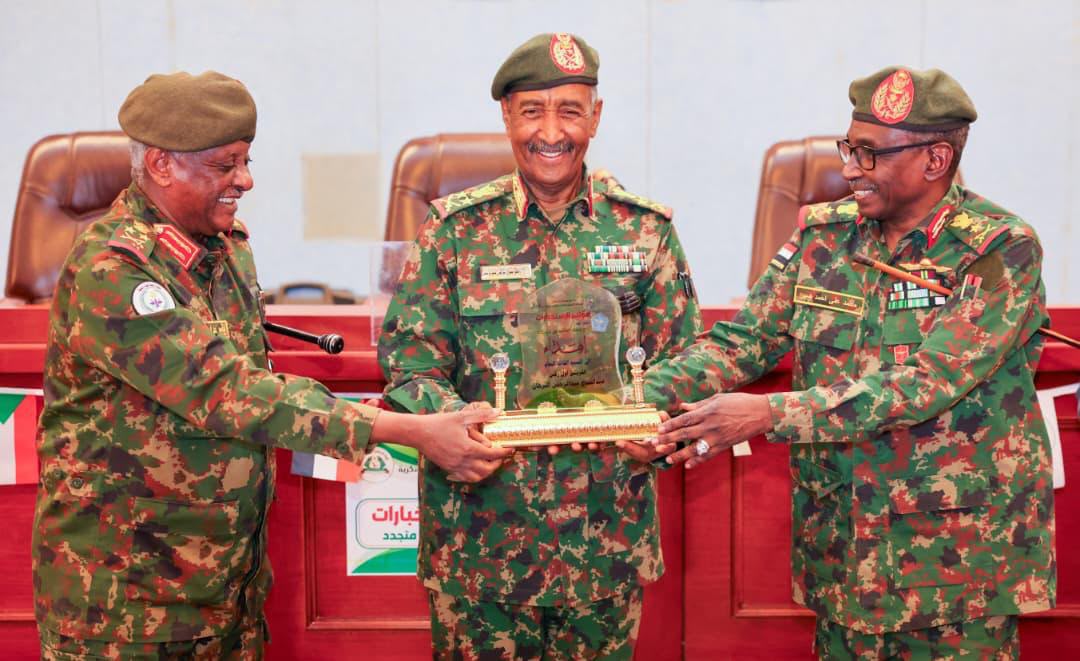
Burhan addresses military intelligence conference in Khartoum
General Abdel Fattah al-Burhan, Chairman of Sudan's Transitional Sovereignty Council and Commander-in-Chief of the Sudanese Armed Forces, addressed a conference organized by the Military Intelligence Directorate in Khartoum on Tuesday, November 24.
The Sudanese military leader began his remarks by honoring those killed during what the army and Sudanese authorities describe as the Battle of Dignity.
Burhan praised the sacrifices made by members of the Sudanese Armed Forces and supporting units deployed across the country's different operational fronts.
He said Sudan was engaged in a conflict involving multiple parties and dimensions, with the preservation of national sovereignty and territorial integrity at the center of the struggle.
The commander-in-chief also highlighted the responsibilities undertaken by intelligence and security organizations in supporting the armed forces.
Sudan fighting to preserve sovereignty and national unity
Burhan said the country was confronting several interconnected challenges that threatened its sovereignty, unity and national cohesion.
He described the ongoing military campaign as part of an effort to preserve Sudan's territorial integrity and maintain the cohesion of the Sudanese nation.
The chairman of the Sovereignty Council emphasized that the armed forces and supporting institutions had a central responsibility in defending the state.
He also praised personnel serving across different military fronts, highlighting their sacrifices during the continuing conflict.
The remarks came as the war between the Sudanese Armed Forces and the Rapid Support Forces (RSF), which began in April 2023, continued to affect large parts of the country.
Military intelligence praised for operational support
A major focus of Burhan's address was the role of the Military Intelligence Directorate in providing information and assessments to the armed forces.
He emphasized that intelligence activities were essential to effective military decision-making.
According to Burhan, the collection of information, its analysis and the evaluation of developments allow commanders to take appropriate decisions at the right time.
He commended military intelligence personnel for their efforts in supporting the army through intelligence reporting and operational assessments.
The commander-in-chief underscored the importance of accurate and timely information in military planning and the evaluation of ongoing operations.
He described the intelligence organization as an important part of the wider military system supporting the Sudanese Armed Forces.
The published remarks did not disclose details of specific intelligence operations or announce new military plans.
Security services and police recognized
Burhan also praised the General Intelligence Service and Sudan's police forces for their contributions during the war.
He acknowledged the sacrifices made by members of the General Intelligence Service and the support provided to the armed forces.
The Sudanese leader said security and intelligence agencies had performed significant national duties in supporting both the military and psychological dimensions of the conflict.
He highlighted the importance of cooperation among the armed forces, intelligence organizations, police and other supporting formations.
The commander-in-chief described their efforts as an important element of Sudan's broader security response.
Burhan stressed that coordination among these institutions contributed to maintaining the cohesion of the armed forces.
Intelligence agencies support military and psychological efforts
During his address, Burhan said Sudan's security and intelligence institutions had played important roles throughout the military confrontation.
He emphasized that the conflict involved more than direct engagements on the battlefield.
The chairman of the Sovereignty Council pointed to the military and psychological dimensions of the fighting and recognized the role of security organizations in both areas.
He praised intelligence personnel for their contribution to the army's ability to assess developments and respond to changing conditions.
His remarks highlighted the continued importance placed by Sudan's military leadership on coordination between intelligence assessments and operational decisions.
Public support contributes to military successes
Burhan attributed part of the armed forces' successes against the RSF to the Sudanese population's support for the military.
He said the public's solidarity with the armed forces had contributed to victories achieved during the conflict.
The commander-in-chief praised the relationship between the Sudanese people and the national military establishment.
He described the cohesion of the armed forces as closely connected to the unity and solidarity of Sudanese society.
Burhan also recognized the sacrifices of supporting formations operating alongside regular military personnel.
His remarks emphasized the importance of maintaining cooperation among the armed forces, other security institutions and the communities supporting them.
Burhan thanks countries supporting Sudan
The Sudanese leader also expressed appreciation to countries that had supported Sudan during the conflict.
Burhan thanked brotherly and friendly nations for standing alongside the country during a difficult period.
He acknowledged their support and solidarity without naming individual countries in the published portion of his remarks.
The speech did not announce any new defense agreements, foreign military deployments or joint operations.
His comments focused on recognition of the support Sudan had received and the importance of continued national resilience.
Tribute to former military leaders
Burhan used the conference to recognize earlier generations of Sudanese military commanders.
He praised senior officers who had helped establish the values and traditions passed down through the armed forces.
Particular recognition was given to former heads of the Military Intelligence Directorate.
According to Burhan, these commanders contributed to the professional and institutional traditions of Sudan's armed forces.
He said their work helped instill principles and values among officers and enlisted personnel.
The chairman of the Sovereignty Council described the military security establishment as an important factor in maintaining the unity and cohesion of the army.
Intelligence assessments central to timely decisions
In his concluding remarks, Burhan reiterated his appreciation for the Military Intelligence Directorate and its personnel.
He emphasized the importance of intelligence reports, analysis and assessments in helping military leaders make appropriate decisions without delay.
The commander-in-chief said the information supplied by the intelligence establishment was essential to evaluating developments and supporting the armed forces.
The November 24 conference placed renewed emphasis on the contribution of military intelligence and other security institutions during Sudan's ongoing conflict.
Burhan's address focused on the sacrifices of military personnel, the role of intelligence in supporting operations, the participation of police and security agencies, the solidarity of the Sudanese population and the preservation of national unity.