Chad's President Mahamat Idriss Déby Itno has ordered sweeping personnel changes and new security measures during a visit to Torboul in Ennedi Ouest, where a dispute between pastoral communities has raised concerns about the possibility of armed confrontation.
The decisions were announced on Saturday, November 7, shortly after the President arrived in the locality as part of a wider security tour of several provinces.
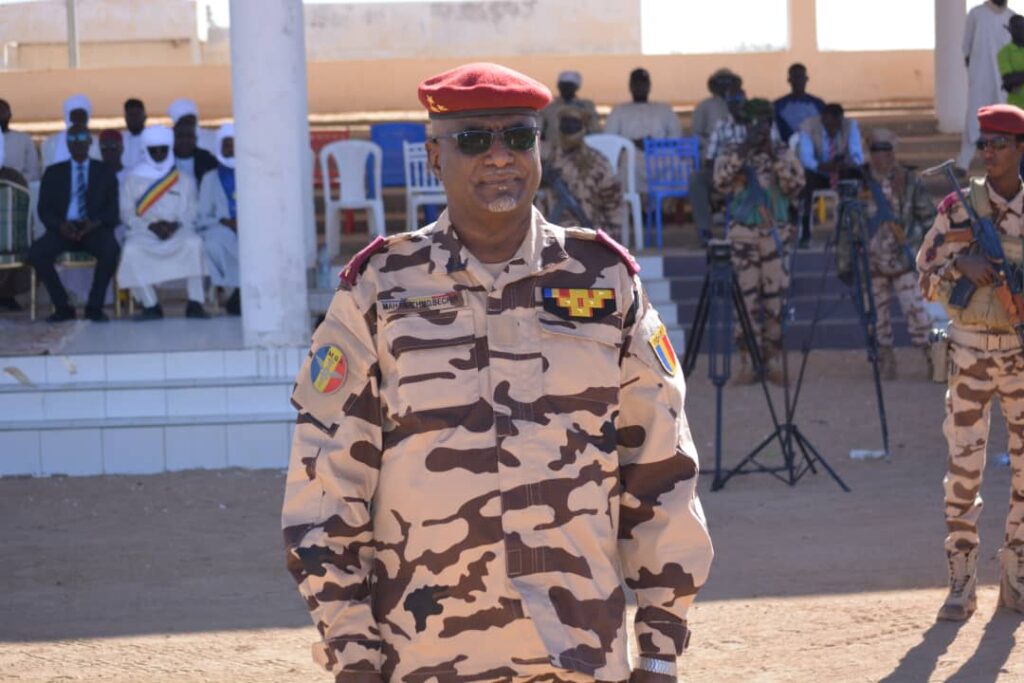
The most significant measure concerned General Hamoda Mahamat Béchir, commander of Defence Zone No. 8 and military coordinator for Ennedi Est.
The general was suspended from his command after the President concluded that earlier instructions to disarm the parties involved in the dispute had not been properly implemented.
Chadian state television and the national news agency also reported that his military rank had been reduced during the meeting.
His deputy was designated to temporarily assume responsibility for the defence zone.
The episode has since attracted attention because of competing accounts of the general's actions and questions about the legal procedures required for military demotion.
Emergency Meeting Held Shortly After Presidential Arrival
President Déby began his security tour in Torboul, located approximately 120 kilometres from Fada and 170 kilometres from Amdjarass.
Within minutes of his arrival, the President convened a meeting involving the commanders of Defence Zones No. 1 and No. 8.
Four government ministers, senior military officials and presidential advisers attended.
The meeting was organized to examine a dispute involving access to grazing areas and water resources between communities in Ennedi Ouest and Ennedi Est.
Authorities warned that the situation could escalate into armed confrontations if preventive measures were not taken.
The government's delegate general for Ennedi Ouest, Goukouni Allatchi Tchoubougou, presented an account of the origins and potential consequences of the dispute.
General Hamoda Mahamat Béchir was subsequently asked to explain the military response and the implementation of instructions previously issued to security personnel.
General Hamoda Removed From Command
The Chadian presidency said the President identified shortcomings in the execution of instructions intended to disarm both parties involved in the dispute.
He also criticized weaknesses in the administrative response to the tensions.
Following those assessments, Déby ordered General Hamoda Mahamat Béchir's suspension as commander of Defence Zone No. 8.
The presidency announced that the commander's deputy would take over on an interim basis.
The suspension represents a significant change in the military leadership responsible for security operations in Ennedi Est.
The President's intervention also reinforced the government's expectation that military personnel follow the chain of command and avoid involvement in community-based disputes.
State Media Reports Military Demotion
The suspension was accompanied by reports that the general had been demoted.
Chadian state television and the national news agency described the action as an immediate reduction in military rank.
However, the public presidency account circulated by the national audiovisual media office focused on his suspension and did not explain the legal process for the reported demotion.
These different descriptions have left questions about the exact nature and legal status of the disciplinary action.
Removal from command does not necessarily carry the same legal consequences as a formal reduction or revocation of military rank.
No detailed decree specifying the general's new rank, the applicable disciplinary procedure or his subsequent military status has been publicly identified.
The general's precise legal position therefore remains unclear beyond his confirmed removal from command.
Claims of Detention Remain Unverified
Following the announcement, social media accounts circulated allegations that General Hamoda had been taken into custody.
Some posts described him as a former figure linked to the Union of Resistance Forces (UFR), a Chadian rebel movement.
Those accounts alleged that he had been blindfolded, handcuffed and transported from the Amdjarass area by helicopter to N'Djamena.
One version claimed that he had been transferred to facilities associated with the National Security Agency, known as ANSE.
Another report referred to his placement under military intelligence supervision.
However, no official detention record, publicly available arrest warrant or confirmed statement from the relevant authorities has established these accounts.
The precise location of the general, the legal basis for any detention and the existence of formal criminal allegations have not been independently verified.
The claims should therefore be distinguished from the confirmed presidential decision to remove him from command.
Alternative Accounts Challenge Official Explanation
The government's position has also been challenged by accounts circulating among commentators and social media users.
According to one version, General Hamoda had sought to resolve the pastoral dispute through dialogue rather than military force.
It alleged that he met representatives of the opposing communities, listened to complaints concerning unfair access to resources and concluded that one group was not armed.
The same account claimed that he submitted a field report detailing his observations and decided against using force.
Those allegations contrast with the government's criticism that disarmament orders had not been properly implemented.
The purported field report has not been publicly released, and the general has not issued an independently verified explanation of the events.
The accounts of which groups possessed weapons and how the disarmament instructions were interpreted remain disputed.
Military Disciplinary Procedures Come Under Scrutiny
The reported demotion has prompted questions about whether the decision followed the procedures required under Chad's military personnel legislation.
Commentators have referred to Ordinance No. 002/PT/2023 of January 13, 2023, governing the general status of military personnel.
Some have argued that measures affecting military rank require formal disciplinary proceedings and opportunities for the individual concerned to present a defence.
Chad's National Assembly adopted amendments to the military personnel framework on June 23, 2026.
The parliamentary changes concerned Articles 10, 13 and 37, addressing aspects of military career management, disciplinary obligations and the legal protection of personnel during operations.
Social media commentary on the Torboul incident has also referred to Articles 85 and 86 of the original ordinance.
However, the current official wording and its precise application to this case have not been independently established.
It would therefore be premature to conclude that a specific provision was definitively violated.
The distinction between an immediate suspension from command and a legally effective loss of military rank remains central to the controversy.
Three Administrative Officials Also Dismissed
The President's decisions extended beyond the armed forces.
The prefect of Torboul and two other local administrative officials were removed from office.
Official accounts identified the prefect of Mourtcha and the sub-prefect of Am-Djirémé among those dismissed.
Some government and local news reports named Djara rather than Mourtcha as the second prefecture affected.
Despite that discrepancy, the dismissal of three local administrators has been consistently reported.
The presidency said the decisions followed failures in the administrative management of a dispute that threatened public order.
The government has not yet provided detailed individual explanations for each dismissal or announced all replacement appointments.
Security Chief Ordered to Disarm Civilians
President Déby instructed General Tahir Erda Tahiro, director-general of the State Institutional Security Services (DGSSIE), to oversee the disarmament of civilians in the affected area.
The order was presented as an immediate security measure intended to prevent the pastoral dispute from developing into armed violence.
The President stressed that members of the security forces must serve the state rather than act according to community loyalties.
His remarks emphasized the principle that public authority should remain impartial when dealing with disputes between groups.
The decision raises practical questions about how disarmament will be conducted and whether the measures will be applied consistently to all parties.
No detailed operational timetable or verified total of weapons collected has been released.
Water and Grazing Rights at the Center of the Crisis
The underlying dispute concerns access to water and pastoral land in northeastern Chad.
Livestock breeding is a major source of income for communities across the Ennedi region.
Access to grazing areas and reliable water supplies is therefore essential to local economic and social stability.
Disagreements over the control and use of these resources can create tensions between communities, particularly when armed individuals are involved.
The presidency described the Torboul situation as a developing dispute that could lead to armed confrontation.
Some alternative accounts alleged that certain communities faced restrictions on water access while others benefited from protection by armed individuals.
Those specific allegations have not been independently established.
The precise circumstances of the conflict and the role played by individual armed groups require further verification.
President Orders Water Infrastructure Within Three Months
Alongside the disciplinary decisions, President Déby announced measures intended to address the underlying dispute over natural resources.
During a separate meeting with traditional leaders, he instructed the Ministry of Water and Energy to construct new water infrastructure for livestock within three months.
The plan is intended to improve access to water and reduce competition over existing facilities.
The Minister of Public Security and Immigration was also instructed to arrange the deployment of nomadic guards to help ensure fair access to water sources and grazing areas.
The government additionally announced plans to prohibit a traditional water-storage practice known locally as Guirbé after the new facilities have been completed.
The proposed ban would be introduced through a ministerial order.
These measures represent an attempt to address the practical causes of the dispute alongside the immediate security response.
Their effectiveness will depend on implementation, local acceptance and the consistent application of access rules.
Torboul Decisions Raise Broader Governance Questions
The removal of a senior general and several administrators during a presidential visit has attracted wider attention to military discipline and local governance in Chad.
The government's official explanation presents the decisions as necessary steps to restore authority, ensure compliance with orders and prevent community violence.
Critics, however, have questioned whether public disciplinary announcements against military personnel provide sufficient procedural safeguards.
The debate also concerns the relationship between security operations and local conflict resolution.
While the government has prioritized disarmament, alternative accounts argue that the circumstances of the dispute should be examined more closely before responsibility is assigned.
The absence of the general's full field report and formal documentation of the reported demotion limits independent assessment of those competing positions.
General's Legal Status Remains Unclear
As of November 8, the suspension of General Hamoda Mahamat Béchir from Defence Zone No. 8 has been confirmed.
Chadian state media have also reported his demotion, while his deputy is expected to exercise command responsibilities on an interim basis.
The allegations concerning his arrest, transfer by helicopter and possible detention in N'Djamena have not been independently confirmed.
Further clarification is also required concerning the disciplinary process and the legal effect of the reported reduction in rank.
Meanwhile, the government's instructions to disarm civilians and develop new water infrastructure are expected to shape the next stage of the security response in Ennedi.
The Torboul episode has therefore developed into a controversy involving military command, local resource conflicts, the exercise of presidential authority and the procedures governing disciplinary action within Chad's armed forces.