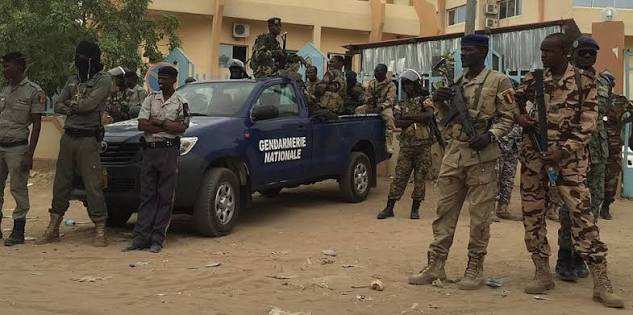
At least 25 people have been killed in clashes between two communities in western Chad, according to figures released by the country's government.
The violence erupted on Friday, October 30, 2026, in the Ngoura area of Hadjer-Lamis province, near its boundary with Barh el Gazel.
The Ministry of Territorial Administration and Decentralisation confirmed late on October 31 that 22 people had also been injured.
Thirty-nine individuals suspected of involvement in the fighting were taken into custody and transferred to N'Djamena for judicial proceedings.
Authorities said investigations would continue to establish responsibility and prevent further violence.
Dispute at Watering Point Escalates into Gunfire
According to accounts collected by AFP from local officials, the confrontation began near a pond used to water livestock in the Koula area.
A local parliamentarian said a herder belonging to the Kreda community had arrived at the water source with his animals.
An argument reportedly developed with a member of the Kouka community over access to the water.
The lawmaker said a firearm was used during the confrontation, triggering wider armed fighting between members of the two communities.
The situation rapidly escalated, resulting in multiple casualties.
Twenty-two injured people were transported to Ngoura hospital for treatment, according to the local account.
Initial reports had given a lower death toll, but the government subsequently confirmed 25 fatalities.
The precise sequence of events and the identities of all those involved remain subject to investigation.
Government Sends Senior Officials to Ngoura
The Chadian government dispatched a senior delegation to the affected area on Saturday, October 31.
The mission was led by Minister of Public Security and Immigration General Ali Ahmat Aghabach.
He was accompanied by Dr Ahmat Oumar Ahmat, the minister delegate responsible for decentralisation, alongside other officials.
The delegation travelled to Ngoura to assess the security situation and support efforts to restore calm.
The government said it intended to protect residents, prevent renewed clashes and encourage dialogue between the communities.
A local official interviewed by AFP said the situation appeared to have been brought under control following intervention by security forces.
Nevertheless, the authorities have not declared the underlying dispute permanently resolved.
Thirty-Nine Suspects Transferred to N'Djamena
The Ministry of Territorial Administration and Decentralisation confirmed that 39 people had been detained in connection with the clashes.
The suspects were transferred to the capital for further judicial proceedings.
Officials said the objective was to establish individual responsibility and allow legal processes to take their course.
The government also expressed support for reconciliation initiatives involving representatives of the affected communities.
Such efforts are intended to prevent further violence and address disagreements over access to shared natural resources.
No final court judgments concerning the detained suspects have been announced.
Nor have the authorities provided a complete public account of the individuals directly responsible for the killings.
Resource Competition Continues to Fuel Local Tensions
Disagreements over water, grazing land and agricultural resources are recurring sources of tension in parts of Chad.
In rural areas, different communities often depend on the same wells, ponds and livestock routes.
Competition can become particularly difficult when access to water is limited and existing arrangements for sharing resources are disputed.
The use of firearms can transform local disagreements into deadly confrontations.
Chad is also among the African countries considered highly vulnerable to climate-related environmental pressures.
However, the latest violence cannot be attributed to climate conditions alone.
Local land-use arrangements, resource management, policing and the availability of effective dispute-resolution mechanisms are also important factors.
Similar Incidents Have Caused Heavy Casualties
The October violence follows previous deadly clashes involving disputes over water access.
In November 2025, at least 33 people were killed during fighting between communities from the Hadjer-Lamis and Barh el Gazel areas over a disputed well.
Government ministers subsequently travelled to the region to support reconciliation.
Another major confrontation occurred in April 2026 in eastern Chad's Wadi Fira province.
A dispute involving a water well reportedly escalated into violence that killed 42 people and injured 10 others.
These incidents demonstrate the recurring risks associated with unresolved disputes over essential resources.
They have also raised questions about whether earlier reconciliation arrangements have been sufficiently effective in preventing renewed hostilities.
Authorities Seek Investigation and Reconciliation
Following the latest fighting, the government has emphasized a combination of security measures, judicial proceedings and community dialogue.
Officials have called for the restoration of calm and the protection of residents in the affected areas.
Local representatives are expected to play a role in addressing disputes and preventing retaliation.
The authorities have not yet published a final report explaining the full circumstances of the confrontation or the legal outcomes for the detained suspects.
For communities in Ngoura and surrounding areas, the immediate priorities include maintaining security, assisting those affected and preventing further violence.
The latest incident underscores the continuing challenge of managing access to water and land resources through peaceful and enforceable local agreements.