Sudan's capital, Khartoum, was shaken by a series of kamikaze drone attacks in the early hours of Sunday, November 22, 2026, triggering intense anti-aircraft fire and explosions across several districts of the metropolitan area.
Sudanese air defense units engaged multiple drones approaching the capital, with military activity reported in Khartoum, Omdurman, Bahri and East Nile.
According to Sudanese local media, the attacks began at approximately 2:15 a.m. and continued into the early morning hours as air defense systems attempted to intercept the incoming aircraft.
Witnesses reported explosions and heavy anti-aircraft fire particularly in eastern Khartoum, where Khartoum International Airport is located.
The assault caused casualties and property damage in residential neighborhoods, underscoring the growing threat posed by long-range and one-way attack drones in Sudan's ongoing conflict.
Child killed as drones strike residential neighborhoods
One of the most serious incidents occurred in the Al-Assal neighborhood of Jebel Aulia, south of Khartoum, where a kamikaze drone struck a residential property.
Local reports identified the victim as a 10-year-old child who died when the drone hit the family home.
Another drone fell in Block 68 of the Arkweit neighborhood in eastern Khartoum without exploding. Sudanese military personnel subsequently secured the area.
Residents also reported anti-aircraft fire and explosions across the Burri, Al-Riyadh and Arkweit neighborhoods.
Sudanese media reported that the National Pension and Social Insurance Fund building was among the locations affected during the attack.
Other accounts described explosions near military installations and electricity outages across parts of the capital, leaving residential districts without power during the overnight assault.
Air defenses activated around Khartoum Airport
Khartoum International Airport emerged as a focal point of the defensive response, with anti-aircraft systems operating over the eastern section of the capital.
The airport has previously faced drone attacks during the conflict, making its protection a significant priority for Sudanese security forces.
The Wadi Sayyidna military airbase in Omdurman also remains a strategically important installation supporting military aviation and air defense operations.
Early accounts of the November 22 attack included references to the base, while the detailed reports published during the morning concentrated on the airport area, eastern Khartoum and residential neighborhoods affected by falling drones.
Sudan's evidence linking drone operations to Ethiopia
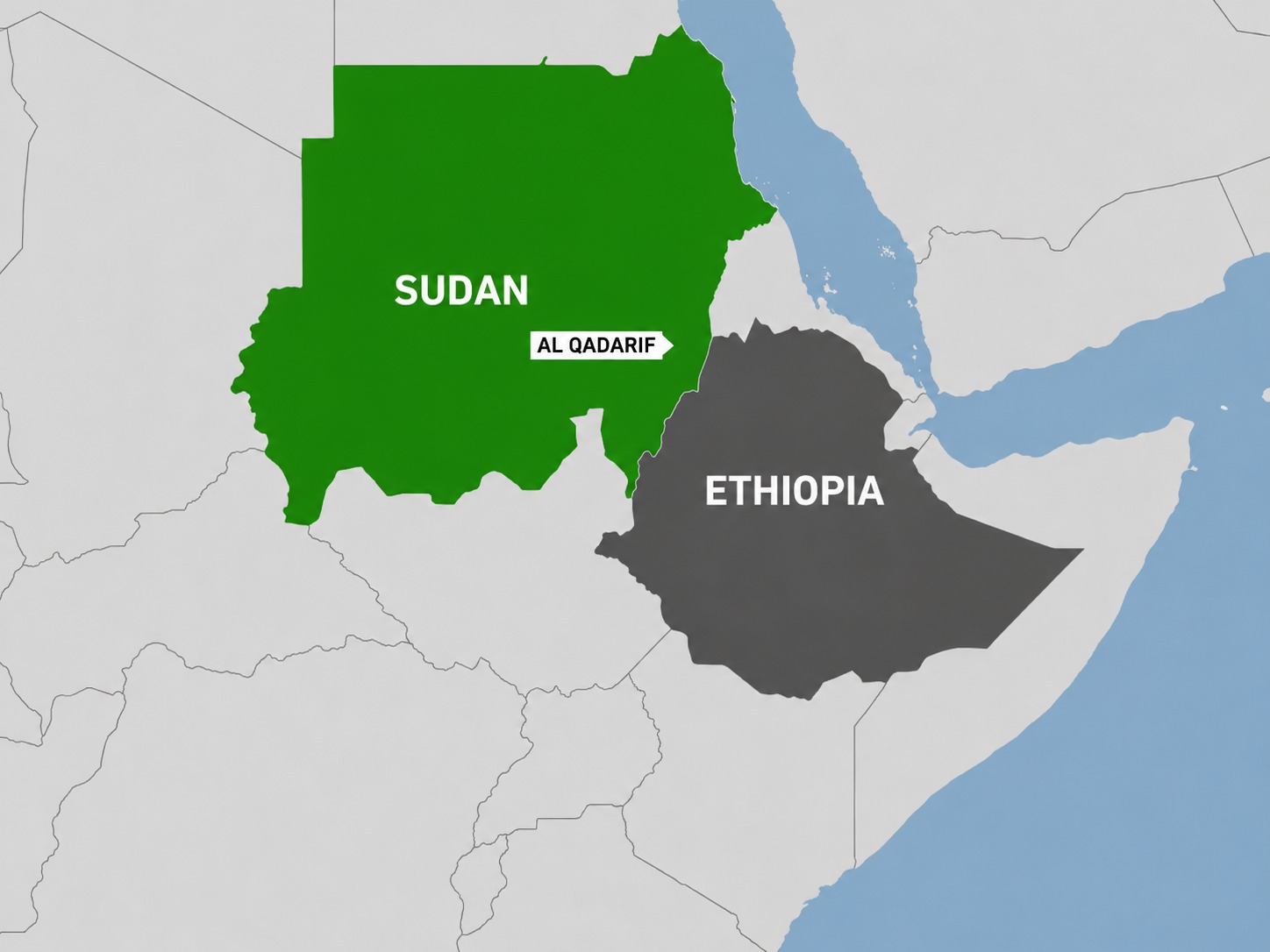
The latest attack comes amid escalating tensions between Khartoum and Addis Ababa over the use of Ethiopian territory for drone operations against Sudan.
On October 28, Sudanese authorities presented technical findings during a press conference in Khartoum, identifying locations inside Ethiopia that they said had been used to launch armed drones targeting Sudanese cities and civilian infrastructure.
The presentation involved representatives of Sudan's defense, foreign affairs, intelligence and information institutions.
Sudanese officials displayed recovered drone components, flight-control data, geographical coordinates and satellite imagery to support their findings.
The government's report identified three primary areas associated with cross-border drone operations: Asosa Airport in western Ethiopia, the Kurmuk-Gizen border sector and Bahir Dar Air Base in the Amhara region.
A subsequent report released in early November documented 70 drone attacks between February 15 and October 27, 2026.
According to Sudanese government figures, these operations involved 187 one-way attack drones and 82 munitions released by armed unmanned aircraft.
The report recorded 484 civilian deaths and injuries during the documented period, reflecting the broader impact of the earlier operations rather than the casualty toll from the November 22 attack.
Diplomatic dispute reaches the United Nations
Sudan's government has taken the drone issue to international institutions, submitting complaints to the United Nations Security Council and the African Union Peace and Security Council in early November.
Khartoum stated that the paramilitary Rapid Support Forces had used locations inside Ethiopia to conduct drone attacks against Sudanese infrastructure, including electricity facilities and other civilian sites.
Sudanese authorities called for an end to such operations and urged international action to prevent further attacks originating from across the border.
Ethiopia has rejected accusations that it supports the RSF, while relations between the two neighboring countries have deteriorated amid wider disagreements over security and armed groups operating along their shared frontier.
Drone warfare deepens Sudan's humanitarian crisis
The November 22 attack highlights the increasing role of unmanned aircraft in Sudan's civil war, which began in April 2023 following the outbreak of fighting between the Sudanese Armed Forces and the Rapid Support Forces.
Throughout 2026, drone operations have increasingly affected electricity stations, airports, residential neighborhoods and other essential infrastructure.
According to figures released by the United Nations on November 17, more than 1,630 civilians were killed in drone attacks across Sudan between the beginning of 2026 and the end of October.
The latest violence in Khartoum adds to concerns over civilian protection and the vulnerability of strategic infrastructure, while keeping the growing military and diplomatic confrontation between Sudan and Ethiopia in focus.