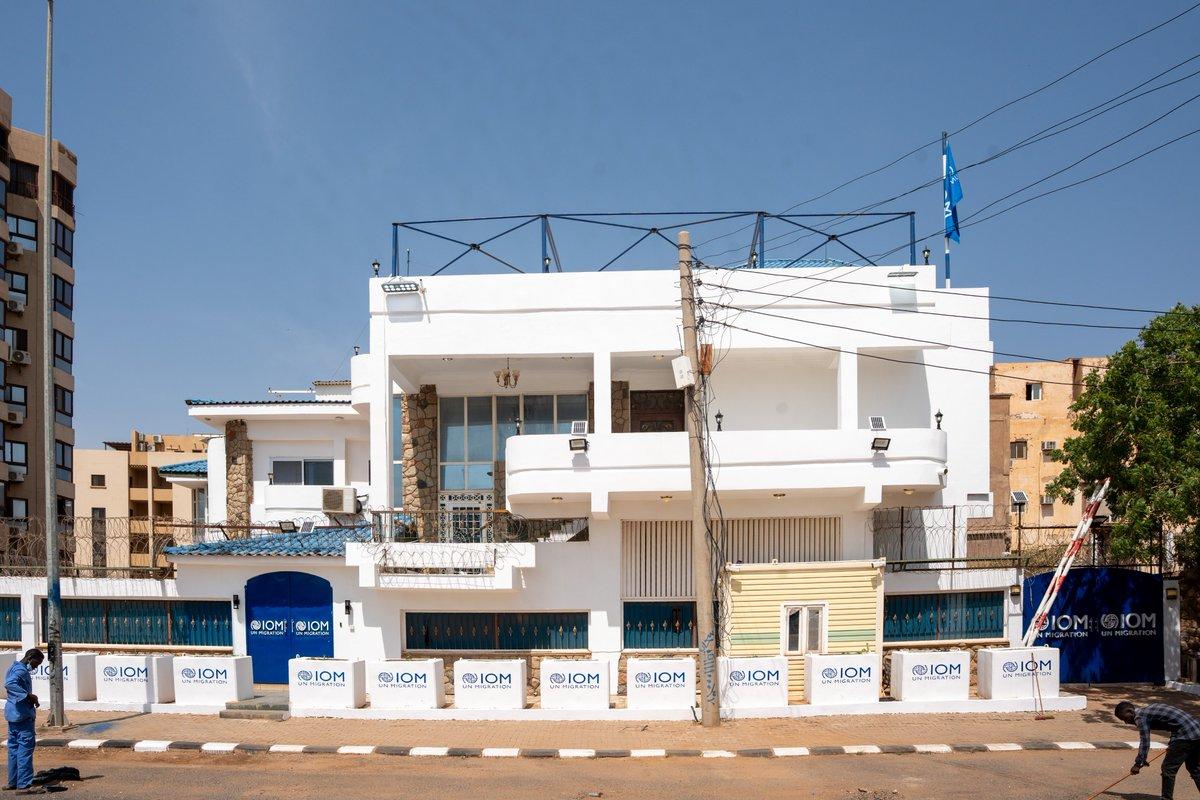
Sudan's capital, Khartoum, came under a widespread kamikaze drone assault in the early hours of Sunday, November 22, 2026, as the paramilitary Rapid Support Forces (RSF) launched attacks across several parts of the metropolitan area.
Sudanese air defense units engaged incoming drones, while a United Nations facility in a residential neighborhood sustained damage during the attacks.
Denise Brown, the United Nations Resident and Humanitarian Coordinator in Sudan, confirmed that UN personnel were inside the affected building when the strike occurred.
Brown condemned the attacks and emphasized that civilians and humanitarian workers must be protected from the effects of armed conflict.
The United Nations did not immediately disclose the precise location of the damaged premises, the agency responsible for the building or the extent of the structural damage. No information was provided regarding possible injuries among UN personnel.
Sudanese military source says drones were launched from Ethiopia
A Sudanese military source told Al Arabiya and Al Hadath that the drones involved in the November 22 attack had been launched from Ethiopian territory.
According to the source, the aircraft were attempting to strike Khartoum International Airport, one of the capital's most strategically important facilities.
Sudanese news outlet Ultra Sudan separately reported that the RSF carried out the overnight assault using one-way attack drones, prompting a sustained response from the army's air defense systems.
The latest developments have renewed attention to Sudan's previous complaints concerning the use of Ethiopian territory for military drone operations.
However, the United Nations statement concerning the damaged facility did not independently identify the origin of the specific drone that struck its premises.
Explosions reported across Khartoum and Omdurman
According to military sources and eyewitnesses, the attacks began at approximately 2:15 a.m., with explosions and anti-aircraft fire continuing into the early morning hours.
Military activity was reported across Khartoum, Omdurman, Bahri and East Nile.
The eastern districts of the capital experienced particularly intense air defense activity near Khartoum International Airport.
Residents reported explosions and anti-aircraft fire in the Burri, Al-Riyadh and Arkweit neighborhoods.
In Block 68 of Arkweit, a drone crashed onto a street without exploding. Sudanese military personnel subsequently secured the surrounding area.
Local reports indicated that the army intercepted most of the incoming drones before they reached their intended targets.
Drone strikes kill civilians in residential neighborhoods
The attacks caused civilian casualties in several locations.
Medical sources speaking to Al Jazeera reported that three civilians were killed when an RSF drone struck a house in the Karari district of Omdurman.
Separately, the Sudanese Observatory for Human Rights reported that a child was killed after a drone hit a residential property in the Al-Assal area of Jebel Aulia, south of Khartoum.
The organization attributed the attacks on the capital to the Rapid Support Forces and called for stronger international measures to protect civilians.
Witnesses described residents attempting to rescue relatives trapped beneath the rubble of damaged homes.
The strikes demonstrated the increasing danger posed by explosive-laden drones operating over densely populated urban areas.
Footage emerges following overnight strikes
Video clips recorded in Khartoum circulated on social media following the overnight attacks.
Sudanese news reports described footage showing a drone that had fallen in the Arkweit neighborhood after the capital's air defense systems engaged incoming aircraft.
The reported footage added a visual dimension to accounts of the destruction and military activity witnessed across the capital.
However, the videos showing the fallen drone in Arkweit should be distinguished from the incident involving the United Nations premises. They do not establish that the UN building itself appears in the footage.
Sudan previously submitted complaints against Ethiopia
The latest assault follows formal diplomatic complaints submitted by Sudan against Ethiopia earlier in November.
On November 1, Sudan's Foreign Ministry announced that it had approached the United Nations Security Council and the African Union Peace and Security Council over drone operations originating from Ethiopian territory.
Sudanese authorities said the RSF had used facilities inside Ethiopia to launch explosive-laden drones and armed unmanned aircraft against civilian infrastructure.
The complaints followed a government presentation on October 28, during which Sudanese defense, intelligence and foreign affairs officials displayed technical material concerning the flight paths and launch locations of drones used in attacks across the country.
Khartoum described the use of Ethiopian territory for such operations as a threat to Sudanese sovereignty and regional security.
Ethiopia has rejected accusations that it supports the Rapid Support Forces and has maintained that it respects Sudan's sovereignty.
Latest assault follows Sudanese airstrikes on Nyala
The November 22 attack followed intensified Sudanese military operations against RSF positions in Nyala, the capital of South Darfur.
According to military sources cited by Ultra Sudan, Sudanese aircraft carried out strikes against an RSF military intelligence facility in the city during the preceding days.
The operations reportedly caused casualties among RSF personnel.
The renewed attacks on Khartoum underline the expanding geographical reach of drone warfare as both sides continue military operations across Sudan.
United Nations calls for protection of humanitarian personnel
Following the damage to UN premises, Denise Brown reiterated that humanitarian personnel in Sudan are working to provide assistance to civilians affected by the conflict.
She emphasized that humanitarian workers and facilities used for relief operations enjoy protection under international humanitarian law.
Brown warned that drone attacks across Sudan were causing civilian deaths and deepening human suffering, further complicating the delivery of essential assistance.
Figures released by the United Nations Human Rights Office on November 17 showed that more than 2,230 civilian deaths had been documented across Sudan between January and the end of October 2026.
More than 1,630 of those deaths were attributed to drone attacks.
The damage to a United Nations facility in Khartoum, with staff present inside, highlights the growing risks confronting humanitarian organizations as Sudan's civil war continues to endanger civilians and essential infrastructure.