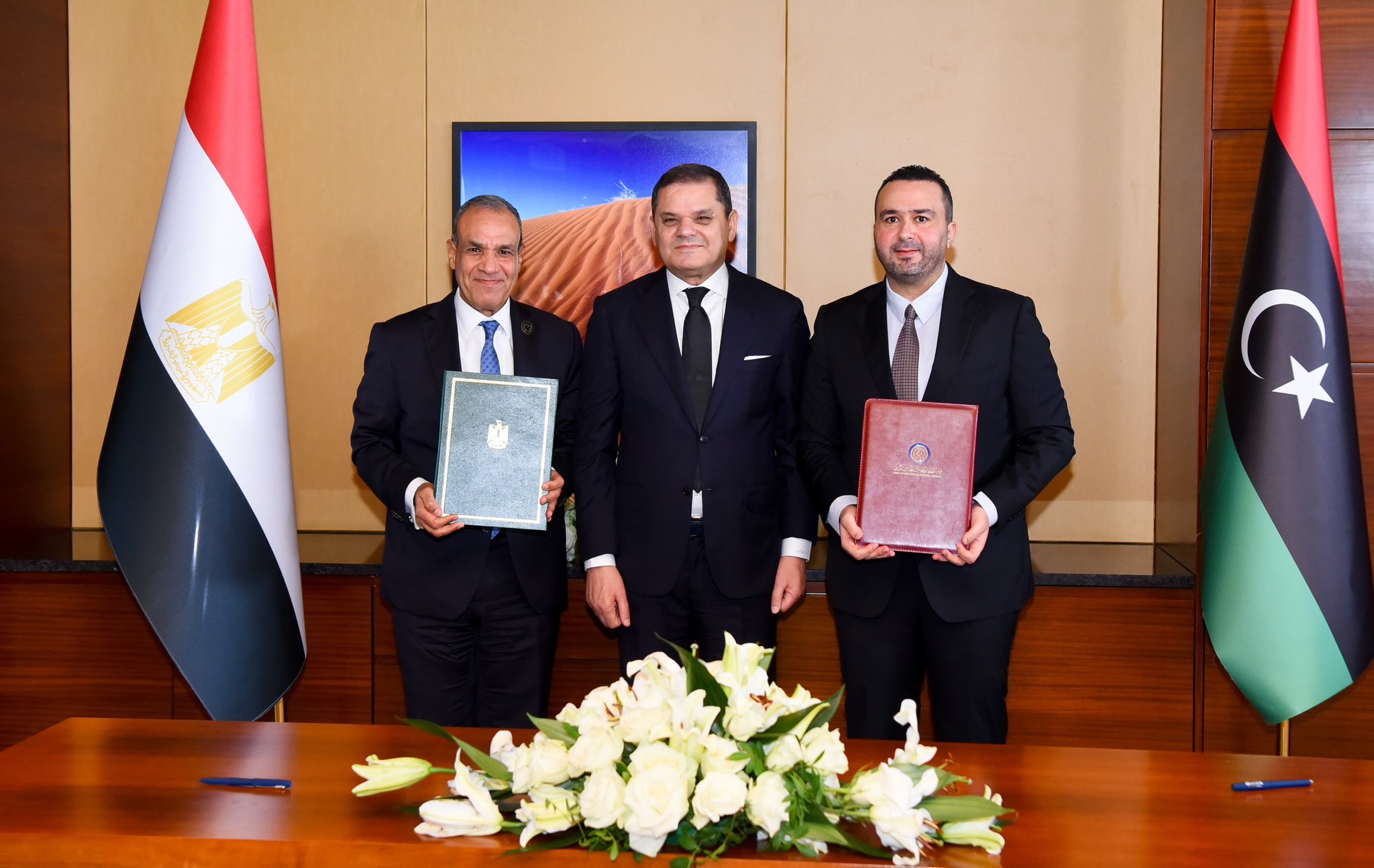
Egypt and Libya have taken a new step toward strengthening cooperation in the healthcare sector through a memorandum of understanding signed in Tripoli on Saturday, November 7.
The agreement was concluded between Egypt's Ministry of Health and Population and Libya's Ministry of Health under the Government of National Unity.
Egyptian Minister of Foreign Affairs, International Cooperation and Egyptian Expatriates Badr Abdelatty signed the document on behalf of Egypt, while Libyan Health Minister Mohamed Al-Ghouj represented Libya.
Libyan Prime Minister Abdulhamid Dbeibah attended and oversaw the signing ceremony.
The agreement aims to strengthen institutional partnerships, facilitate the exchange of medical expertise and improve healthcare services through cooperation between the two countries.
It was signed during Abdelatty's visit to Tripoli for the 22nd Ordinary Session of the Executive Council of the Community of Sahel-Saharan States (CEN-SAD).
Prime Minister Dbeibah Oversees Signing Ceremony
The signing followed discussions between Prime Minister Abdulhamid Dbeibah and Egyptian Foreign Minister Badr Abdelatty on strengthening bilateral relations.
The officials reviewed opportunities to expand cooperation in economic, commercial and institutional sectors, with healthcare emerging as an area for practical cooperation.
During the ceremony, Abdelatty and Al-Ghouj signed the memorandum in the presence of the Libyan prime minister.
The agreement establishes a framework for closer cooperation between the countries' healthcare institutions and aims to make better use of their medical expertise and available resources.
It also reflects Libya's efforts to develop partnerships in sectors considered important for public services and human development.
Pharmaceutical Manufacturing and Medicine Safety
Pharmaceutical cooperation represents one of the central components of the new agreement.
Egypt and Libya intend to strengthen exchanges in pharmaceutical manufacturing, clinical pharmacy and the monitoring of medicine safety.
Cooperation in pharmaceutical manufacturing could provide opportunities for institutions to share technical expertise and production-related knowledge.
Clinical pharmacy collaboration is intended to support professional practices involving the safe and effective use of medicines in healthcare facilities.
The memorandum also includes pharmacovigilance, which involves identifying, assessing and monitoring possible adverse effects associated with medicines.
These areas are important for improving patient safety, supporting appropriate treatment and strengthening the quality of pharmaceutical services.
However, the memorandum does not announce the establishment of a new pharmaceutical factory or specify a joint manufacturing investment.
Cooperation Against Infectious and Chronic Diseases
The agreement covers research into healthcare systems and the implementation of primary healthcare programmes.
It also provides for cooperation in combating communicable and non-communicable diseases.
Infectious disease prevention requires effective monitoring, timely diagnosis and coordination among healthcare providers.
Non-communicable diseases, including diabetes and cardiovascular conditions, present different challenges involving early diagnosis, long-term treatment and continued medical care.
The two countries intend to exchange experience in these areas and examine approaches that can improve health services.
Cooperation on healthcare research is also expected to support the sharing of professional knowledge and institutional practices.
Epidemiological Surveillance and Disease Monitoring
Another significant area covered by the memorandum is the exchange of information on epidemiological surveillance.
Epidemiological monitoring helps health authorities identify disease patterns, assess public health risks and detect potential outbreaks.
The agreement provides a framework for Egypt and Libya to exchange knowledge related to surveillance systems and disease monitoring procedures.
Such cooperation could strengthen institutional readiness and improve communication between public health bodies.
These activities are particularly relevant for the early identification of infectious diseases and the coordination of preventive measures.
The agreement does not specify a new cross-border surveillance platform or an operational launch date.
Laboratories and Blood Banks Included
The memorandum also includes cooperation involving medical laboratories and blood banks.
Medical laboratories play an essential role in diagnosing illnesses, monitoring treatment and supporting clinical decision-making.
Blood bank services are equally important for emergency medicine, surgical procedures and the treatment of patients requiring blood products.
The new cooperation framework allows the two countries to exchange expertise in these areas and explore improvements in institutional practices.
Areas of potential collaboration include professional training, quality management and the sharing of technical experience.
No specific laboratory construction project, blood bank facility or equipment purchase was announced as part of the signing.
Antimicrobial Resistance and Infection Prevention
Egypt and Libya also agreed to cooperate in research and programmes addressing antimicrobial resistance.
Antimicrobial resistance occurs when microorganisms develop resistance to medicines used to treat infections, making some diseases more difficult to manage.
The issue represents a growing challenge for healthcare systems because it can reduce the effectiveness of treatment and increase the risks associated with infectious diseases.
The memorandum includes cooperation on research and prevention strategies related to antimicrobial resistance.
It also covers infection prevention and control, particularly practices intended to reduce the transmission of infections in healthcare settings.
The exchange of professional experience may support improved hospital procedures, safer patient care and stronger infection-control practices.
These activities are expected to form part of the broader technical cooperation between the countries' health institutions.
Medical and Pharmaceutical Training
Professional training is another important element of the agreement.
The two countries plan to exchange expertise and develop cooperation in medical and pharmaceutical education.
The initiative is intended to support the professional development of healthcare workers and strengthen institutional knowledge.
Training-related cooperation may involve doctors, pharmacists, laboratory specialists and other healthcare professionals.
Egypt's experience in medical education and healthcare administration is among the resources that could support closer institutional partnerships.
Libyan healthcare institutions may also contribute their own professional experience through exchanges with Egyptian counterparts.
The memorandum does not yet establish a publicly announced training calendar, participant quota or list of institutions responsible for implementing specific programmes.
Health Insurance and Primary Care Development
The cooperation framework extends to health insurance and primary healthcare services.
Health insurance is an important component of healthcare financing and administration, particularly where governments seek to improve the sustainability and accessibility of medical services.
The memorandum allows both countries to exchange experience concerning insurance-related policies and institutional arrangements.
Primary healthcare cooperation is also intended to support the delivery of essential services, including preventive care, early diagnosis and routine medical treatment.
These areas are closely connected to the efficiency of national healthcare systems and the ability of citizens to access appropriate medical services.
The agreement does not introduce a common Egypt–Libya insurance system or provide for automatically free treatment across the two countries.
Healthcare Partnership Forms Part of Broader Relations
The health memorandum was signed during a wider diplomatic meeting between Abdelatty and Dbeibah.
The two officials also discussed strengthening cooperation in trade, investment, infrastructure and reconstruction.
Egyptian companies and workers remain involved in economic and reconstruction activities in Libya.
During the discussions, the Egyptian side emphasized the importance of reducing obstacles to trade and supporting further economic cooperation.
The two governments also reviewed preparations for the next meeting of their Joint Higher Committee, a mechanism intended to advance bilateral relations across multiple sectors.
The healthcare agreement therefore forms part of a broader effort to develop practical institutional partnerships between the neighboring countries.
Agreement Signed During CEN-SAD Meeting
The signing coincided with the 22nd Executive Council meeting of CEN-SAD, which opened in Tripoli on November 7.
The meeting brought together foreign ministers and senior officials from African countries to discuss institutional development, political coordination, economic cooperation and regional security.
Egyptian Foreign Minister Badr Abdelatty traveled to Libya to attend the session and conduct bilateral consultations with Libyan officials.
The health memorandum was one of the concrete outcomes of the diplomatic contacts conducted during his visit.
The agreement demonstrates how regional meetings can provide opportunities to advance cooperation in specific sectors alongside broader political discussions.
Implementation Details Remain to Be Announced
The memorandum establishes a wide-ranging framework covering several important aspects of healthcare.
Egypt and Libya intend to strengthen medical cooperation through professional exchanges, training, research and institutional partnerships.
Pharmaceutical manufacturing, epidemiological surveillance, laboratory services, blood banks, antimicrobial resistance and health insurance are among the areas identified for collaboration.
However, neither government has publicly announced a comprehensive implementation timetable, a dedicated funding package or the first projects to be launched under the agreement.
Further administrative and technical coordination will be necessary to translate the memorandum into specific programmes.
The November 7 signing provides Egypt and Libya with a new institutional basis for cooperation aimed at improving healthcare services and strengthening the capabilities of their medical institutions.