Cairo and Khartoum issue wide-ranging joint declaration
Egypt and Sudan reaffirmed their strategic alignment on national security, regional stability and economic reconstruction following high-level meetings in Cairo on November 24, 2026.
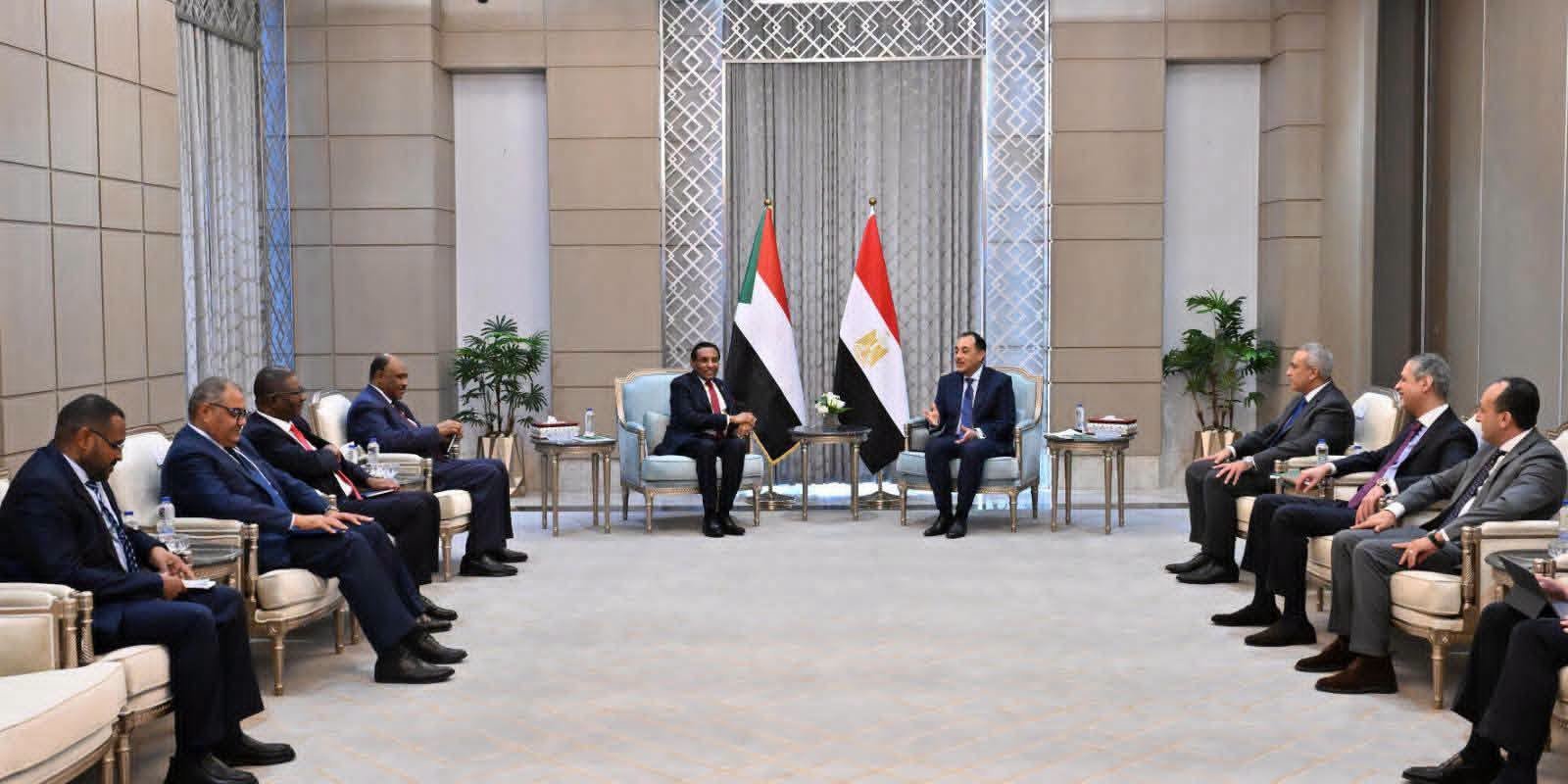
Sudanese Transitional Prime Minister Kamil al-Tayeb Idris met Egyptian President Abdel Fattah el-Sisi and delivered a message from Sudan's Sovereignty Council Chairman, General Abdel Fattah al-Burhan.
Idris subsequently held extensive consultations with Egyptian Prime Minister Mostafa Madbouly.
The discussions addressed Sudan's ongoing conflict, threats to state institutions, infrastructure reconstruction and regional security challenges involving the Nile Basin and the Red Sea.
The joint declaration outlined shared priorities and emphasized the importance of strengthening coordination between the two governments.
Egypt invokes mutual defense arrangements
One of the most significant elements of the declaration concerned Egypt's commitment to Sudan's sovereignty and territorial integrity.
Cairo reiterated that Sudan's national security is directly linked to Egypt's own security interests.
The Egyptian government firmly rejected attempts to divide Sudan or establish alternative political and administrative entities operating outside the country's recognized state institutions.
Egypt also opposed any recognition of parallel authorities that could undermine Sudan's territorial unity.
The declaration recalled the principles announced by the Egyptian presidency on December 18, 2025, concerning the protection of Sudan's national institutions.
Cairo reaffirmed its readiness to take necessary measures permitted under international law and the bilateral mutual defense agreement to protect Sudanese unity and prevent violations of what it considers essential security boundaries.
Egypt and Sudan signed a mutual defense agreement in 1976, providing an existing framework for military and security cooperation.
However, the November 24 statement did not announce a new Egyptian military intervention or authorize a specific military operation inside Sudan.
Both governments back Sudanese state institutions
The two countries emphasized the importance of preserving Sudan's national institutions, particularly the Sudanese Armed Forces.
The declaration recognized the army's role in protecting Sudan's borders, national security, resources and water rights.
Both governments pledged to continue coordination aimed at restoring stability and preventing the fragmentation of Sudan's state structures.
Their position comes as Sudan remains divided by the conflict between the national army and the Rapid Support Forces, which began in April 2023.
Egypt has repeatedly warned that attempts to establish parallel governing authorities could threaten Sudan's unity and have consequences for regional security.
Drone attacks launched from a neighboring country condemned
The declaration also addressed recent drone attacks against civilian areas and essential infrastructure in Sudan.
Both governments condemned attacks attributed to rebel militias, particularly those targeting electricity stations, water facilities and other civilian infrastructure.
The statement alleged that drones used in some of these attacks had been launched from the territory of a neighboring country.
It did not identify that country by name.
Egypt and Sudan stressed the need to respect Sudan's sovereignty, protect civilian infrastructure and prevent external activities that could prolong the conflict.
The remarks came amid growing concern about the use of unmanned aircraft in attacks affecting Sudanese cities and essential public services.
Egypt and Sudan challenge Ethiopian dam policies
Nile water security was another central subject of the joint declaration.
Egypt and Sudan reaffirmed that their water security interests are closely linked and cannot be treated as separate matters.
Both countries insisted on preserving their rights and existing water uses under the 1959 Nile Waters Agreement.
They criticized Ethiopia's unilateral approach to the Grand Ethiopian Renaissance Dam, arguing that its operation without sufficient coordination could have serious consequences for the downstream countries.
The governments called on Addis Ababa to change its approach and resume cooperation based on applicable principles of international law.
These include preventing significant harm, providing advance notification, conducting consultations and seeking mutually acceptable arrangements.
Ethiopia maintains that the dam is essential to its electricity generation and economic development.
The dispute remains a major source of tension among the three countries, particularly over dam operations and the management of Nile water flows.
Nile Basin coordination to continue
The declaration also addressed institutional cooperation among Nile Basin countries.
Egypt and Sudan reaffirmed the central role of the Nile Basin Initiative in supporting regional cooperation.
They called for continued consultations aimed at establishing a more inclusive framework representing all Nile Basin states.
The governments welcomed efforts led by Uganda, with the participation of Rwanda and South Sudan, to support further consultations and identify possible adjustments to the regional framework agreement.
The objective, according to the declaration, is to address the concerns of all participating countries and restore broader consensus.
Cairo and Khartoum also agreed to follow up on the outcomes of their Permanent Joint Technical Commission for Nile Waters and the bilateral 2+2 consultations involving their foreign and irrigation ministers.
A previous round of those consultations took place in Cairo on November 2.
Strong message over Red Sea access
The two countries adopted a firm position on the governance and security of the Red Sea.
They reaffirmed the principle of freedom of navigation and emphasized that responsibility for Red Sea governance should remain with its coastal states under international law.
Egypt and Sudan rejected arrangements granting maritime access to non-coastal countries at the expense of the sovereignty, territorial integrity or ports of coastal states.
They also opposed efforts to militarize the Red Sea or exploit regional instability to impose unilateral measures affecting coastal countries.
The statement comes amid renewed diplomatic attention to Ethiopia's longstanding ambition to secure access to the Red Sea.
However, the Red Sea section of the November 24 declaration did not explicitly identify Ethiopia or any other individual country.
The governments framed their position around coastal-state sovereignty, regional stability and the prevention of further militarization.
Egyptian companies invited to Sudan's reconstruction
Economic reconstruction featured prominently in the bilateral discussions.
Egypt expressed its readiness to support Sudan's national reconstruction efforts and contribute to restoring infrastructure and productive sectors damaged by the war.
The Sudanese delegation welcomed greater involvement by Egyptian companies in rebuilding the country's economy.
Potential areas of cooperation include industrial facilities, agricultural development and the rehabilitation of infrastructure.
Both governments also agreed to work toward increasing bilateral trade and expanding investment opportunities.
Additional cooperation was discussed in healthcare, pharmaceutical manufacturing, education, culture and social development.
No specific new financing package or binding timetable for reconstruction projects was announced in the joint declaration.
Prisoners, students and voluntary returns addressed
The two governments agreed to accelerate efforts to resolve issues affecting detainees and prisoners held in both countries.
During the presidential meeting, el-Sisi directed the relevant Egyptian authorities to examine requests concerning Sudanese prisoners and the possibility of eligible individuals completing their sentences in Sudan.
Any transfers would remain subject to applicable legal procedures.
The declaration also reaffirmed the need to facilitate the voluntary return of Sudanese nationals from Egypt.
Sudan expressed appreciation for Egypt's role in hosting Sudanese citizens displaced by the conflict.
Both governments committed to addressing administrative and educational matters affecting Sudanese students and continuing cooperation on social and cultural issues.
Egyptian prime minister invited to Sudan
At the conclusion of the visit, Prime Minister Idris extended an invitation to his Egyptian counterpart, Mostafa Madbouly, to visit Sudan.
The proposed visit would provide an opportunity to review the implementation of agreements reached during the Cairo consultations and explore additional areas of cooperation.
Both governments pledged to maintain high-level political dialogue, expand official exchanges and develop bilateral relations toward broader economic integration.
The November 24 declaration demonstrates the extent to which Egypt and Sudan are coordinating their positions not only on Sudan's internal stability but also on wider regional questions involving Nile water resources, Red Sea governance and national sovereignty.
The practical implications of the declaration will depend on subsequent diplomatic consultations, reconstruction initiatives and developments in Sudan's continuing conflict.