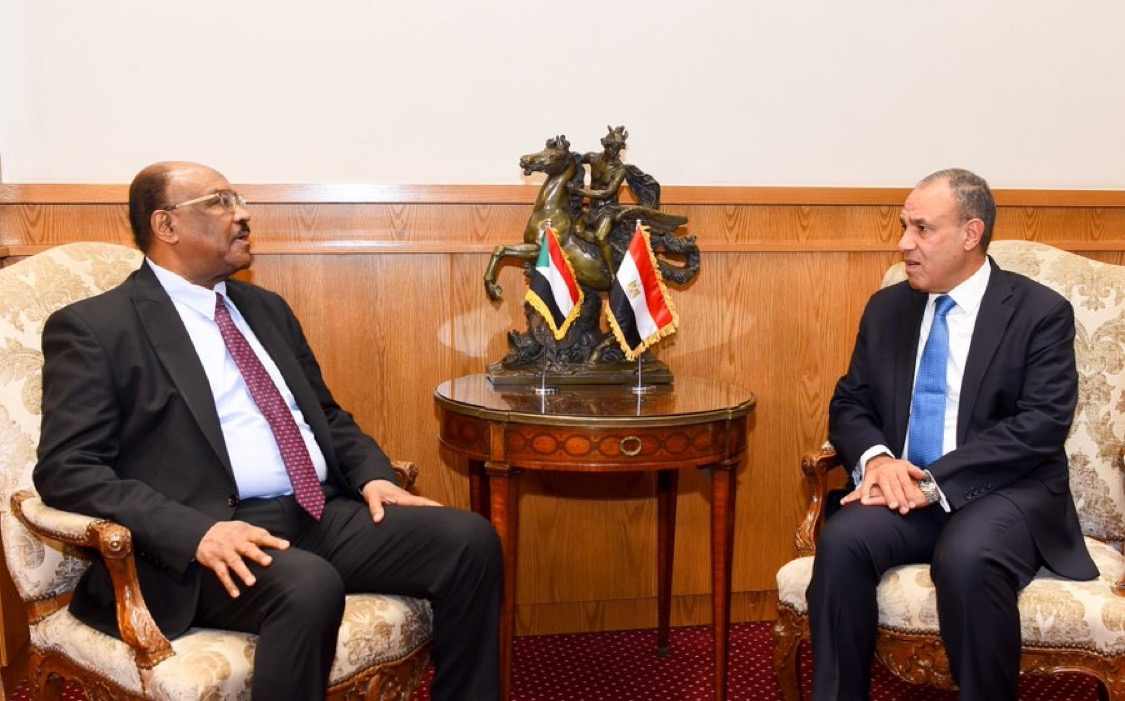
Egypt and Sudan have strengthened their cooperation on Nile water management and post-war reconstruction through a new memorandum of understanding signed in Cairo.
The agreement was concluded on Monday, November 2, during the third round of the bilateral 2+2 consultative mechanism, which brings together the foreign and irrigation ministers of both countries.
Egypt was represented by Foreign Minister Badr Abdelatty and Minister of Water Resources and Irrigation Hani Sewilam.
Sudan’s delegation was led by Foreign Minister Mohieddin Salem and Minister of Agriculture and Irrigation Ismat Qurashi Abdullah Mohammed.
The meetings produced both a formal water-development agreement and a broader joint political statement covering the Nile dispute, Sudan’s security situation and Red Sea governance.
Water Cooperation Agreement Signed in Cairo
The water resources memorandum was signed by Egyptian Irrigation Minister Hani Sewilam and Sudanese Agriculture and Irrigation Minister Ismat Qurashi.
Foreign Ministers Badr Abdelatty and Mohieddin Salem attended the signing ceremony.
According to the Egyptian Foreign Ministry, the agreement aims to support development projects in Sudan under an Egyptian initiative for Nile Basin countries.
Its provisions include rehabilitation of water infrastructure damaged during the war, flood-protection projects and the collection of rainwater.
The memorandum also covers the establishment of solar-powered drinking-water stations, technical training and capacity-building for Sudanese water institutions.
The projects are intended to improve access to drinking water, strengthen infrastructure resilience and support Sudan’s recovery and reconstruction.
The announcement did not disclose the total financial value of the agreement, the number of facilities to be constructed or a comprehensive implementation timetable.
Joint Position Against Unilateral Ethiopian Dam Operations
A central issue in the consultations was Ethiopia’s Grand Ethiopian Renaissance Dam on the Blue Nile.
Egypt and Sudan reiterated their opposition to unilateral measures relating to the operation and management of the dam.
The two governments said Ethiopia’s approach, in the absence of a binding mechanism governing the project, created continuing risks for downstream water security.
They called for compliance with applicable international legal principles, including prior notification, consultation and the prevention of significant harm.
Cairo and Khartoum also maintained that the outstanding GERD dispute should be addressed directly among Egypt, Sudan and Ethiopia.
Both countries rejected attempts to extend this particular disagreement to other Nile Basin states.
Ethiopia, for its part, has consistently defended the dam as a sovereign development and electricity-generation project.
The Egyptian-Sudanese characterisation of the dam as contrary to international law reflects their governments’ stated position, rather than an independently settled legal finding.
Nile Water Security Treated as a Shared Priority
The two governments described their water security interests as closely interconnected.
In their joint statement, they reaffirmed their position on water rights under the 1959 Nile Waters Agreement between Egypt and Sudan.
They also stressed the role of the Permanent Joint Technical Commission for Nile Waters as a mechanism for coordinating technical assessments, exchanging information and developing common positions.
The commission’s 66th session formed part of the wider diplomatic engagements taking place in Cairo.
The ministers discussed hydrological data sharing, the safe operation of dams and reservoirs, and stronger coordination during flood seasons.
They also examined ways to protect water infrastructure, irrigation intakes and drinking-water facilities from flood-related damage.
Both countries expressed support for continued cooperation through the Nile Basin Initiative and called for a more inclusive institutional framework that addresses the concerns of all basin states.
Rehabilitation of Sudan’s Jebel Aulia Dam
Sudan’s Jebel Aulia Dam, located south of Khartoum, was among the infrastructure projects discussed.
The facility suffered damage during the conflict that began in April 2023.
Sudanese officials welcomed Egypt’s technical assessment of the damaged infrastructure and the continuing involvement of Egyptian specialists in rehabilitation planning.
The two countries have previously examined a 16-month programme for restoring the facility.
The November consultations included further consideration of the dam and Sudan’s hydrological monitoring network.
The ministers also discussed technical cooperation involving Sudanese reservoirs and Egypt’s High Aswan Dam.
No announcement indicated that the Jebel Aulia rehabilitation programme had already been completed.
The newly signed memorandum provides an additional framework for practical cooperation on water infrastructure and reconstruction.
Egypt Reaffirms Support for Sudan’s Sovereignty
The consultations extended beyond water policy to Sudan’s ongoing armed conflict.
Egypt reaffirmed its support for Sudan’s sovereignty, territorial integrity and national institutions.
The joint statement rejected attempts to establish or recognise parallel governing structures that could undermine Sudan’s unity.
Cairo also repeated its position that developments affecting Sudan’s stability have direct implications for Egyptian national security.
The statement referred to Egypt’s December 18, 2025 presidential declaration and existing bilateral defence arrangements.
Egypt said it remained prepared to take measures permitted under international law to support Sudan and protect the security interests it had identified.
The consultations did not announce a new joint military operation or a newly signed defence treaty.
Drone Attacks on Civilian Infrastructure Condemned
Egypt and Sudan also condemned drone strikes targeting electricity facilities, water infrastructure and other essential installations in Sudan.
Their joint statement referred to attacks allegedly launched from the territory of a neighbouring country.
The two governments emphasized the need to respect Sudan’s sovereignty and protect its critical infrastructure.
Sudanese authorities had previously accused the Rapid Support Forces of conducting attacks using drones launched from Ethiopian territory.
However, the November 2 joint statement did not explicitly name the neighbouring state in the passage addressing those strikes.
The precise launch locations and responsibility for the reported attacks remain subject to independent verification.
Red Sea Security Included in Joint Declaration
The foreign and irrigation ministers also addressed regional maritime security.
Egypt and Sudan reaffirmed that the sovereignty of Red Sea coastal states must be respected in decisions affecting regional maritime governance.
They opposed arrangements that would grant non-coastal states maritime access at the expense of the sovereignty, ports or territorial integrity of Red Sea littoral countries.
The two sides also rejected actions that could contribute to further militarisation of the region.
Their statement placed Red Sea stability alongside Nile water security and Sudan’s internal security as areas requiring continued bilateral coordination.
Reconstruction and Technical Cooperation to Continue
Sudan’s delegation emphasized the country’s substantial infrastructure needs as it seeks to recover from years of conflict.
Water facilities, irrigation networks and technical monitoring systems were among the areas identified for further cooperation.
Egypt expressed readiness to continue supporting Sudanese reconstruction programmes and technical training.
The agreement on water resources represents a specific institutional step toward that objective.
The ministers also committed to maintaining consultations and expanding cooperation in political, economic, cultural and humanitarian fields.
The November 2 meetings therefore produced two connected outcomes: a signed memorandum supporting Sudan’s water infrastructure and a joint diplomatic position on Nile security, Sudan’s sovereignty and regional stability.
The next stage will depend on the implementation of the agreed projects and continued coordination between the two governments.