Eritrea's dispute with Ethiopia over access to the Red Sea has entered another period of heightened diplomatic tension, with the strategic port of Assab remaining a central issue.
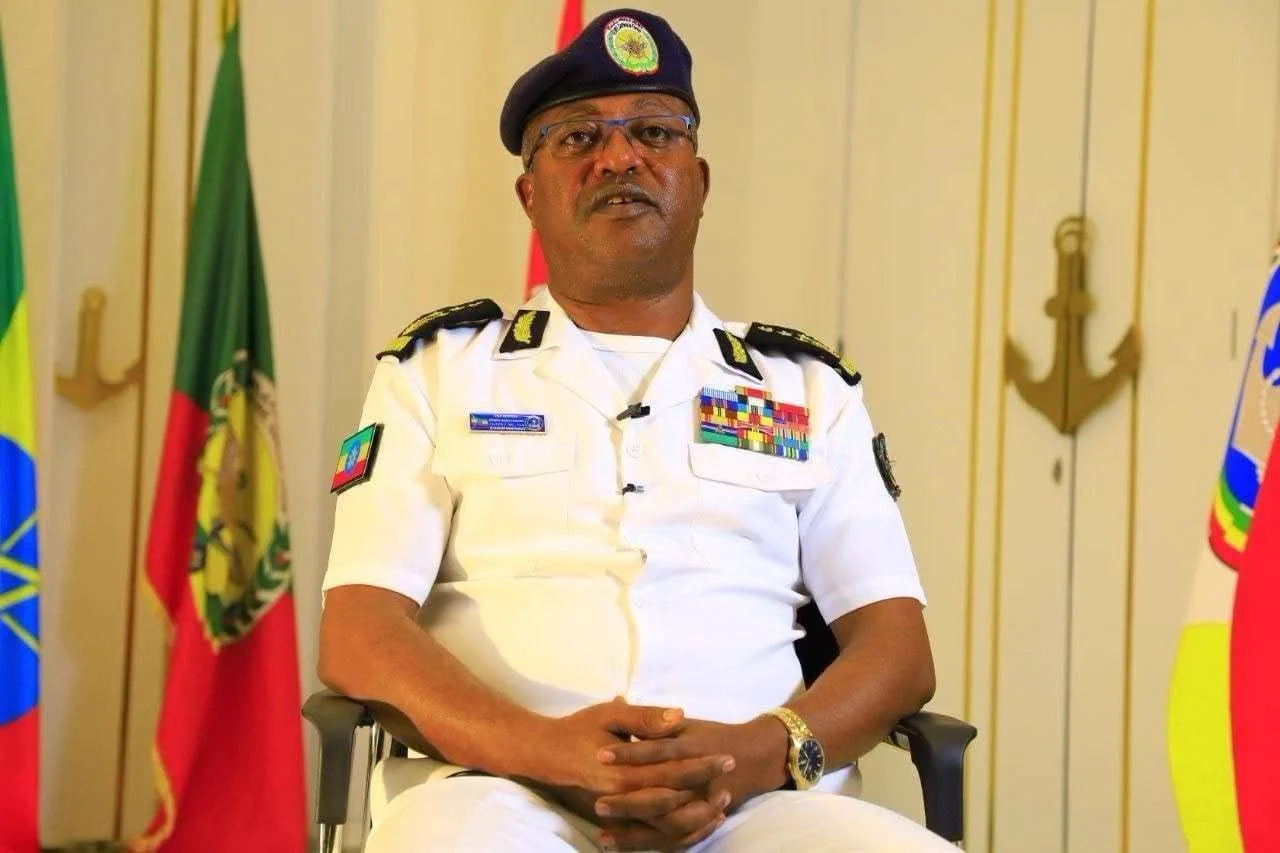
The latest developments followed comments by Ethiopian Navy Commander Vice Admiral Kindu Gezu, who described Ethiopia's loss of direct maritime access as a historic tragedy.
Speaking to former military and police personnel on November 7, Gezu said Ethiopia remained determined to restore access to the sea through legal procedures, diplomacy or unspecified alternatives.
His remarks came shortly after Eritrea's government published a series of statements attributed to senior Ethiopian military and political officials concerning Assab and other Red Sea ports.
Asmara maintains that Ethiopia's economic interest in maritime access cannot justify threats against Eritrea's sovereignty or changes to its internationally recognized territory.
Asmara Raises Concerns Over Ethiopian Military Statements
On November 2, Eritrea's Ministry of Information published a document compiling remarks attributed to senior Ethiopian officials concerning sovereign access to the Red Sea.
The document included statements attributed to Prime Minister Abiy Ahmed, Ethiopian military chief Field Marshal Berhanu Jula, Deputy Chief of Staff General Abebaw Tadesse and Air Force Commander General Yilma Merdasa.
Eritrean authorities argued that the statements demonstrated an increasingly explicit effort to challenge the country's control over its coastal territory.
Among the claims highlighted by Asmara were references to obtaining sea access through force if negotiations failed.
Eritrea also cited comments attributed to Ethiopian commanders concerning the possibility of reaching Assab through military operations.
The government described the statements as threats to its independence and territorial integrity.
However, the original context and recordings of every statement included in the Eritrean compilation have not been independently verified.
Ethiopian officials have also previously described maritime access as an issue that could be addressed through negotiation and mutually beneficial arrangements.
Assab Becomes the Focus of the Sovereignty Dispute
Assab is located on Eritrea's southern Red Sea coastline, close to Ethiopia's Afar region.
The port played an important role in Ethiopia's external trade before Eritrea became independent in 1993.
Its geographical position and historic transport connections continue to make it a significant part of Ethiopia's discussions about maritime access.
For Eritrea, however, Assab is a sovereign port situated within the country's internationally recognized borders.
The Eritrean government has emphasized that commercial access to a port and sovereign ownership of coastal territory are fundamentally different questions.
Asmara argues that Ethiopia's historic use of Assab does not establish a current legal entitlement to control the port.
The dispute has therefore moved beyond the practical question of trade logistics and become a disagreement over sovereignty, security and the territorial settlement established after Eritrean independence.
Eritrea Appeals to the United Nations Security Council
The Eritrean government raised its concerns at the United Nations during October.
Foreign Minister Osman Saleh submitted a diplomatic letter accusing Ethiopia of threatening military action against Eritrean territory.
The letter called on the UN Security Council to condemn what Asmara described as an Ethiopian agenda to seize sovereign access to the Red Sea.
Eritrea also requested measures aimed at deterring a possible military escalation.
The government referred to Article 2(4) of the UN Charter, which prohibits the threat or use of force against another state's territorial integrity or political independence.
Ethiopia presented a competing position, accusing Eritrea of supporting armed opposition groups and entering Ethiopian territory during fighting in Tigray.
Addis Ababa argued that it was responding to threats against its national security.
Eritrea rejected those allegations and maintained that Ethiopia was using them to justify potential aggression.
The competing military claims have not been independently verified in full.
Red Sea Coastal States Issue Joint Declaration
Eritrea has also sought to strengthen regional coordination on Red Sea security.
On October 4, President Isaias Afwerki participated in a quadrilateral summit in El Alamein, Egypt, alongside Egyptian President Abdel Fattah El-Sisi, Somali President Hassan Sheikh Mohamud and Sudanese Sovereignty Council Chairman Abdel Fattah Al-Burhan.
The four leaders issued a joint declaration emphasizing respect for national sovereignty, independence and territorial integrity.
They also reaffirmed the principle of freedom of navigation in the Red Sea.
A central provision of the declaration stated that responsibility for Red Sea governance belongs to the coastal states.
The position was consistent with Eritrea's argument that maritime security arrangements must respect the authority of sovereign countries bordering the waterway.
The leaders also agreed to establish a mechanism for continued consultation on regional issues.
The declaration did not establish a joint military operation against Ethiopia or announce a new defence alliance.
Chinese Envoy Reaffirms Respect for Eritrean Sovereignty
Eritrea's diplomatic activity continued in early November as China launched a series of regional consultations.
On November 5, President Isaias Afwerki received China's Special Envoy for Horn of Africa Affairs, Hu Changchun, at the Denden Guest House in Asmara.
The meeting focused on bilateral relations and current developments affecting the Horn of Africa.
According to the Eritrean government's account, Hu reiterated China's position on the importance of respecting Eritrea's sovereignty and territorial integrity.
Beijing also held separate consultations with Ethiopian officials as part of its regional diplomatic initiative.
China's Foreign Ministry described the visits as efforts to encourage dialogue, reduce tensions and contribute to peace and stability.
The meetings demonstrated the growing international attention being directed toward the deterioration in relations between Eritrea and Ethiopia.
China did not announce a new military arrangement concerning Assab or publicly commit itself to supporting either country in an armed confrontation.
Diplomatic Relations Collapsed in October
Relations between Eritrea and Ethiopia deteriorated sharply on October 1.
Ethiopia ordered the closure of its embassy in Asmara and expelled ten Eritrean diplomats from Addis Ababa.
The Ethiopian government accused the diplomats of activities threatening national security.
Eritrea rejected the accusations and announced the severance of diplomatic relations.
The decision marked a significant reversal of the reconciliation initiated by President Isaias Afwerki and Prime Minister Abiy Ahmed in 2018.
The closure of diplomatic missions has complicated communication between the neighboring governments during a period of increasing military tension.
Both countries have continued to exchange accusations concerning border security and support for armed groups.
Fighting in Tigray Adds to Eritrea's Security Concerns
The maritime dispute has intensified alongside renewed conflict in northern Ethiopia.
Fighting between Ethiopian federal forces and armed groups associated with the Tigray People's Liberation Front escalated during September and October 2026.
Ethiopian authorities accused Eritrea of supporting the opposition forces and carrying out incursions into northern Ethiopia.
Asmara denied those accusations and argued that Addis Ababa was seeking a justification for military action against Eritrean territory.
The dispute has increased concerns about the possible spread of fighting beyond Ethiopia's internal conflict.
The situation is particularly sensitive because Eritrea and Ethiopia previously fought a border war from 1998 to 2000.
Their relations improved with the 2018 peace agreement but have deteriorated again amid regional political and security disagreements.
International diplomatic efforts are continuing to discourage further escalation.
Eritrea's Independence Remains Central to Its Position
Eritrea's argument over Assab is closely connected to the country's independence process.
In April 1993, Eritreans participated in a referendum observed by the United Nations and other international organizations.
Approximately 99.8 percent of participating voters supported independence.
The result was announced on April 27, 1993, and Eritrea subsequently became a member of the United Nations.
The country's independence was recognized by Ethiopia, establishing Eritrea as a sovereign state with its own internationally recognized territory.
Assab and Massawa remained within Eritrea's borders following independence.
Eritrea continues to argue that economic dependence on its ports before 1993 cannot be used to challenge the country's subsequent sovereignty.
For Asmara, defending its internationally recognized territory remains inseparable from the legacy of its struggle for independence.
Maritime Transit Rights Do Not Transfer Sovereignty
Ethiopia's economic demand for improved access to international shipping remains a separate issue.
As a landlocked country, Ethiopia depends heavily on transport connections through Djibouti for its external trade.
Addis Ababa has repeatedly called for additional maritime routes to reduce transport costs and improve logistical security.
International law recognizes the importance of providing landlocked countries with access to the sea.
Article 125 of the United Nations Convention on the Law of the Sea establishes a framework for transit access through agreements between landlocked and transit countries.
The same provision protects the sovereignty of states through which transit takes place.
Commercial port arrangements, transport agreements and long-term infrastructure partnerships can provide mechanisms for maritime access without requiring a transfer of territory.
Eritrea's position is that any arrangement involving its ports must respect its sovereignty and internationally recognized borders.
Eritrea Maintains Its Position as Regional Diplomacy Continues
Vice Admiral Kindu Gezu's latest comments have renewed attention on an issue already affecting diplomatic relations and regional security.
Eritrea considers Ethiopian statements about Assab and sovereign maritime access a potential threat to its independence.
Asmara has raised its concerns at the United Nations, strengthened consultations with Egypt, Sudan and Somalia, and engaged with China's diplomatic initiative in the Horn of Africa.
Ethiopia continues to argue that reliable access to the Red Sea is essential to its long-term economic and security interests.
The underlying question is whether maritime access can be addressed through negotiated commercial arrangements while preserving Eritrea's sovereign control over its territory.
No new Ethiopian military operation against Assab or agreement transferring control over Eritrean coastal territory has been confirmed following Gezu's remarks.
With diplomatic ties severed and fighting continuing in northern Ethiopia, efforts to prevent further escalation remain important for the security of both countries and the wider Horn of Africa.