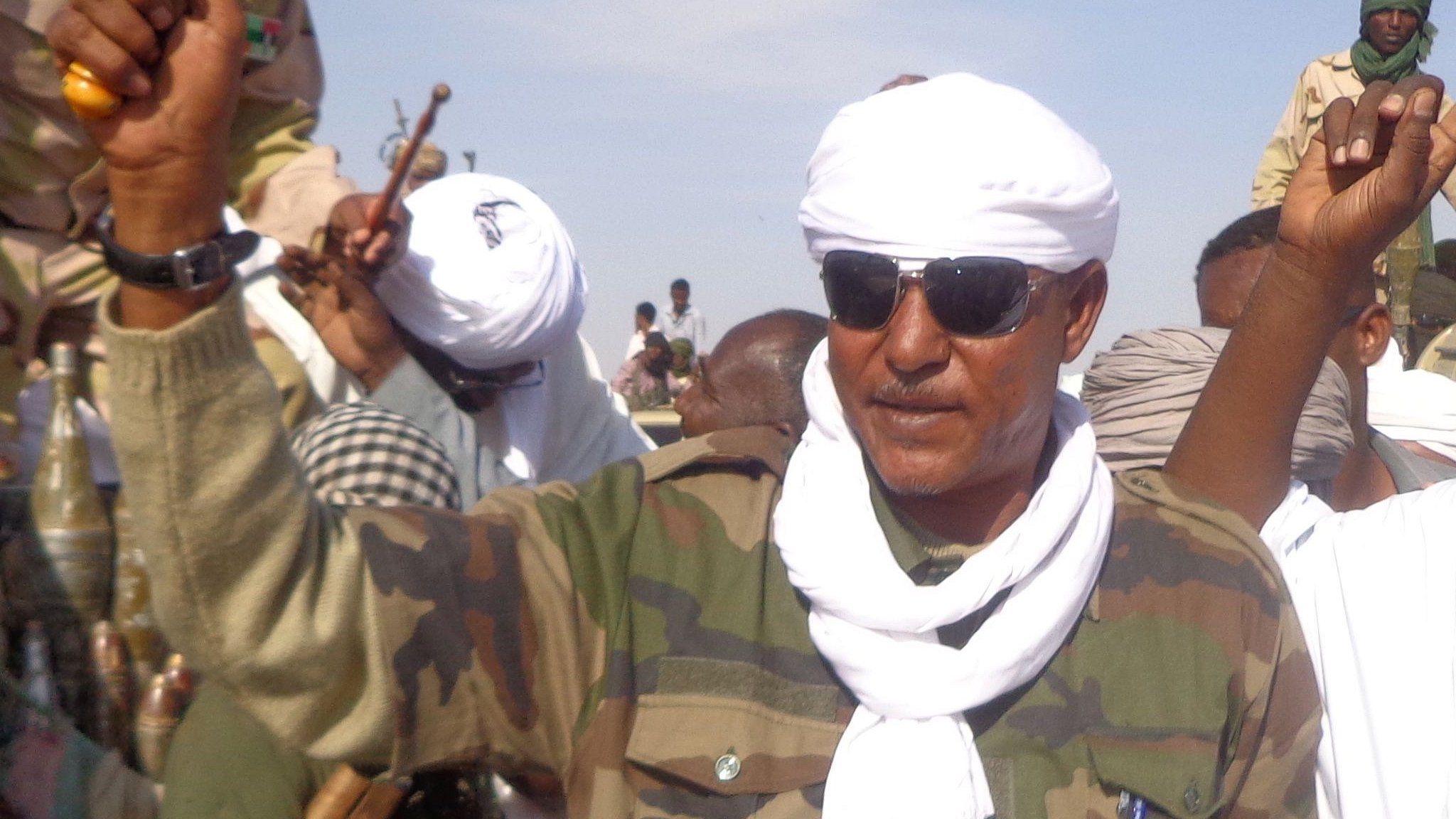
Musa Hilal reveals his account of Sudan's military history
Sheikh Musa Hilal, chairman of Sudan's Revolutionary Awakening Council and a prominent leader of the Mahamid tribal community, has given an extensive interview addressing two decades of political and military developments in Sudan.
Speaking to Egyptian newspaper Al-Shorouk in an interview published on November 23, 2026, Hilal discussed the formation of the Janjaweed militias, the emergence of the Rapid Support Forces (RSF), the rise of Mohamed Hamdan Dagalo, widely known as Hemedti, and the political decisions of former President Omar al-Bashir.
He also detailed alleged offers of substantial financial incentives from foreign actors and the Dagalo family.
Several of the claims involve private conversations and financial arrangements for which independent corroborating evidence has not been made publicly available.
"Hemedti was not born in Sudan"
Hilal challenged accounts of Hemedti's origins, asserting that the RSF leader was born outside Sudan.
He said Hemedti and his family migrated from western Chad to Sudan in 1984.
According to Hilal, Hemedti was approximately seven years old at the time, while his brother Abdel Rahim Dagalo was around 11.
Hilal described broader migration from Chad and neighboring regions between 1972 and 1984, when drought, famine and armed conflict forced communities to cross into Sudan.
He said many families settled among related tribal communities in North Darfur.
Hilal belongs to the Mahamid branch of the Rizeigat, while the Dagalo family is associated with the Mahariya branch.
His account of the Dagalo family's origins and dates of migration remains his own testimony rather than an independently established biographical record.
Janjaweed formation and cooperation with Idriss Déby
Hilal also revisited his role in organizing armed tribal forces during the conflict that erupted in Darfur in 2003.
He argued that Arab communities had been subjected to attacks by armed movements and had sought protection through formally organized military units.
According to Hilal, tribal leaders proposed incorporating local young men into Sudan's security forces under official military supervision.
He said approximately 2,000 men were recruited in each of North and West Darfur as part of the Border Guards structure.
Hilal further claimed that in 2004 he worked with the late Chadian President Idriss Déby to encourage defections from armed opposition groups operating in Darfur.
He compared those defections to the departures currently being reported from the RSF.
Hilal portrayed the effort as contributing to the weakening of armed movements opposing the Sudanese government.
However, the Janjaweed and associated forces were implicated in extensive attacks on civilians during the Darfur conflict, including killings, forced displacement and other grave abuses.
Hemedti's rise from the Popular Defense Forces
Hilal described Hemedti as an ordinary member of Sudan's Popular Defense Forces during the early stages of his military career.
He said that military recruitment around Nyala expanded in 2005 and 2006, beginning with approximately 360 personnel.
At that time, according to Hilal, Hemedti had no senior military command position, while his brother Abdel Rahim was engaged in private business activities.
Hilal claimed that Sudanese intelligence officials subsequently appointed Hemedti to supervise forces recruited around Nyala.
He said approximately 500 additional military positions were assigned to Hemedti's organization within a relatively short period.
The arrangement, in Hilal's account, helped establish the military authority that would eventually allow Hemedti to emerge as one of Sudan's most influential commanders.
Hilal claims he prevented an airstrike against Hemedti
One of Hilal's most significant disclosures concerned an alleged decision to bomb Hemedti's forces after their rebellion against the government.
Hilal said former Defense Minister Abdel Rahim Mohamed Hussein had prepared an aerial operation targeting the group.
According to his account, the government intended to eliminate the fighters after they broke from state command and established links with armed movements.
Hilal said he personally intervened with President Bashir, asking for negotiations instead of military action.
He maintained that Bashir accepted his request and ordered the planned strike to be halted.
A committee involving political and military officials subsequently negotiated the group's return to cooperation with government forces, Hilal said.
He described the intervention as an important turning point in Hemedti's military career.
Bashir allegedly suspected Hilal of seeking the presidency
Hilal said his relationship with Bashir deteriorated as political figures within the former regime became concerned about his influence.
He alleged that members of Bashir's inner circle deliberately encouraged the president to distrust him.
According to Hilal, Bashir once accused him of seeking the presidency, referring to the presidential chair during a private meeting.
Hilal said he denied having presidential ambitions and maintained that his objective was the stability of Sudan and its institutions.
He accused figures within the former government of promoting Hemedti between 2014 and 2016 as a way to reduce his own political and military influence.
Hilal also claimed that some security officials were involved in bringing Hemedti closer to Bashir while marginalizing traditional Darfur leaders.
Dagalo brothers allegedly offered 30% of Jebel Amer gold interests
Hilal described a meeting with Hemedti and Abdel Rahim Dagalo at their residence in Jabra, Khartoum.
During the discussion, he said, the brothers offered him a business arrangement involving gold operations.
He claimed they proposed giving him a 30% share of their interests in Jebel Amer and other mining areas in return for supporting their political ambitions.
Hilal said he directly questioned whether the brothers intended to rule Sudan.
According to his account, they answered affirmatively and indicated that influential supporters were backing their political project.
He said he requested two weeks to consider the proposal.
The brothers subsequently sent intermediaries in an effort to secure his agreement, Hilal claimed, but he ultimately refused.
No independent financial documentation establishing the alleged offer has been made public.
Hilal alleges Washington offered him bags of dollars
Hilal also accused representatives of the United States of offering him money to participate in an effort to remove Bashir from power.
He said the meeting took place in Nyala during the administration of US President George W. Bush.
According to Hilal, an adviser representing the American administration presented him with bags containing US dollars.
He claimed the objective was to obtain the participation of Hilal, his tribal network and supporters in Darfur in a political project targeting the Bashir government.
Hilal said the representatives also met former Sudanese Vice President Ali Osman Mohamed Taha.
The interview did not identify the alleged American representative or establish the amount of money involved.
The account has not been independently corroborated by official American documentation.
Alleged $300 million International Criminal Court offer
Another major allegation concerned the International Criminal Court (ICC).
Hilal said he had met representatives associated with the court during investigations into crimes committed in Darfur.
He claimed that individuals acting on behalf of the ICC subsequently approached him with an offer of $300 million in exchange for testimony against Bashir and senior figures in the former government.
Hilal said he rejected the proposed arrangement, arguing that his status as a tribal leader prevented him from testifying in that way against fellow Sudanese nationals.
He also emphasized that he had not been subject to an ICC arrest warrant.
However, the United Nations Security Council placed Hilal under targeted sanctions through Resolution 1672 on April 25, 2006, in connection with the Darfur conflict.
Those measures included a travel ban and an asset freeze.
The extraordinary claim concerning a $300 million ICC payment has not been independently substantiated, and no evidence establishing such an offer was presented in the interview.
Allegations over payments to Sudanese troops in Yemen
Hilal also accused the Dagalo family of diverting funds intended for Sudanese troops participating in the Saudi-led Operation Decisive Storm in Yemen.
He said the family took 50% of payments allocated to participating soldiers.
According to Hilal, the remaining money was paid in Sudanese currency even though the original transfers had been made in US dollars.
He stated that he had previously warned Bashir about financial arrangements involving troop payments, gold trading and migration-related funds.
Hilal argued that these activities helped the Dagalo family accumulate financial and political influence.
The interview did not include financial records confirming the alleged diversions.
"They will stab you in the back within a year"
Hilal said he warned Bashir that empowering Hemedti and his associates could threaten the government itself.
According to Hilal, he told the former president that the individuals gaining influence around him could eventually turn against him.
He linked the warning to information he said he had received about the Dagalo brothers' political ambitions.
Hilal maintained that Bashir dismissed his concerns and interpreted them as jealousy or rivalry.
He said the gradual weakening of his Border Guards forces and the transfer of greater military responsibilities to Hemedti strengthened the latter's position.
The alleged warning formed part of Hilal's account of how the former regime empowered commanders who later challenged the established political order.
Arrested with his sons while his mother was dying
Hilal also described the events leading to his arrest in 2017.
He said he opposed the government's disarmament campaign because he believed it was designed to dismantle his forces and eliminate his influence in Darfur.
According to Hilal, Sudanese military and RSF units surrounded his stronghold in Mustariha, North Darfur, with numerous armed vehicles.
He said the operation took place while his mother was on her deathbed.
Hilal and his sons were detained and transferred by aircraft to Khartoum, he explained.
He said they remained imprisoned at military facilities associated with the army's General Headquarters from 2017 until 2021.
Hilal portrayed the arrest as part of a broader effort by Hemedti and political allies to remove traditional tribal leaders and consolidate the influence of the Dagalo family.
Hilal refuses to express regret over Janjaweed
Asked about the formation of the Janjaweed and accusations of atrocities committed in Darfur, Hilal defended his previous decisions.
He said Arab communities had been threatened by armed movements and had organized to protect themselves.
Hilal maintained that the creation of armed groups was a defensive response to the security situation.
He explicitly stated that he did not regret his actions.
Nevertheless, Janjaweed militias were extensively documented as being involved in atrocities against civilian communities during the Darfur conflict.
International investigations linked militia operations to killings, forced displacement, sexual violence and attacks on villages.
Hilal's own leadership role was examined by human rights organizations and contributed to his designation for UN sanctions in 2006.
His rejection of personal regret therefore stands alongside longstanding allegations of serious human rights abuses involving the forces he helped organize.
Rivalry between Hilal and Hemedti shaped Darfur's power struggle
Hilal and Hemedti initially maintained relationships shaped by tribal connections and the military structures that emerged during the Darfur war.
Their rivalry grew as Hemedti acquired increased authority within Sudan's security institutions.
The formal establishment of the RSF in 2013 further strengthened Hemedti's position.
Hilal, meanwhile, sought to maintain his political and tribal influence through the Revolutionary Awakening Council.
Their conflict escalated with Hilal's arrest in 2017 and intensified after the war between the Sudanese Armed Forces and the RSF began in April 2023.
Hilal's decision to align himself with the Sudanese army placed the two figures on opposing sides of the conflict.
Clashes around Mustariha in 2026 demonstrated the continued importance of tribal alliances and regional military structures in Darfur.
The latest interview provides Hilal's account of how gold revenues, intelligence appointments, military recruitment, personal rivalries and international contacts helped shape the emergence of the RSF.
While several of his most serious allegations remain unsupported by independent documentary evidence, the interview offers a detailed perspective from one of the central figures in Darfur's political and military history.