Nigeria has announced a new cross-border military arrangement with Cameroon, Niger and Chad as part of efforts to strengthen regional security cooperation and prevent armed groups from exploiting international borders to escape military operations.
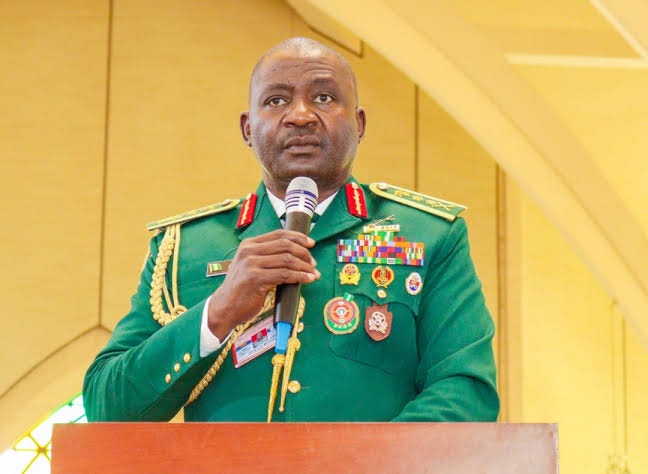
Defence Minister General Christopher Musa disclosed the agreement during a briefing in Abuja on November 16, 2026, explaining that Nigerian forces would be permitted to pursue militants and armed bandits up to five kilometres inside the territories of participating neighbouring countries.
The arrangement is intended to address a longstanding security challenge in northeastern Nigeria, where Boko Haram and Islamic State West Africa Province (ISWAP) fighters have used remote border areas and difficult terrain to evade military operations.
The agreement represents a further attempt to improve cooperation among countries affected by insurgent activities across the Lake Chad Basin.
Five-kilometre pursuit arrangement targets militant movements
According to Musa, the new arrangement will allow Nigerian troops to continue pursuing armed groups across designated international borders within a maximum distance of five kilometres.
The minister explained that militants have frequently taken advantage of porous borders to withdraw into neighbouring countries after conducting attacks in Nigeria.
Border regions shared by Nigeria, Cameroon, Niger and Chad include remote rural communities, forests, difficult terrain and areas surrounding Lake Chad, where monitoring armed movements remains a major operational challenge.
Boko Haram and ISWAP have maintained networks across these areas, using cross-border routes to facilitate the movement of fighters, supplies and equipment.
The new arrangement is intended to reduce the ability of militants to evade pursuing security forces simply by crossing an international boundary.
However, the detailed rules governing these operations have not yet been made public.
Cameroon raises questions over reciprocal military access
The agreement has also prompted questions about whether the right of pursuit will apply equally to the armed forces of all participating countries.
According to Radio France Internationale (RFI), a senior Cameroonian military officer raised concerns about reciprocity, asking whether Cameroonian forces would receive equivalent permission to pursue Boko Haram fighters into Nigerian territory.
Cameroon has faced repeated incursions by Boko Haram militants from northeastern Nigeria, particularly in its Far North Region.
The two countries had already strengthened their military relationship through a defence memorandum of understanding signed in Yaoundé on June 16, 2026.
The agreement was signed by Cameroon's Defence Minister Delegate Joseph Beti Assomo and Nigerian Defence Minister Christopher Musa.
It established a framework for enhanced intelligence sharing, military training, joint operations, border security and cooperation against terrorism and transnational crime.
The newly announced five-kilometre pursuit arrangement could further support these objectives, although its implementation procedures and reciprocal provisions remain unclear.
Regional cooperation under the Multinational Joint Task Force
Nigeria, Cameroon, Niger and Chad have previously coordinated counterinsurgency operations through the Multinational Joint Task Force (MNJTF), headquartered in N'Djamena, Chad.
The force is responsible for supporting regional military cooperation against Boko Haram, ISWAP and other armed groups operating across the Lake Chad Basin.
On May 18, 2026, the African Union Peace and Security Council highlighted progress made by the MNJTF during Operation Lake Sanity III, launched on April 19.
The operation targeted militant logistical facilities and movement networks, contributing to efforts to restore security and improve humanitarian access in affected communities.
However, the African Union also warned that Niger's temporary suspension of participation in the MNJTF had created security vulnerabilities, particularly in relation to border monitoring, arms trafficking and the movement of foreign fighters.
The council called for stronger regional coordination and additional resources to address operational shortages, including air mobility, communication equipment and counter-drone capabilities.
The relationship between the newly announced pursuit arrangement and existing MNJTF operational structures has not yet been clarified.
United States expands intelligence support to Nigeria
During the same Abuja briefing, Defence Minister Musa outlined an expansion of security cooperation between Nigeria and the United States.
He said Washington was providing real-time intelligence, satellite imagery and military training to help Nigerian forces identify militant leaders and conduct targeted operations.
According to Musa, intelligence cooperation has improved the military's ability to monitor armed groups operating in remote areas and difficult terrain.
The minister also revealed that Nigeria was expecting additional military helicopters from the United States and Italy.
He said security agencies were monitoring militant organizations' use of satellite communications, commercial drones and cryptocurrency networks, while cooperating with international partners to disrupt their financial operations.
The intelligence support forms part of Nigeria's broader effort to strengthen its counterinsurgency capabilities and protect vulnerable communities.
Growing threats across the Sahel and northern Nigeria
The cross-border arrangement comes amid growing concerns over militant activities in northeastern and northwestern Nigeria.
Musa warned that Islamic State-linked networks operating in the Sahel were attempting to establish relationships with armed criminal groups in northwestern Nigeria.
He said militants were exploiting forested areas and porous borders with Niger and Benin to evade security forces and maintain logistical networks.
The defence minister emphasized that Nigerian authorities were working with neighbouring countries to disrupt cross-border recruitment, financing and supply routes.
Meanwhile, Boko Haram and ISWAP have intensified attacks against military positions in northeastern Nigeria in recent weeks, despite years of counterinsurgency operations.
On November 5, Nigeria's military rejected reports of a ceasefire agreement with Boko Haram or ISWAP, reaffirming its commitment to continued operations against the groups.
Implementation details remain to be clarified
Although Nigeria has announced the five-kilometre right-of-pursuit arrangement, several operational and legal questions remain unresolved publicly.
Authorities have not disclosed whether cross-border military movements will require advance notification, how participating armies will coordinate their activities or whether the same pursuit rights will apply equally to all parties.
A detailed joint implementation document from Cameroon, Niger and Chad has not yet been released publicly.
The arrangement nevertheless reflects efforts to strengthen cooperation against armed groups operating across national boundaries.
For Nigeria and its neighbours, the central objective is to prevent Boko Haram, ISWAP and other militant organizations from using border crossings as safe routes after attacks, while improving coordinated security operations across the Lake Chad region.