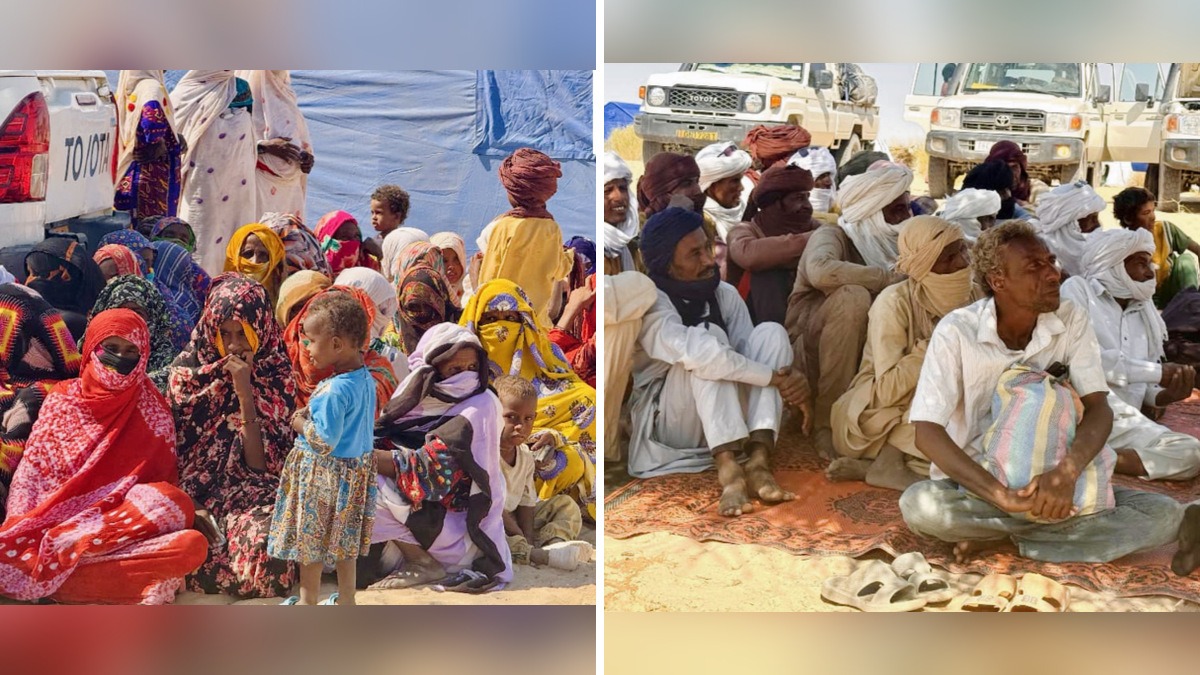
More than 1,000 members of the Arab Mahamid community have arrived in western Chad after leaving Niger's southeastern Diffa region, where authorities have ordered members of the community to depart the country before the end of 2026.
The latest arrivals have gathered around Daboua, in the Fouli department of Chad's Lac province, near the border with Niger.
According to a report published by Chadian news outlet Alwihda Info on November 22, 2026, the new arrivals include men, women and children, many from families traditionally dependent on nomadic livestock herding.
Local authorities have begun organizing reception and assistance measures as concerns grow that further arrivals could place additional pressure on already limited resources.
The movement follows instructions issued by Niger's military-led authorities requiring the Mahamid community to leave the country by December 31.
More than 1,000 people reach Chad's Lac province
Chad's government initially confirmed the arrival of approximately 800 Mahamid community members on November 20.
Government spokesperson and Communications Minister Gassim Chérif Mahamat said additional arrivals were expected before the end-of-year deadline.
Other Chadian media reported higher figures during the same period.
On November 20, Le Progrès reported that 1,104 people had reached the Lac province from Niger.
Two days later, Alwihda Info reported that more than 1,000 Mahamid community members had arrived in Daboua.
The figures reflect reports gathered at different points during the ongoing population movement.
Local accounts describe families gathering in temporary reception areas, while community representatives say additional households are preparing to cross the border.
Niger orders Mahamid community to leave by December 31
The displacement is directly connected to a decision by Nigerien authorities concerning the Mahamid population living in the Diffa region.
According to information reported by Agence France-Presse on November 15, Diffa Governor Major General Mahamadou Ibrahim Bagadoma informed representatives of the community during a November 8 meeting that they had until December 31, 2026, to leave the country.
Niger's official news agency, ANP, also reported that local authorities conveyed instructions from the country's leadership to Mahamid representatives during a meeting in Chetimari on November 14.
The authorities have justified the decision by referring to security concerns, illicit weapons trafficking, questions concerning residency and nationality, and suspected links between certain individuals and armed groups operating in the Lake Chad Basin.
Diffa has faced attacks by Boko Haram and the Islamic State West Africa Province (ISWAP) for more than a decade.
Regional security officials have accused some individuals associated with the community of providing logistical assistance or weapons to extremist organizations.
Mahamid representatives, however, reject measures that would require an entire community to leave because of accusations concerning individual members.
Restrictions on identity documents, schools and water supplies
The departure order follows several months of administrative restrictions affecting Mahamid communities in southeastern Niger.
In April, Niger's Interior Ministry instructed authorities in Diffa and Zinder to identify members of the community and examine their identity and residency status as part of preparations for repatriation.
In October, measures were introduced affecting schools and public water facilities serving Mahamid settlements.
Local officials said some schools had been closed and water pumps removed from wells established by the state.
The authorities maintained that those facilities had been used primarily by members of one community, creating unequal access for other residents.
However, community representatives and civil society organizations have warned about the consequences for children and families who depend on these services.
Speaking to Deutsche Welle, Algoni Mahamat Zene, a Mahamid community leader in Diffa, said many members of the community were born in Niger and had lived there throughout their lives.
He stated that the community had 261 settlements across the Diffa and Zinder regions, highlighting the potential scale of the displacement.
African human rights body raises urgent concerns
The African Commission on Human and Peoples' Rights has formally intervened over developments affecting the Mahamid community.
In a statement published on November 9, the commission announced that three of its human rights mechanisms had sent a joint urgent appeal to Nigerien President Abdourahamane Tiani on November 6.
The appeal concerned restrictions affecting access to drinking water, education, healthcare and identity documents in the Diffa region.
The commission's intervention brought additional international attention to the implications of the measures for the community's fundamental rights.
Human rights advocates have emphasized the importance of examining individual security concerns without imposing collective restrictions on families, including children and long-term residents.
Chadian authorities mobilize in Daboua
Chadian authorities have responded to the growing number of arrivals by organizing field visits and consultations with humanitarian partners.
On November 11, General Saleh Haggar Tidjani, the government's general delegate to Lac province, visited Daboua to assess the living conditions of newly arrived families.
He was accompanied by security personnel, administrative officials and representatives of organizations involved in humanitarian assistance.
The delegation met community members to identify their immediate needs and assess the challenges associated with receiving additional people.
Authorities subsequently held consultations concerning reception arrangements, security considerations and assistance for displaced families.
A temporary settlement site was identified as part of the response.
Social Affairs Minister visits reception facilities
On November 16, Chad's Minister of Social Action, National Solidarity and Humanitarian Affairs, Zara Mahamat Issa, visited the reception area in Daboua.
The minister inspected water points to assess their condition and determine what measures were required to ensure access to safe drinking water.
She also visited areas where tents were being installed to accommodate the arrivals.
Discussions with local officials focused on improving shelter conditions, providing food and basic supplies, and expanding access to essential social services.
Chadian media reported that assistance included rice, sugar, pasta, soap, tents, buckets and other household items.
Le Progrès also carried local information about approximately 50 hand-operated water pumps installed in the reception area.
Despite these measures, the possibility of additional arrivals continues to raise concerns about the capacity of local services.
Chad criticizes Niger's collective expulsion policy
The movement of Mahamid families has become a source of diplomatic tension between Chad and Niger.
On November 20, Chadian government spokesperson Gassim Chérif Mahamat criticized the policy during comments to AFP.
He described the forced movement as resembling a mass deportation rather than an ordinary immigration procedure and expressed concern about the impact on communities that had lived in Niger for decades.
Chadian authorities have also emphasized that ethnic origin alone cannot establish citizenship.
Officials speaking to the BBC explained that individuals arriving from Niger would have their nationality examined on a case-by-case basis.
Those identified as Chadian citizens would be permitted to return, while other cases would require individual assessment.
The position reflects concerns in N'Djamena over the legal status of people who may have been born in Niger and lived there for generations.
Mahamid families have lived in Niger for decades
The Mahamid are an Arab pastoral community with longstanding connections to the Sahel and Sahara regions.
Significant numbers migrated to Niger during the 1970s after severe drought affected the Abéché region of eastern Chad.
Additional families later moved into Niger while escaping conflicts in Chad and Sudan.
Over subsequent decades, many established permanent communities in Diffa and surrounding areas, with later generations born in Niger.
The growing size of pastoral herds, particularly camels, together with pressure on water and grazing resources, contributed to disputes with other local communities.
Local reconciliation efforts, including agreements concluded in 2018, did not fully resolve these tensions.
The latest developments also revive memories of a previous expulsion initiative in 2006, which was eventually suspended after protests and diplomatic intervention.
Year-end deadline raises fears of further displacement
The arrival of more than 1,000 Mahamid community members in Daboua marks a significant humanitarian consequence of Niger's departure order.
With the December 31 deadline approaching, further population movements could increase pressure on shelter, sanitation, drinking water and healthcare facilities in Chad's Lac province.
The dispute also creates difficult questions over nationality, individual legal status and the responsibilities of neighboring governments.
No comprehensive bilateral arrangement has yet been announced to resolve the status of all Mahamid families affected by the measures.
The developments underscore how security policies in the Lake Chad Basin can create wider humanitarian challenges when border management, citizenship and longstanding patterns of migration intersect.