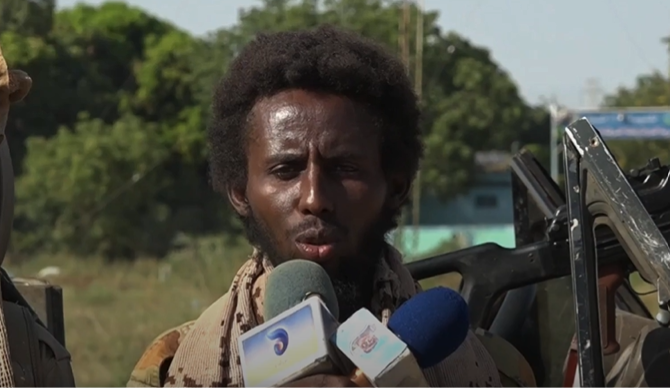
A former officer of Sudan's Rapid Support Forces has described what he says was direct involvement by an Emirati individual in the paramilitary organisation's payroll and military operations.
Captain Jiddu Mohammed Hamed Shugar made the statements in a recorded account announcing his departure from the RSF and his decision to join the Sudanese Armed Forces.
Shugar said the RSF's military leadership had become dependent on external direction and accused Mohamed Hamdan Dagalo, widely known as Hemedti, and his brother Abdel Rahim of implementing an agenda originating in the United Arab Emirates.
His account goes beyond broad descriptions of foreign assistance, identifying a person responsible for payments and outlining how fighters were moved across international borders before receiving equipment and entering the battlefield.
Former Officer Challenges RSF Leadership
Shugar described Hemedti and Abdel Rahim Dagalo as instruments of an external agenda rather than independent commanders directing the war.
He said his assessment was based on extensive service within the RSF, where he had held several field positions.
According to his account, he served as deputy commander of the Third Elite Unit in El Fasher and commander of Group 99.
His previous deployments included Khartoum, air defence positions, the Al-Shajara Armoured Corps, Wad Madani and Nyala.
Shugar maintained that his experience gave him direct knowledge of the RSF's military capabilities and internal operations.
He focused particularly on the organisation's financial arrangements, movement of personnel and logistics supporting operations in Sudan.
Abu Mohammed and the Payment of Fighters' Salaries
One of the most significant details in Shugar's testimony concerns a person he identified as Abu Mohammed the Emirati.
Shugar said Abu Mohammed was involved in paying RSF personnel and overseeing aspects of military operations.
He recalled a dispute that developed when fighters did not receive their salaries on time.
According to Shugar, the unpaid personnel raised their grievances with senior commanders, including RSF deputy commander Abdel Rahim Dagalo.
After demanding that the outstanding salaries be settled, Shugar said he was given a telephone and spoke directly with Abu Mohammed.
He described the Emirati figure as having a practical role in resolving the payment dispute.
Abu Mohammed subsequently visited the fighters in the Ethiopian Kurmuk area, according to the former officer.
Shugar said the man promised that salaries would be paid on Sunday and that the payments were subsequently made as promised.
The account places an individual identified as Emirati directly within the RSF's payment arrangements rather than describing foreign support solely through transfers to senior commanders.
Abu Mohammed's full identity, official status and the underlying payment records have not yet been independently established.
Military Supply Route Through Chad and Ethiopia
Shugar also provided a detailed account of the movement of RSF personnel from Darfur toward Sudan's southeastern border.
He said fighters were initially assembled in Nyala, the capital of South Darfur.
From there, they travelled through Amdjarass Airport in eastern Chad before being transported to Assosa Airport in western Ethiopia.
Shugar emphasized that personnel did not arrive in Assosa equipped for combat.
According to his account, they were not wearing military uniforms and did not carry weapons or military equipment when they reached the Ethiopian airport.
The fighters were subsequently moved by road to a camp identified as Fana.
At the site, Shugar said they received new vehicles, uniforms, artillery equipment, ammunition, food and other supplies.
Once equipped, the personnel were deployed toward Kurmuk in Sudan's Blue Nile State.
Shugar also described facilities inside Ethiopia being used to support the fighters and provide medical treatment to wounded personnel.
He said more serious cases were transferred to other countries for further treatment.
His account identifies a sequence of locations and activities that could be examined against flight records, satellite imagery and military logistics data.
Previous Investigations Examined Ethiopia Supply Network
Shugar's description brings renewed attention to investigations published earlier in 2026 concerning military facilities near the Ethiopia–Sudan border.
On February 10, Reuters published an investigation into a training camp in Ethiopia's Benishangul-Gumuz region used by fighters associated with the RSF.
The investigation drew on satellite imagery, interviews with officials and diplomatic material.
Several sources told Reuters that the United Arab Emirates had financed the facility and provided military trainers and logistical support.
Reuters said it could not independently verify every aspect of the reported Emirati financing.
The investigation also examined activity around Assosa Airport, which sources connected to logistical operations supporting RSF personnel.
In September, Sudan Tribune reported statements by local authorities in Kurmuk describing military facilities in Ethiopia and movement through Assosa and Fana.
Shugar's account adds the perspective of a former RSF officer who says he was familiar with the movement and equipping of fighters.
Foreign Drone Operators in RSF Operations
The former officer also described the involvement of foreign personnel in operating attack drones.
Shugar identified Colombians and Spaniards among those he said were responsible for operating the systems.
He expressed anger at the involvement of foreign operators in weapons operations affecting Sudanese civilians and cited the issue as one reason for leaving the RSF.
The presence of foreign military contractors alongside RSF fighters has been examined in several international investigations.
In a report published on May 25, Human Rights Watch documented the recruitment and deployment of Colombian military contractors to Sudan.
The organisation examined employment records, company links, interviews and videos showing Spanish-speaking contractors alongside RSF fighters in Darfur.
Its research identified links to Global Security Services Group, a security company based in Abu Dhabi.
Human Rights Watch also analysed footage placing foreign contractors near operations in El Fasher.
A subsequent UN investigation highlighted the role of foreign military personnel in operating advanced weapons and drone systems during Sudan's war.
These findings provide documented context for Shugar's account of Colombian personnel. The nationality and individual identities of the Spanish operators he mentioned have not been separately established.
Series of Defections From the RSF Leadership
Shugar's account comes during a period marked by the departure of several RSF commanders.
Major General Al-Nour Ahmed Adam, known as Al-Nour Al-Gubba, left the organisation in April 2026 and joined the Sudanese army.
Brigadier General Ali Rizgallah, widely known as Al-Safana, announced his departure in May and accused the UAE of financing and arming the RSF.
On October 8, Lieutenant Colonel Mohammed Azraq Al-Fanjari announced that he was leaving the organisation with approximately 300 personnel and 30 military vehicles.
Another commander, Lieutenant Colonel Jiddo Mohammed Adamo Hima, announced his defection on October 24, alongside reports that six additional officers had left.
Hima, a separate officer from Captain Shugar, accused the Dagalo family of surrendering the RSF's decision-making authority to foreign interests.
On October 30, senior commander Siddiq Abdelrahman Ander also announced his departure.
In footage obtained by Al Jazeera, Ander criticised what he described as family control over the organisation's finances, weapons, troop movements and promotions.
These departures have drawn attention to internal disputes over leadership, finances and the direction of the war.
International Investigations Examine External Support
The role of foreign financing and military assistance in Sudan's conflict has been the subject of investigations by the United Nations, international news organisations and human rights groups.
A UN fact-finding investigation published in September examined a transnational network involving individuals and entities in the UAE, Chad, Libya and Somalia, which investigators linked to the supply of weapons, equipment, logistics, training and foreign personnel to the RSF.
Human Rights Watch separately documented the recruitment of Colombian contractors through connections involving a UAE-based security company.
The UAE has consistently rejected accusations that it provides weapons, financing or military assistance to the RSF.
Shugar's testimony adds a specific account of salaries, operational contacts, cross-border transport and military supplies to this wider body of reporting.
His most distinctive contribution is the description of an Emirati individual who, according to the former officer, communicated directly with fighters and arranged their payments.
Defector Urges Darfur Communities to Protect Young Men
Shugar also addressed traditional leaders, chiefs and community elders in Darfur.
He appealed for young men to be protected from continued recruitment into the RSF.
The former officer said thousands of fighters from different formations, including Brigades 1 through 13, had died during the fighting.
His appeal reflected concern over the continuing loss of life among communities from which the paramilitary organisation recruits personnel.
Sudan's war, which began in April 2023, has displaced millions of people and devastated large parts of the country.
The repeated departures of senior commanders have opened a wider debate about the RSF's internal structure and international connections.
Shugar's account places particular attention on the relationship between the organisation's military leadership, foreign financing and the movement of fighters across Chad and Ethiopia.
The central element of his testimony is the direct role he assigns to Abu Mohammed the Emirati in paying fighters and handling operational matters, alongside his description of the route used to transport and equip RSF personnel before their deployment to Sudan's Blue Nile front.