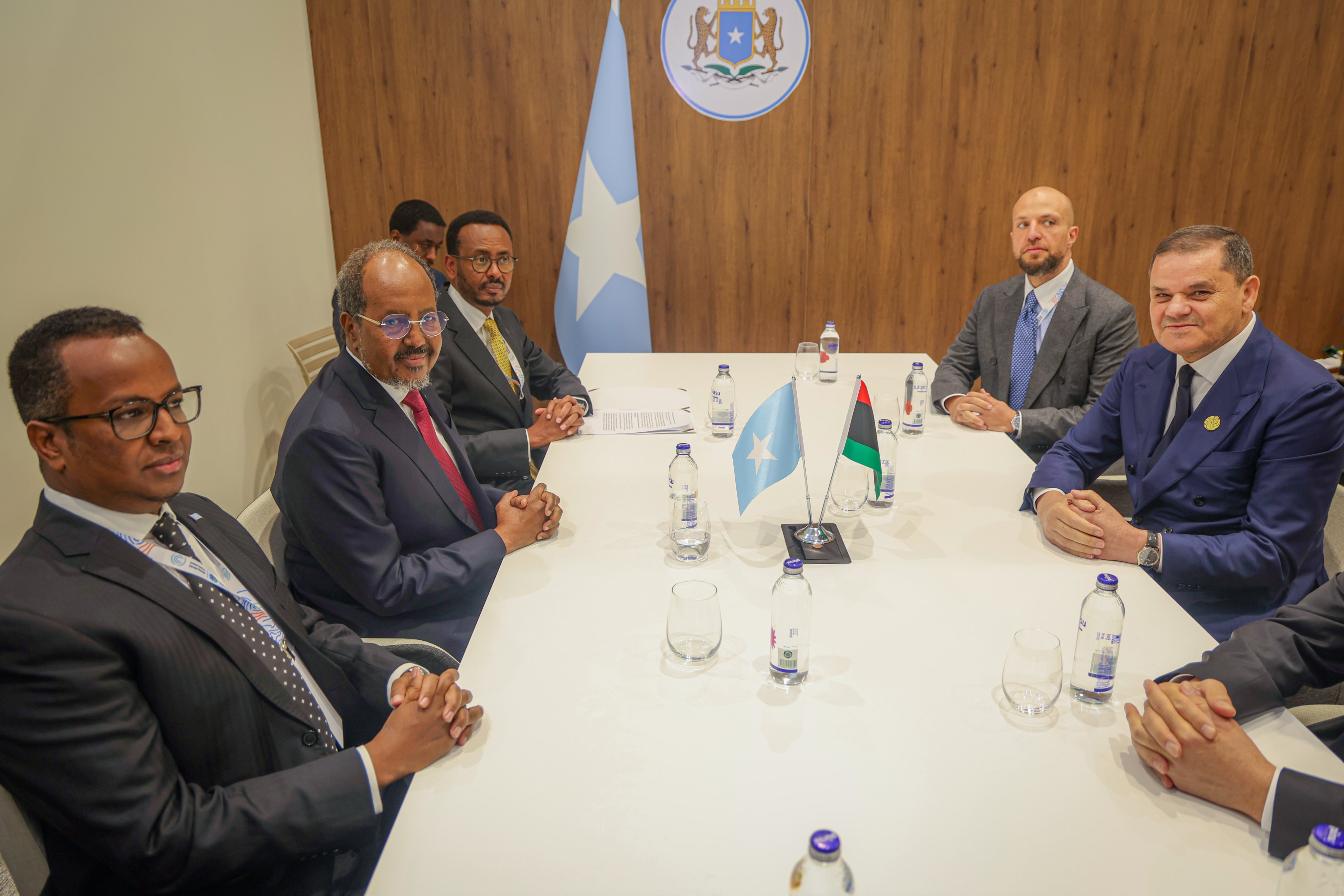
Somalia and Libya were represented at the highest levels during the COP31 UN Climate Change Conference in Antalya, Türkiye.
Somali President Hassan Sheikh Mohamud and Libya's Government of National Unity Prime Minister Abdulhamid Dbeibah joined international leaders attending the summit hosted by Turkish President Recep Tayyip Erdoğan.
According to the Libyan News Agency, Dbeibah participated in the November 11 proceedings and held meetings with several international officials and leaders.
The discussions addressed bilateral cooperation, opportunities for expanding partnerships and regional and international developments.
President Mohamud also participated in the summit, presenting Somalia's climate priorities and calling for stronger international support for vulnerable countries.
Although both leaders' attendance has been confirmed, no separate official account has yet established that Mohamud and Dbeibah held a bilateral meeting during COP31.
Previous meeting strengthened bilateral relations
The latest international gathering follows recent high-level contacts between Libya and Somalia.
On October 3, 2026, President Hassan Sheikh Mohamud met Mohamed Yunus al-Menfi, Chairman of Libya's Presidential Council, in Egypt's New Alamein city.
The meeting took place on the sidelines of the Alamein-Africa Business Forum.
According to the Libyan Presidential Council's statement, the two leaders reviewed bilateral relations and opportunities to strengthen cooperation across several sectors.
They also exchanged views on developments in the Horn of Africa and broader regional security challenges.
The discussions reflected the two countries' continuing interest in diplomatic coordination and cooperation within African and Arab institutions.
Support for Somalia's sovereignty
A significant element of the October meeting concerned Somalia's sovereignty and territorial integrity.
President Mohamud welcomed al-Menfi's position supporting Somalia's unity and national sovereignty.
The Libyan official, in turn, appreciated Somalia's support for efforts to resolve Libya's political crisis through a nationally owned process.
Both leaders emphasized the importance of dialogue and stability in addressing regional challenges.
Somalia reaffirmed its support for an inclusive Libyan political settlement involving the country's principal political and national actors.
The discussions also highlighted the importance of cooperation through the African Union, Arab League and United Nations.
Agreements signed during the 2025 Tripoli visit
The two countries had previously taken steps to institutionalize their diplomatic cooperation.
During President Mohamud's official visit to Tripoli on February 24, 2025, he met Prime Minister Abdulhamid Dbeibah and signed several bilateral agreements.
These included a mutual visa exemption arrangement for holders of diplomatic, special and service passports.
The two sides also agreed to establish a political consultation mechanism between their foreign ministries.
Another memorandum addressed cooperation between the municipalities of Tripoli and Mogadishu in local administration and urban development.
The governments further agreed to establish a high-level joint committee to review previous agreements and examine opportunities for economic and investment cooperation.
These arrangements provided an institutional basis for continued diplomatic engagement between the two countries.
Cooperation on migration and Somali citizens in Libya
The welfare of Somali nationals in Libya has also become an important aspect of bilateral relations.
On September 25, 2026, Somali Foreign Minister Abdisalam Abdi Ali met Libya's Acting Foreign Minister Eltaher Salem Elbaour in New York during the United Nations General Assembly.
The ministers discussed the situation of Somali citizens in Libya and the need to strengthen cooperation on migration-related issues.
They agreed to improve coordination between their respective institutions, particularly in matters affecting the protection and welfare of citizens.
Libya remains an important country along migration routes connecting parts of Africa with the Mediterranean.
Cooperation between Tripoli and Mogadishu therefore has implications for consular assistance, migrant protection and broader bilateral relations.
COP31 highlights shared development priorities
The Antalya summit also provides a platform for Somalia and Libya to engage with international partners on climate change and sustainable development.
Somalia is seeking greater financial support for climate adaptation, particularly in response to recurring droughts, flooding and food insecurity.
President Mohamud called on developed countries to meet their climate responsibilities and provide more accessible assistance to countries facing severe environmental risks.
Libya's participation, meanwhile, reflects its interest in international discussions concerning energy transition, climate risks and sustainable economic development.
Dbeibah's meetings at the summit were described by Libyan authorities as part of efforts to expand international partnerships.
While both countries have demonstrated continued diplomatic engagement, no new Somalia–Libya agreement has been officially announced as an outcome of COP31.
Their participation in Antalya comes against the background of existing bilateral cooperation and previously documented high-level political discussions.