Somali national media releases investigation into UAE activities
Somalia's national media has broadcast an investigative documentary examining the activities of the United Arab Emirates in Bosaso, a major commercial city in the northeastern Puntland region.
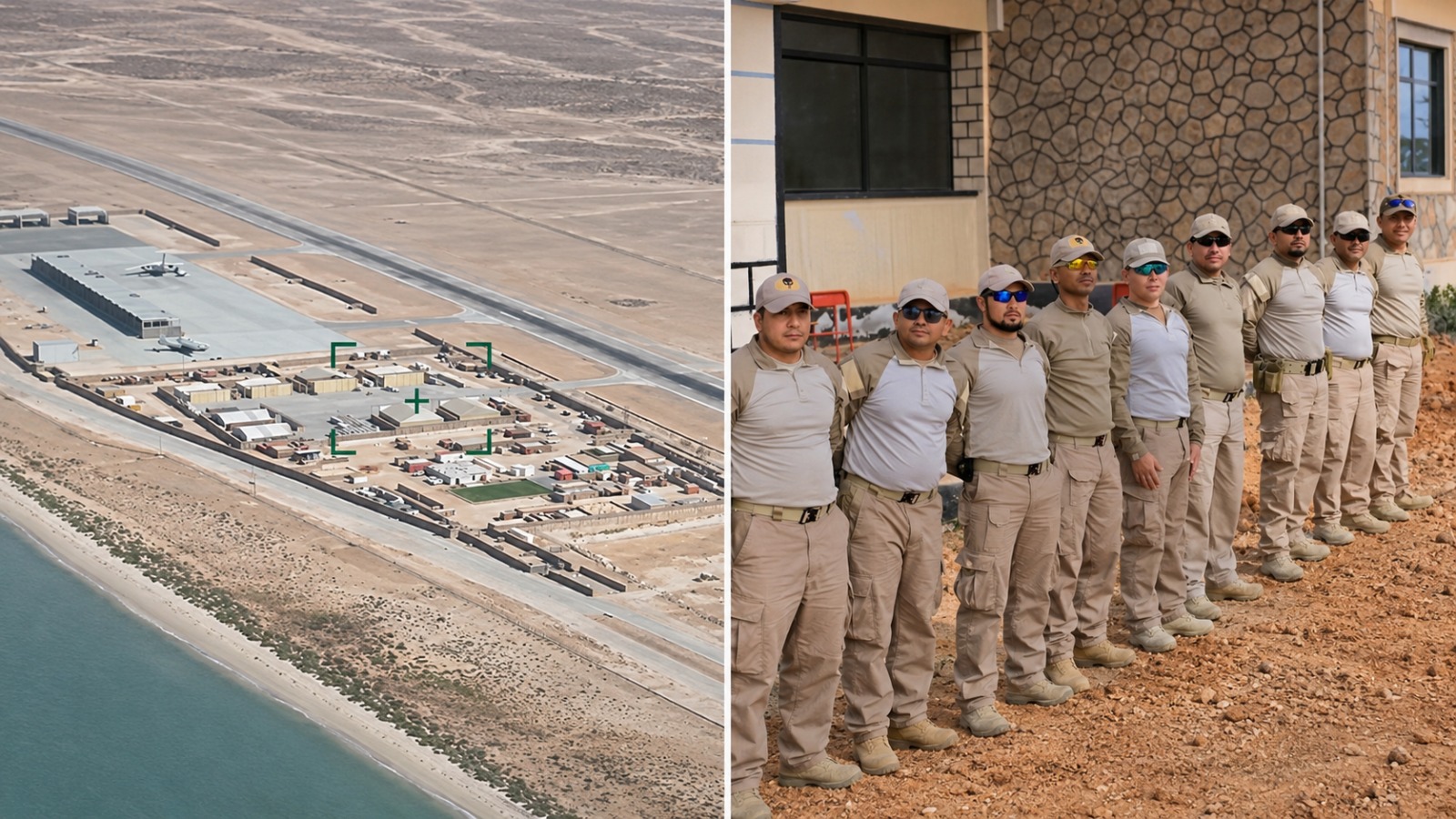
The approximately five-minute video presents footage of foreign military personnel, airport facilities, cargo aircraft, shipping containers, transport vehicles and aviation records.
According to the Somali government's security dossier, Bosaso has been used as a transit hub for Colombian fighters and military supplies associated with the RSF's campaign in Sudan.
The documentary describes a logistics network involving Bosaso Airport, the city's port and military facilities allegedly operated by the UAE.
Somali authorities said the activities involved unauthorized use of national infrastructure and violations of the country's airspace.
More than 6,000 Colombian fighters reportedly transported
One of the documentary's central findings concerns the number of foreign fighters allegedly transported through Bosaso.
Somali security agencies reported that more than 6,000 Colombian fighters had passed through the airport since Sudan's conflict began in April 2023.
According to the investigation, the recruits initially arrived as civilian passengers.
They reportedly wore ordinary clothing, carried no visible military equipment and displayed no identifying military insignia.
The documentary includes footage of groups of men gathered inside a building and subsequently transported in vehicles.
Somali authorities said these individuals were later deployed to military activities connected to the RSF in Sudan.
The figure of more than 6,000 originates from the Somali security dossier. International investigations have independently documented the movement of Colombian military contractors through Bosaso, but have not established that total.
Qatar-donated buses allegedly used to transport fighters
The documentary also details how Colombian personnel were reportedly transported after arriving at Bosaso Airport.
According to Somali national media, buses originally donated by Qatar to Somalia and later handed over to the Puntland administration for public services were used to transport the foreign fighters.
The vehicles were allegedly diverted from their intended public-service role to move Colombian personnel from the airport to a UAE-operated military facility in Bosaso.
The video presents footage associated with the movement of foreign personnel through the city.
Somali authorities described the buses as part of the logistics network supporting the onward movement of foreign fighters.
The documentary did not provide a separate figure for the number of people transported using those vehicles.
Weapons and military equipment allegedly shipped through Bosaso Port
Another major section of the investigation concerns maritime shipments through Bosaso Port.
Somali national media reported that large cargo ships docked at the port carrying containers allegedly filled with weapons and military equipment.
Footage shown in the documentary includes vessels, shipping containers, trucks and loading operations.
According to the Somali security dossier, these shipments were connected to a broader network supplying military equipment to the RSF.
The documentary said the foreign fighters and equipment were subsequently transported from Bosaso toward several destinations linked to the Sudan conflict.
However, it did not publish a complete cargo inventory, shipping documentation or identifying details for every vessel involved.
Routes linked Bosaso to Chad, Darfur and Libya
The documentary identifies several destinations associated with the alleged movement of fighters and military supplies.
These include Amdjarass in Chad, Nyala in Sudan's Darfur region and Kufra in southeastern Libya.
According to Somali authorities, these locations formed part of regional routes used to transfer personnel and military equipment toward RSF-controlled areas.
Nyala has served as a major military and logistics center for the RSF in Darfur.
Kufra, in southeastern Libya, is connected to important overland routes leading toward Sudan and Chad.
The video presents maps illustrating the geographical relationships between these locations.
Previous investigations by Human Rights Watch have independently documented routes used by Colombian military contractors traveling through Somalia, the UAE, Chad and Sudan.
One former Colombian contractor interviewed by the organization described spending approximately ten days at a military facility near Bosaso before traveling to Abu Dhabi and eventually reaching Nyala through Chad.
Colombian fighters reportedly paid $4,000 per month
The documentary also addresses financial arrangements involving the Colombian personnel.
According to reports cited by Somali national media, individual fighters received monthly payments of approximately $4,000.
The video states that the payments were believed to have been financed by the UAE government.
Somali authorities also reported that some Colombian personnel appeared in footage alongside members of the Puntland security forces.
The documentary said these individuals had been presented publicly as trainees rather than personnel being prepared for deployment to Sudan.
Images of foreign men alongside uniformed personnel were shown as part of the investigation.
The footage did not include comprehensive employment contracts or bank records establishing that all individuals received the same monthly amount.
Somali aviation authority reports hundreds of unauthorized flights
The final section of the documentary focuses on aviation records.
Somalia's Civil Aviation Authority reported that aircraft chartered by the UAE had carried out hundreds of flights from Bosaso without authorization from the federal government.
According to the authority, 301 unauthorized flights were recorded during 2024.
The corresponding figure for 2025 was 668.
Those annual figures amount to 969 flights across the two years.
An earlier section of the documentary also referred to more than 984 unauthorized flights, although it did not explain the difference between that overall figure and the two annual totals.
The video presents aviation records containing dates, aircraft registration numbers, flight identifiers, aircraft types and route codes.
Somali authorities said the operations had been conducted without obtaining the required permission to use the country's airspace.
Cargo airlines and IL-76 aircraft named in records
The documentary also identifies aviation operators associated with the reported flights.
Among the companies appearing in the displayed records are RubyStar, Aviacon Zitotrans, Aerostan and Abakan.
The footage includes records relating to Ilyushin IL-76 cargo aircraft, a type commonly used for transporting heavy equipment.
Somali national media said companies chartered by the UAE had operated flights through Bosaso outside the country's authorized aviation framework.
The documents were presented as part of the government's investigation into the use of Somali airports and airspace.
The Somali Civil Aviation Authority described unauthorized charter operations as a violation of the federal government's authority over national aviation activities.
Human Rights Watch documented Bosaso transit network
The Somali documentary follows earlier investigations into the recruitment and deployment of Colombian military contractors supporting the RSF.
In May 2026, Human Rights Watch published a detailed report examining the recruitment, movement and deployment of Colombian personnel to Sudan.
The investigation drew on interviews with former contractors, corporate documents, satellite imagery, social media evidence and geolocation analysis.
It examined the activities of the Abu Dhabi-based Global Security Services Group and recruitment companies operating in Colombia.
Human Rights Watch independently geolocated footage recorded near a Puntland Maritime Police Force facility west of Bosaso Airport.
The organization also documented the expansion of the airport's military infrastructure from late 2022 onward.
Its investigation identified routes connecting Colombia, Somalia, the UAE, Libya, Chad and Sudan.
Separate United Nations investigations have also examined the role of foreign military contractors and cross-border supply networks in the Sudan conflict.
These findings provide independent evidence of Bosaso's role in the transit network, although they do not verify every numerical or operational claim made in the Somali documentary.
The UAE has rejected allegations that it supplied arms to the RSF or organized foreign mercenary deployments for the conflict.
Somalia raises sovereignty concerns over foreign military activities
The Federal Government of Somalia has described the use of Bosaso's airport and port facilities for unauthorized military activities as a matter of national sovereignty.
Somali authorities maintain that foreign governments cannot conduct military aviation or logistics operations through the country's infrastructure without federal authorization.
The security dossier presents the alleged use of Bosaso as part of a broader series of unauthorized foreign activities.
The newly released footage places particular emphasis on the arrival of Colombian personnel as civilians, their transportation using Qatar-donated buses, alleged military shipments through Bosaso Port and extensive unauthorized flight operations.
The disclosures have renewed attention to the relationship between Somalia's regional infrastructure, UAE-linked security operations and the international supply networks associated with Sudan's continuing war.