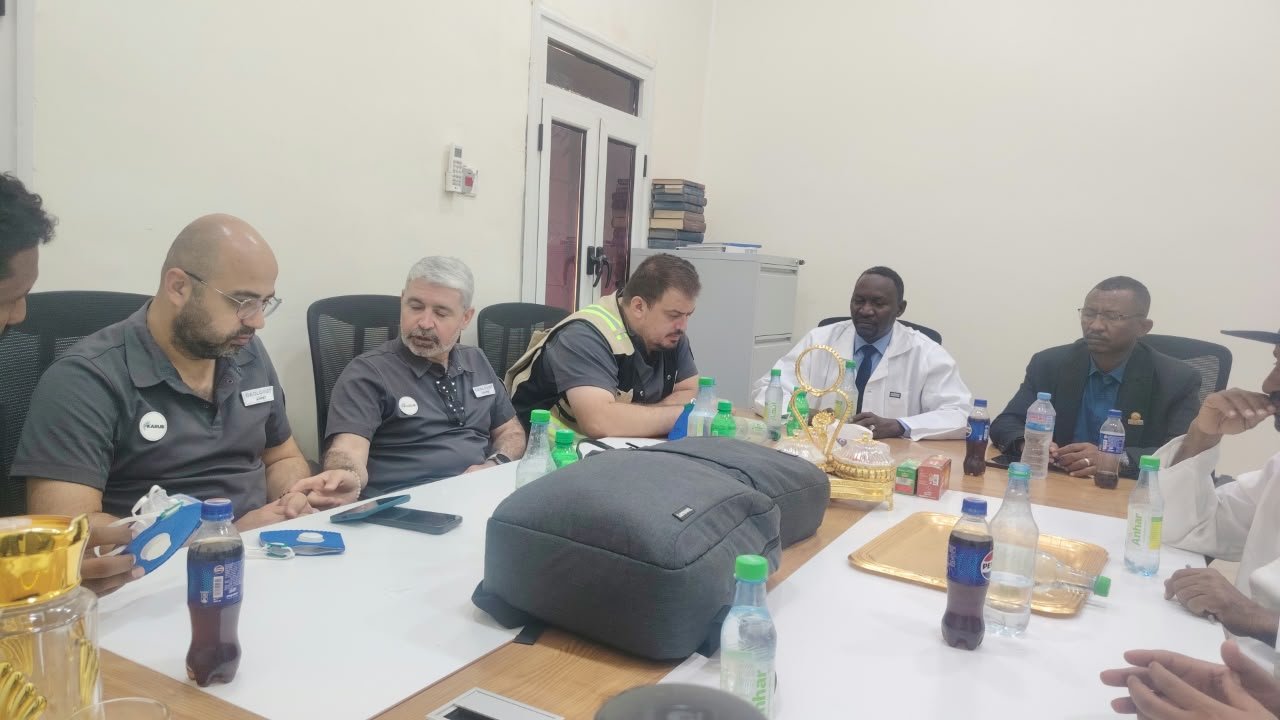
Sudan is expanding its technical cooperation with international mining companies following an agreement between the Geological Research Authority of Sudan (GRAS) and Karub Holding, a company with operations in Türkiye, to conduct laboratory analysis and geological assessments of mineral resources.
The agreement, announced by the Sudan News Agency (SUNA) on November 9, 2026, covers mineral samples obtained from exploration blocks associated with Karub's activities in Sudan.
Dr. Mustafa Hamid, Director of the Central Reference Laboratory at the Geological Research Authority, confirmed the arrangement and highlighted the cooperation established between the Sudanese institution and the company.
According to the announcement, Karub's specialists conducted field activities alongside technical personnel from the Geological Research Authority in three Sudanese states.
A total of 74 geological samples were collected for laboratory examination, with some scheduled for analysis inside Sudan and others to be prepared for testing abroad.
The development follows discussions held in September between Karub representatives and Sudanese mining authorities concerning the company's investment and exploration plans.
Exploration teams collect 74 samples across three states
The latest agreement focuses on mineral exploration areas located in Sudan's Northern, River Nile and Red Sea states.
According to the Sudanese geological authority, Karub representatives visited the proposed exploration blocks accompanied by a technical team from the government institution.
The fieldwork was carried out under exploration licenses approved by the relevant Sudanese authorities.
During the geological investigations, the teams collected 74 samples from the designated areas.
These materials will undergo laboratory examination to provide further information about their mineral characteristics and geological composition.
Mineral exploration generally involves several technical stages, including field mapping, sampling, laboratory testing and the interpretation of geological data.
Such assessments are intended to establish whether geological formations warrant additional exploration activities.
At this stage, Sudanese officials have not disclosed the specific mineral types identified in the samples, their grades or the commercial value of any potential deposits.
The announcement therefore represents progress in exploration and resource evaluation rather than confirmation of a commercially viable mineral discovery or the commencement of mining production.
Samples to undergo domestic and international laboratory testing
Karub Holding formally requested the preparation and processing of geological samples through the Central Reference Laboratory of Sudan's Geological Research Authority.
The request was contained in an official letter signed by Karub Holding Chairman Burak Yoğurtcu.
According to the Sudanese announcement, the company asked for the samples to be prepared in accordance with the authority's established technical standards before being sent for analysis outside Sudan.
The arrangement also provides for laboratory testing of a number of samples at the authority's Central Reference Laboratory.
The use of domestic and international laboratory facilities is expected to support the technical evaluation of materials collected during the exploration campaign.
Reliable sample preparation and laboratory testing are important components of mineral exploration, helping researchers determine elemental composition and assess whether further geological work is justified.
Depending on the results, additional field surveys, sampling or more detailed exploration activities may become necessary.
However, no official details have been published regarding the foreign laboratories involved, the destination countries for the samples, the testing timetable or the expected completion date.
Agreement follows September investment negotiations
The November development comes approximately two months after Karub Holding initiated high-level discussions with Sudanese mining officials.
On September 1, 2026, a Karub delegation led by General Manager Yogur Dirak met Mohamed Tahir Omar, Director General of the Sudanese Mineral Resources Company.
The meeting focused on accelerating technical and administrative procedures that would allow the company to begin mineral exploration and mining-related activities in Sudan.
Sudanese officials expressed their readiness to provide technical assistance and facilitate the required procedures.
During the discussions, Karub representatives stated that the company was prepared to begin exploration activities and possessed the technical and financial capabilities required for mining investments.
On September 2, Sudanese Minerals Minister Nour Al-Daim Taha also met the company's delegation.
The minister welcomed Turkish investment interest and emphasized the government's commitment to expanding cooperation with companies capable of contributing technology, expertise and capital to the mining sector.
He identified Sudan's mineral resources, particularly gold, as an important area for potential investment.
The minister also highlighted the importance of attracting international companies, improving technical capabilities and creating greater economic value from the country's natural resources.
The collection of 74 samples announced in November provides an indication that the earlier investment discussions have been followed by technical exploration activities.
Karub expands its international mining interests
Karub operates across several sectors, including mining, energy, infrastructure, construction and international trade.
According to its corporate website, the company's business history began in Dubai in 2013, initially focusing on activities connected to energy and international commerce.
Karub entered the Turkish market in 2021 and completed its Turkish licensing procedures in 2022.
The company states that it maintains its headquarters in the United Kingdom, with offices in Türkiye, the United Arab Emirates and China.
Its mining activities include geological research, mineral exploration, mining operations and project development.
Africa represents one of the regions in which Karub has pursued business opportunities.
In June 2026, Karub Chairman Burak Yoğurtcu led a delegation that met Niger's Minister of Mines, Colonel Abarchi Ousmane, in Niamey.
The June 15 meeting addressed potential cooperation in the mining sector and the development of future partnerships.
The Sudan agreement adds another exploration-related initiative to the company's engagements with African mining authorities.
Nevertheless, the financial value of Karub's planned Sudanese operations and the precise extent of its future mining investments have not been publicly established.
Sudan seeks new investment in mineral exploration
Sudan possesses a wide range of mineral resources, including gold, chromite, copper, iron and industrial minerals.
Gold is particularly important to the country's mining economy and remains a major focus for domestic and international investors.
According to figures disclosed by Sudan's Technical Mining Committee in June 2026, the country issued 104 mineral exploration licenses during the first half of the year.
These included 63 general exploration permits and 41 exclusive exploration permits.
Officials reported that approximately 90 percent of exploration applications were primarily focused on gold.
Mining investment has increasingly concentrated in the Northern, River Nile and Red Sea states, which have attracted substantial exploration interest.
These are the same three states where the geological samples associated with Karub's latest agreement were collected.
However, the fact that gold dominates Sudan's mineral exploration sector does not establish that Karub's 74 samples contain gold or that any commercially viable gold deposits have been identified.
Those questions can only be addressed through verified laboratory results and further geological evaluation.
Rebuilding Sudan's mining sector amid conflict
Sudan's mining industry has faced significant disruption since the outbreak of armed conflict between the Sudanese Armed Forces and the Rapid Support Forces in April 2023.
The fighting damaged public and private infrastructure, disrupted transport networks and affected the operations of institutions responsible for geological research and resource management.
The Geological Research Authority was among the institutions whose facilities were affected by the conflict.
In April 2026, Minerals Minister Nour Al-Daim Taha outlined plans to rebuild the mining sector through modern geological surveys, advanced exploration technology and partnerships with international institutions.
The Sudanese government has pursued cooperation with foreign partners, including Türkiye and China, to strengthen geological research, training and technical capacity.
Scientific assessments and access to reliable mineral data are particularly important to the government's efforts to attract new investment.
The agreement with Karub Holding comes as Sudan seeks to restore and modernize its mineral exploration capabilities while the conflict continues.
Türkiye-Sudan economic cooperation gains momentum
The mining agreement also comes amid broader discussions between Türkiye and Sudan concerning cooperation in energy and natural resources.
In early November, Turkish Energy and Natural Resources Minister Alparslan Bayraktar referred to opportunities for expanded cooperation with Sudan in mining, oil, natural gas and electricity generation.
His remarks highlighted expectations that Turkish companies could increase their activities in Sudan as investment opportunities develop.
Karub's agreement with Sudan's Geological Research Authority represents a specific technical initiative within this broader economic relationship.
The current phase focuses on collecting, preparing and analyzing mineral samples rather than commercial extraction.
Once laboratory results become available, they could help determine whether the explored areas require additional investigation and whether future investment projects may be justified.
The agreement provides a documented example of Turkish-linked private-sector involvement in Sudanese mineral exploration, although the scale, timing and commercial prospects of any eventual mining operations remain uncertain.