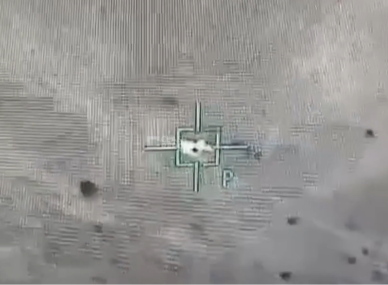
The Sudanese Armed Forces (SAF) announced on Friday, November 13, that their air defense units had intercepted and downed an unmanned aerial vehicle in southeastern Sudan's Blue Nile state.
According to a statement issued by the military's General Command, the incident occurred around midday in the Dindiro area near the Ethiopian border.
The military described the aircraft as a hostile strategic drone and said it had entered Sudanese airspace from Ethiopia.
The statement did not identify the party operating the drone or provide details about its intended destination.
No information was released about the aircraft's manufacturer, payload, debris or the air defense system used during the interception.
The announcement follows several similar incidents reported by Sudanese authorities in the border region during recent months.
Another reported interception in Dindiro
Dindiro has previously appeared in Sudanese military announcements concerning unmanned aircraft near the Ethiopian border.
On August 23, the Sudanese army reported that its forces had brought down a hostile drone southeast of Dindiro after it entered the country from the direction of Ethiopia.
The November 13 announcement concerns a separate incident reported in the same general area.
The repeated reports highlight the importance of the eastern Blue Nile border zone to Sudanese air defense operations.
The military has maintained that unmanned aircraft have crossed into Sudan from neighboring territory on several occasions.
However, the latest statement did not include radar tracking data, photographs of recovered wreckage or other independently verifiable evidence concerning the aircraft's route.
It also did not establish whether the drone was operated by a state military or an armed group.
A series of drone incidents along the border
Sudan's military has issued multiple announcements about drones allegedly entering Blue Nile state from Ethiopia since August.
On August 27, the army reported the downing of a strategic drone north of Sarkam.
On September 13, the SAF's 4th Infantry Division said air defenses intercepted another aircraft over Balang in the eastern sector of Kurmuk.
A further incident was reported near Wad al-Mahi on October 12, when the military said a drone had been tracked after crossing the border.
On October 22, the army announced another interception near Bakouri while reporting gains in ground operations in Blue Nile state.
The military also said it had downed an aircraft over the state on November 3.
In several of these cases, the Sudanese authorities described the drones as hostile but did not identify their operators.
The November 13 Dindiro announcement adds to this sequence of reported interceptions.
Sudan accuses Ethiopia over drone operations
The latest development comes against the background of serious disagreements between Sudan and Ethiopia over the use of unmanned aircraft.
Khartoum has accused Addis Ababa of allowing territory under Ethiopian control to be used for drone operations attributed to Sudan's paramilitary Rapid Support Forces.
On October 28, Sudanese defense, foreign affairs and intelligence officials presented a technical briefing concerning aircraft wreckage, navigation records and alleged cross-border flight paths.
Sudanese officials said the material indicated that some drones used against targets inside Sudan had been launched from locations in Ethiopia.
They also accused the RSF of targeting electricity facilities and other civilian infrastructure.
The Sudanese government subsequently submitted complaints to the United Nations Security Council and the African Union Peace and Security Council.
Ethiopia has denied the accusations against it.
The technical claims presented by Sudan have not all been independently established through an international investigation.
The November 13 military statement likewise did not demonstrate that the newly reported aircraft was operated by Ethiopian government forces.
Diplomatic confrontation escalated in November
The dispute over drone attacks has contributed to a wider deterioration in relations between Khartoum and Addis Ababa.
In early November, Ethiopia ordered Sudanese consular personnel in Assosa to leave the country.
Sudan responded by closing Ethiopia's consulate in Gedaref and expelling its personnel.
The reciprocal measures followed accusations by both governments that neighboring territory was being used to support hostile armed groups.
Sudan has accused Ethiopia of facilitating RSF-linked operations.
Ethiopia, meanwhile, has accused Sudan and other regional countries of supporting armed opponents of the Ethiopian government, allegations rejected by the governments concerned.
The competing accusations have raised concerns about the potential for Sudan's civil war and political tensions in the Horn of Africa to develop into a wider regional security crisis.
Against this background, the reported downing of another drone near the common border adds a further security issue to an already strained relationship.
Blue Nile remains a contested military region
Blue Nile state has become an important theater in Sudan's continuing war between the Sudanese Armed Forces and the Rapid Support Forces.
Fighting in the region has also involved the Sudan People's Liberation Movement-North, led by Abdelaziz al-Hilu, which has operated alongside RSF forces.
The border areas around Kurmuk and Geissan have experienced recurring clashes, changes in territorial control and reported drone activity.
On October 22, the Sudanese military announced that it had recaptured Bakouri and Akleili, two locations important to military movement around the Kurmuk–Damazin corridor.
The region's proximity to Ethiopia and South Sudan adds to its strategic significance.
Military operations in Blue Nile affect not only frontline positions but also road access, civilian transportation and the ability of humanitarian organizations to reach communities.
Drone operations have become an increasingly prominent part of the wider Sudanese conflict, including attacks on military installations and public infrastructure.
However, the November 13 announcement did not identify the latest drone as belonging to the RSF or its allies.
Drone type and intended target remain unknown
The Sudanese military used the term “strategic drone” in describing the aircraft reportedly intercepted near Dindiro.
That designation reflects the military's own classification and does not independently establish the drone's specifications.
The General Command did not identify a particular model or disclose information about the system's operational range, surveillance equipment or possible weapons.
On November 11, Sudanese authorities separately reported that their forces had shot down two FH-95 drones in West Kordofan and East Darfur.
Those incidents involved other locations and should not be confused with the newly reported interception in Blue Nile.
There is no verified basis for identifying the November 13 drone as an FH-95 or any other specific model.
Similarly, the claim that an aircraft entered from Ethiopia does not, by itself, establish that it belonged to Ethiopia's armed forces.
Further clarification awaited
The Sudanese army's latest statement indicates that military air defense activity remains ongoing near the Ethiopian border.
The reported interception took place amid continued fighting in Blue Nile and a diplomatic dispute involving allegations of cross-border military assistance.
Sudanese officials have repeatedly emphasized the need to protect national airspace and prevent attacks against military positions and civilian infrastructure.
For now, the military has confirmed only its account of downing a hostile drone around midday on November 13 in the Dindiro area.
The aircraft's operator, model, intended target and precise flight path remain undisclosed.
Independent verification and any further official statements will be important in establishing the circumstances and broader implications of the incident.