Sudanese Armed Forces (SAF) air defence units responded to a series of drone attacks over the capital, Khartoum, during the early hours of Sunday, November 22, 2026.
According to a Sudanese military source cited by Al Arabiya, unmanned aerial vehicles arriving from Ethiopian territory attempted to strike Khartoum International Airport.
The attack triggered air defence operations across several parts of the capital, where residents reported explosions, anti-aircraft fire and drones flying over residential neighbourhoods.
Anadolu Agency and Sudanese news outlet Ultra Sudan reported that army air defence units intercepted multiple drones, particularly over eastern Khartoum.
Witnesses described heightened military activity near the international airport and surrounding districts.
Drone attack begins at 2:15 a.m.
According to Ultra Sudan, the attack began at approximately 2:15 a.m. local time and continued into the early morning.
Military sources and eyewitnesses reported explosions and sustained anti-aircraft fire across Khartoum, Omdurman, Khartoum North and East Nile.
Sudanese military sources said air defence systems managed to intercept most of the drones before they reached their intended targets.
Witnesses speaking to Anadolu Agency described explosions over eastern Khartoum, particularly around Burri, Al-Riyadh and Arkweit.
The eastern part of the city includes Khartoum International Airport, a major strategic facility that has repeatedly been targeted during the conflict.
Khartoum International Airport among reported targets
Al Arabiya's report cited a Sudanese military source as saying the drones had attempted to target the airport after arriving from Ethiopia.
The international airport has been a focus of military operations since fighting began between the Sudanese army and the Rapid Support Forces (RSF) in April 2023.
Following the army's recapture of Khartoum in March 2025, Sudanese authorities began restoring infrastructure and working toward the resumption of civilian aviation services.
In May 2026, the airport was targeted by drone attacks that Sudanese authorities linked to the UAE and Ethiopia.
The November 22 incident again brought military activity close to the airport.
However, there has been no confirmed announcement that a drone directly struck the runway, passenger terminal or other airport infrastructure during Sunday's attack.
Drones fall in residential areas
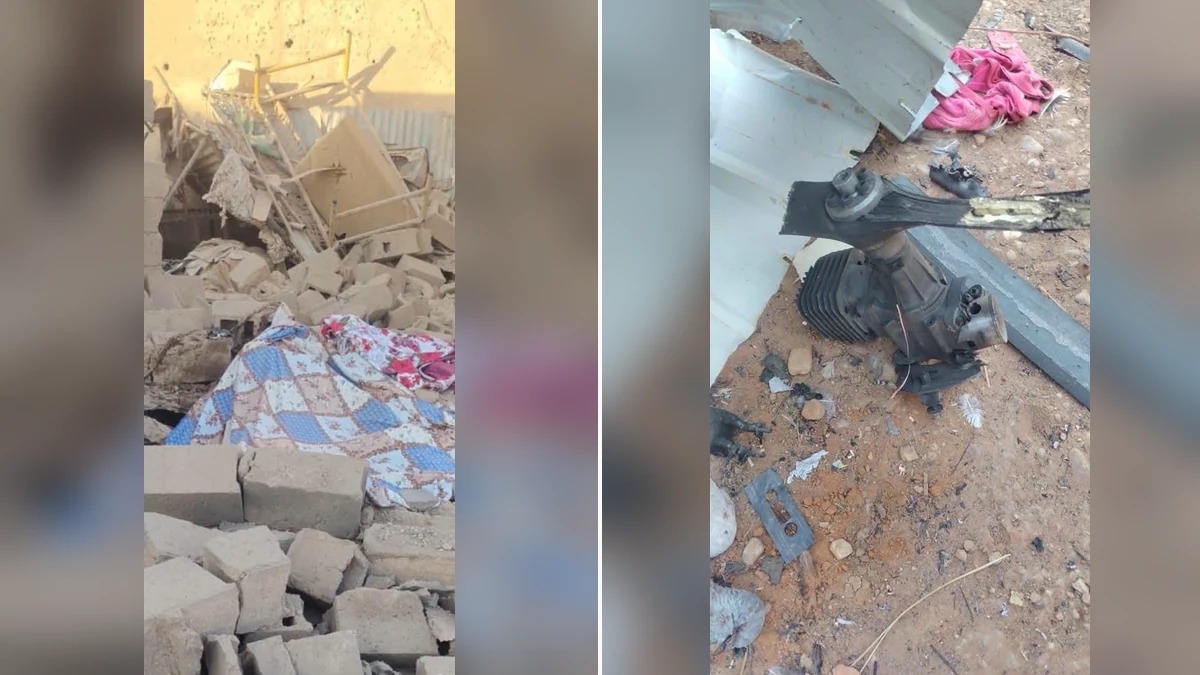
Witnesses reported that one drone crashed onto a street in the Arkweit district without exploding.
According to Anadolu Agency, a Sudanese army unit subsequently arrived at the scene and secured the surrounding area.
Ultra Sudan identified the location as Block 68 in Arkweit and reported no significant damage from the incident.
Another drone reportedly struck a house in Al-Assal, a residential area within the Jebel Aulia locality south of Khartoum.
Sudanese outlet Azza Press reported that a 10-year-old boy named Mohamed was killed when a drone hit his family's home at approximately 5:15 a.m.
The report said the child was inside the house when the aircraft struck.
Details of the fatality are based on local sources, and a comprehensive official casualty assessment has not yet been published.
Sudan previously linked drone operations to Ethiopia
The latest incident follows months of accusations by Sudanese authorities that drones targeting the country have been launched from facilities inside Ethiopia.
On October 28, Sudan's Defence Ministry, Foreign Ministry and intelligence agencies held a joint news conference in Khartoum.
Officials displayed recovered drone components, flight data and satellite imagery that they said demonstrated the involvement of launch sites in Ethiopia.
The Sudanese government identified Bahir Dar Airport in Ethiopia's Amhara region among the locations allegedly used for drone operations.
Other sites mentioned in Sudanese reports included Asosa Airport and facilities near the Kurmuk border area.
Sudanese officials accused the RSF of using Ethiopian territory to conduct attacks against civilian and military infrastructure.
Khartoum reports 70 attacks and 187 drones
On November 1, Sudan's Transitional Sovereignty Council published a report detailing what it described as cross-border drone operations originating from Ethiopia.
The report documented 70 attacks between February 15 and October 27, 2026.
According to the Sudanese authorities, the operations involved 187 one-way attack drones and 82 munitions launched from unmanned aircraft.
The government said the attacks killed or injured 484 civilians, while 176 Sudanese soldiers were killed and another 200 wounded.
The reported incidents included strikes against power stations, residential areas, military facilities and other infrastructure across several states.
The figures represent Sudanese government findings and have not all been independently verified by international investigators.
Sudan takes dispute to UN and African Union
The Sudanese government subsequently escalated its complaint to international institutions.
On November 2, the Foreign Ministry announced that it had formally submitted complaints against Ethiopia to the United Nations Security Council and the African Union Peace and Security Council.
Khartoum accused Addis Ababa of allowing the RSF to use Ethiopian territory to launch explosive-laden drones and other aerial weapons against Sudanese targets.
The government called for the alleged cross-border operations to end and urged international institutions to address the issue under international law.
Sudan also reiterated its position that it retained the right to defend its territory and national security.
Ethiopia rejects previous allegations
Ethiopia has previously rejected accusations that its territory was used to facilitate attacks on Khartoum International Airport.
In May 2026, Ethiopia's Foreign Ministry dismissed Sudanese allegations concerning drone strikes and maintained that the government was not involved.
Addis Ababa subsequently accused the Sudanese military of assisting armed groups linked to the Tigray People's Liberation Front, an allegation rejected by Khartoum.
The dispute escalated further in November when Ethiopia expelled six staff members from Sudan's diplomatic mission in Asosa and closed the consulate.
The two governments remain divided over cross-border security, armed groups and the use of military facilities near their common border.
No new Ethiopian government response directly addressing the November 22 airport incident was identified.
Attack follows Sudanese strikes on RSF positions in Nyala
The latest assault on Khartoum came days after Sudanese army airstrikes targeted RSF positions in Nyala, the capital of South Darfur.
On November 19, Sudanese aircraft struck a facility described as an RSF intelligence headquarters in the city.
Sudanese media reported substantial casualties among RSF intelligence personnel following the operation.
Military sources quoted by Ultra Sudan described the November 22 drone attack on the capital as a response by the RSF to those strikes.
The renewed aerial activity highlights the continuing importance of drones in the conflict between the Sudanese Armed Forces and the paramilitary organization.
Further official details are awaited concerning the number of intercepted aircraft, their point of origin, and any damage sustained at Khartoum International Airport.