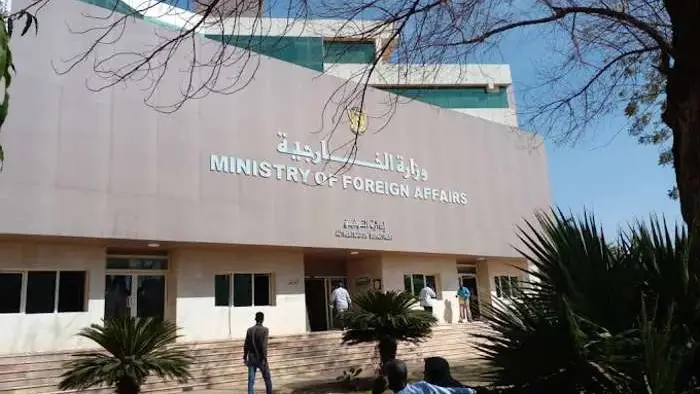
Relations between Sudan and Ethiopia have deteriorated further following diplomatic measures affecting consular personnel in both countries.
On Wednesday, November 4, a senior Ethiopian official told Reuters that six Sudanese diplomatic staff members stationed in Assosa had been ordered to leave Ethiopia within 48 hours.
The official did not explain the decision and requested anonymity because of the sensitivity of the matter.
Reports of a reciprocal Sudanese measure emerged shortly afterward.
According to an account attributed to a Sudanese government source speaking to Asharq Bloomberg, Khartoum decided to close Ethiopia's consulate in Gedaref and give its employees 48 hours to leave Sudan.
The reported Sudanese response has not yet been independently corroborated by a detailed public government statement.
Together, the developments have brought a diplomatic dimension to the growing security dispute between the neighbouring countries.
Ethiopia Orders Six Sudanese Consular Staff to Leave
The Ethiopian decision affects personnel serving at Sudan's consulate in Assosa, the capital of the Benishangul-Gumuz region near the Sudanese border.
A senior Ethiopian official confirmed to Reuters that six members of the consular staff had been instructed to leave the country within 48 hours.
No official reason was provided.
The spokesperson for Ethiopian Prime Minister Abiy Ahmed's office did not immediately respond to Reuters' request for comment.
Several regional media outlets reported that the Sudanese consulate had also been ordered to close.
However, the specific measure directly confirmed to Reuters was the expulsion order affecting six staff members.
The Ethiopian government had not publicly provided a detailed explanation of whether the consular closure was permanent or how services would be maintained.
Sudan Reportedly Takes Reciprocal Action in Gedaref
Sudan was subsequently reported to have adopted a similar measure against Ethiopian diplomatic personnel.
A Sudanese government source cited by Asharq Bloomberg said the authorities had closed the Ethiopian consulate in Gedaref, eastern Sudan.
The source said Ethiopian consular staff had been granted 48 hours to leave Sudanese territory.
Gedaref occupies an important position in cross-border relations because of its proximity to Ethiopia and its role in trade and administrative services.
The reported reciprocal move would place consular operations on both sides of the border under restrictions.
However, no independently verified detailed order has been made available establishing the number of Ethiopian personnel affected or the precise operational arrangements following the reported closure.
UN Complaint Preceded the Diplomatic Escalation
The consular dispute followed Sudan's announcement that it had lodged a formal complaint against Ethiopia with the United Nations Security Council and the African Union Peace and Security Council.
Sudan's government announced the move on November 1, accusing Addis Ababa of allowing the Rapid Support Forces to conduct drone operations from Ethiopian territory.
Khartoum claimed that explosive and armed drones had been used to target civilian facilities, electricity installations and other essential infrastructure.
Sudanese officials said the attacks had caused civilian casualties and disrupted basic services.
The Foreign Ministry stated that it had submitted supporting documents to the international bodies.
Sudan considers the alleged activity a violation of its sovereignty and has demanded action to prevent further attacks.
Ethiopia denies providing military assistance to the RSF.
The allegations about the launch locations of the drones and the involvement of Ethiopian authorities have not been conclusively established through an independent international investigation.
Assosa Has Become a Focus of Security Allegations
Assosa's geographical location has become increasingly important in the diplomatic dispute.
The town lies in western Ethiopia, close to Sudan's eastern border, and serves as the administrative centre of Benishangul-Gumuz.
Sudanese officials have previously alleged that military facilities in the area were connected to drone operations and logistical support benefiting the RSF.
Khartoum has raised questions about the movement of armed personnel, weapons and other equipment through territory near the border.
Ethiopia has rejected allegations that it is supporting the paramilitary force.
Although the expulsion decision came against the background of these accusations, the Ethiopian official who confirmed the measure did not establish a direct reason for the order.
The immediate diplomatic consequence is therefore confirmed, while the precise justification for Ethiopia's decision remains undisclosed.
Ethiopia Accuses Sudan of Supporting Tigray Rebels
Addis Ababa has made separate allegations against Sudan regarding fighting in northern Ethiopia.
The Ethiopian government accuses Sudan, Egypt and Eritrea of providing support to Tigrayan armed groups involved in renewed hostilities against federal forces.
The fighting intensified in September 2026, adding pressure to Ethiopia's relations with neighbouring countries.
Sudan, Egypt and Eritrea have denied the allegations.
The accusations have created a situation in which each government believes that foreign actors are assisting its armed opponents.
This has increased concern that Sudan's civil war and Ethiopia's internal conflict could become increasingly interconnected.
Sudan Says It Wants to Avoid Open War
Amjad Farid, political and foreign affairs adviser to Sudan's Transitional Sovereign Council, addressed the tensions in comments to Reuters.
He said Sudan remained committed to defending its territorial sovereignty.
At the same time, Farid emphasized that Khartoum was making every effort to avoid a direct war with Ethiopia.
His comments underscored Sudan's stated preference for preventing a wider military confrontation despite the seriousness of its accusations.
However, the reported reciprocal consular measures show that diplomatic relations remain under considerable pressure.
Regional Stability Faces Another Challenge
The confrontation comes amid severe security and humanitarian crises across the Horn of Africa.
Sudan's war, which began in April 2023, has displaced more than 14 million people, according to UN figures cited by Reuters.
Renewed fighting in Ethiopia's Tigray region has also raised concerns about further instability.
The combination of armed conflicts, cross-border accusations and diplomatic expulsions is increasing pressure on regional relations.
The 48-hour orders affecting consular personnel in Assosa and reportedly Gedaref mark another stage in the dispute.
For Sudan and Ethiopia, the immediate question is whether diplomatic engagement can prevent a further escalation of tensions.
The response of both governments, along with any mediation by regional and international partners, will be important in determining the next stage of the crisis.