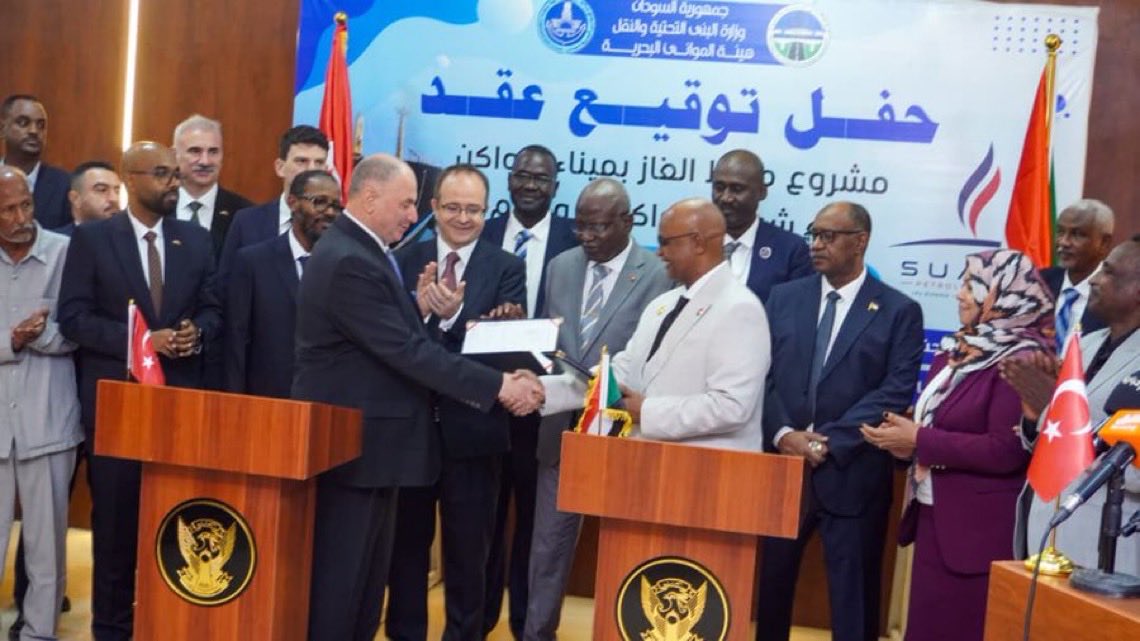
Sudan has taken a significant step towards upgrading its energy infrastructure with a final agreement for a specialised liquefied petroleum gas (LPG) terminal at Prince Osman Digna Port in Suakin.
The contract, signed on November 8, 2026, between Sudan's Sea Ports Corporation and Suakin Petroleum, establishes a framework for developing new gas handling and storage facilities along the country's Red Sea coast.
The project is intended to address weaknesses in Sudan's energy supply system while creating additional opportunities for regional maritime trade.
New Maritime Infrastructure for Gas Imports
According to Sudanese port authorities, the planned terminal will feature a specialised marine berth with a water depth of approximately 12 metres.
The facility is designed to accommodate gas carriers with cargo capacities of up to 5,000 tonnes.
Earlier planning documents identified a proposed storage capacity of 28,000 cubic metres, although subsequent port authority reporting used a different capacity unit.
The storage facility is expected to be positioned approximately 150 metres from the marine berth, with construction projected to take 24 months.
Strengthening Sudan's Strategic Energy Reserves
Sudan's ongoing conflict has placed considerable pressure on energy supplies, transportation networks and essential infrastructure.
Officials hope the new facility will improve the country's ability to receive, store and distribute imported LPG while reducing disruptions affecting domestic consumers and businesses.
Sea Ports Corporation Director General Jelani Mohammed Jelani has presented the development as part of wider efforts to modernise Sudan's port infrastructure and secure strategic energy supplies.
Plans also envisage connecting gas distribution to inland markets through road transport and railway logistics.
Suakin's Potential Role as a Regional Energy Hub
The Red Sea location gives Suakin considerable importance in Sudan's long-term trade and infrastructure planning.
Sudanese authorities envision the terminal becoming a platform for energy distribution not only within Sudan but potentially to neighbouring African markets.
The project could support broader efforts to strengthen maritime services for landlocked countries and expand the commercial role of Sudan's eastern ports.
However, these regional distribution ambitions remain development objectives rather than established operations.
Turkish Partnership Supports Infrastructure Development
The project will be implemented by Suakin Petroleum, a joint venture involving Turkish company ARGAZ and Sudanese company Petrodar.
It will operate under a build-operate-transfer arrangement, with the private-sector partner responsible for developing and operating the facility under contractual terms before its eventual transfer.
Sudanese officials say the investment could create employment opportunities, encourage further commercial activity and contribute to the country's infrastructure recovery.
The project's total cost, financing details and concession period have not yet been publicly disclosed.
With the final agreement signed, Sudan is seeking to transform the Suakin development into a significant addition to its energy import infrastructure and Red Sea logistics network.